

Androgenic alopecia is the most common type of hair loss affecting both men and women worldwide. Although it is often referred to as male pattern baldness, this condition is not limited to men and represents a genetically and hormonally driven disorder of the hair follicle. Androgenic alopecia accounts for the majority of cases among the various forms of hair loss, making it a central focus in modern dermatology and hair restoration medicine.
The condition develops gradually, often beginning with subtle thinning that progresses over years. Because the process is slow, many individuals do not seek treatment until visible hair loss—such as a receding hairline or thinning at the crown—has already occurred. Understanding the causes and progression of androgenic alopecia is essential for choosing the most effective treatment options and preventing further hair loss.
This comprehensive guide will explore:
Androgenic alopecia results from the interaction of genetics and hormones. While multiple factors influence hair loss, the primary driver is sensitivity of the hair follicles to dihydrotestosterone DHT, a potent androgen hormone.
DHT is a byproduct of testosterone created by the enzyme 5-alpha reductase. In genetically predisposed individuals, DHT binds to the androgen receptor within susceptible hair follicles.
This interaction causes:
Importantly, DHT does not affect all hair follicles equally. Follicles located at the temples, frontal scalp, and crown are more sensitive, while those at the back of the scalp typically remain resistant—an observation that forms the basis of hair transplantation.
A strong family history is one of the most significant predictors of androgenic alopecia. Individuals with close relatives who experienced early hair loss are at a higher risk factor for developing the condition themselves.
Genetic influence determines:
This explains why some individuals begin to lose hair in their late teens, while others maintain thick hair well into later life.
Although the underlying mechanism is similar, androgenic alopecia presents differently in men and women.
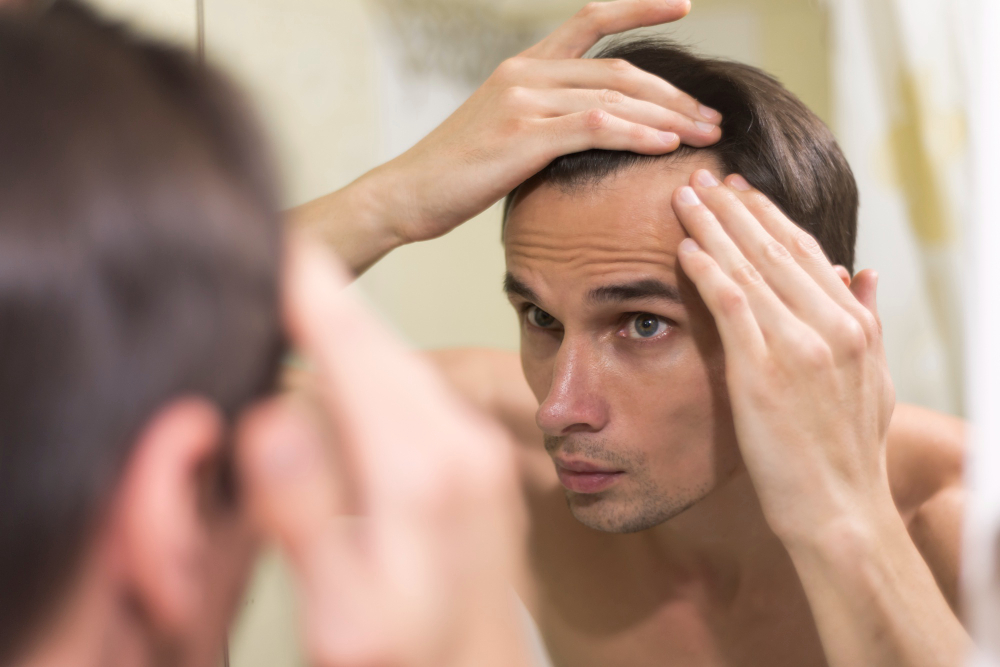
In men, androgenic alopecia follows a characteristic pattern known as male pattern baldness. This typically includes:
Over time, these changes may lead to partial or complete baldness on the top of the scalp.
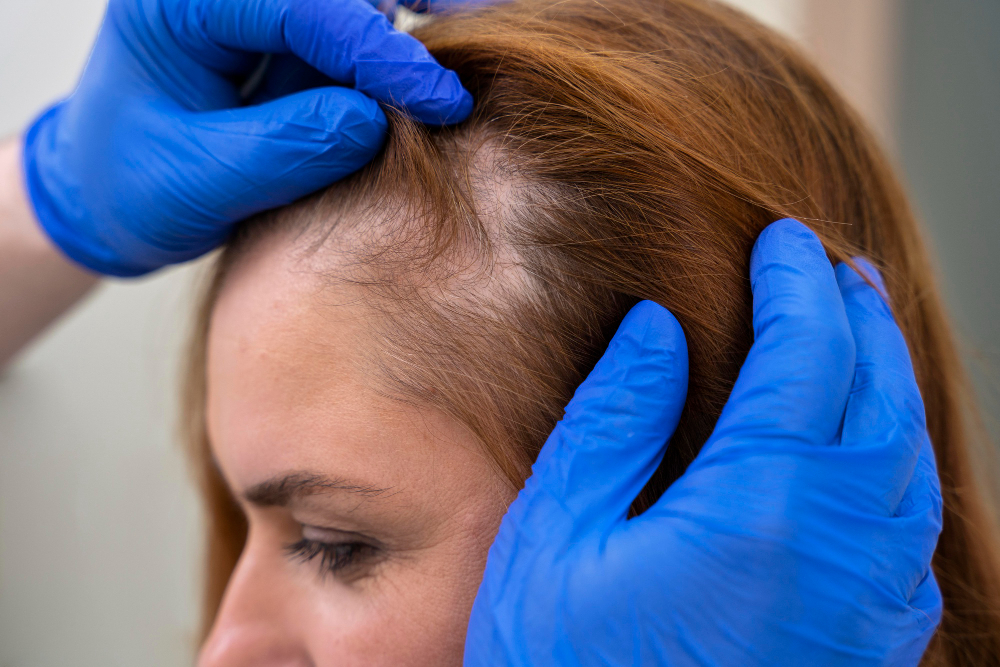
In women, hair loss tends to be more diffuse:
While women rarely develop complete baldness, the cosmetic and psychological impact can be significant.
Recognizing early symptoms allows for earlier intervention and better outcomes.
Common signs include:
These changes often occur gradually, making them easy to overlook in the early stages.
Not all hair loss is androgenic alopecia. Understanding the types of hair loss is critical for accurate diagnosis and appropriate treatment.
Telogen effluvium causes sudden, diffuse shedding triggered by stress, illness, or hormonal changes. Unlike androgenic alopecia, it is usually temporary.
Alopecia areata is an autoimmune condition characterized by patchy hair loss. It differs fundamentally in cause and treatment approach.
Correctly distinguishing these conditions ensures that medical treatments are applied appropriately.
Among all forms of hair loss, androgenic alopecia is the most prevalent due to:
Its chronic nature makes it a long-term condition requiring sustained management rather than short-term intervention.
Understanding the stages of androgenic alopecia is essential for selecting the most effective treatment options. The condition progresses in predictable patterns, though the speed and severity vary between individuals.
In men, androgenic alopecia is classified using the Norwood–Hamilton scale:
At early stages, medical intervention can significantly slow progression. In later stages, surgical approaches may be required.
In women, androgenic alopecia is typically categorized using the Ludwig scale:
Women rarely progress to complete baldness, but the aesthetic impact can still be profound.
Diagnosis is usually based on clinical evaluation, but accurate diagnosis is crucial to differentiate androgenic alopecia from other types of hair loss.
A dermatologist assesses:
These imaging techniques allow visualization of:
Blood tests may be ordered to exclude other causes of hair loss, especially in women. Conditions such as iron deficiency or thyroid disorders can contribute to shedding and may coexist with androgenic alopecia.
There is no definitive cure for androgenic alopecia, but multiple treatment options can slow progression, preserve existing hair, and improve appearance.
Medical treatments aim to target the underlying hormonal and biological mechanisms responsible for follicular miniaturization.
These treatments reduce the impact of dihydrotestosterone DHT on susceptible hair follicles by limiting its production or blocking its interaction with the androgen receptor.
Benefits include:
Topical solutions improve scalp circulation and prolong the growth phase of hair. They are most effective when started early and used consistently.
Modern hair loss management increasingly incorporates growth factors to stimulate follicular activity.
These therapies:
Platelet-rich plasma (PRP) therapy is one example, using the patient’s own blood-derived growth factors to promote hair regrowth.
While treatments are generally well tolerated, side effects must be considered.
Possible side effects include:
Most side effects are reversible when treatment is adjusted or discontinued, but medical supervision is strongly recommended.
For individuals with advanced hair loss or insufficient response to medical therapy, surgical restoration may be appropriate.
Hair follicles are harvested from donor areas resistant to DHT and implanted into balding regions. Once hairs transplanted, they typically retain their genetic resistance to androgenic alopecia.
Ideal candidates:
Hair transplantation does not stop future hair loss; it redistributes existing follicles.
Distinguishing androgenic alopecia from other forms of hair loss is essential for effective treatment.
Telogen effluvium causes diffuse shedding and is often triggered by stress or illness. Unlike androgenic alopecia, it is usually reversible.
Alopecia areata is an autoimmune condition characterized by sudden, patchy hair loss and requires a different therapeutic approach.
The treatment of male androgenic alopecia often includes:
Early intervention significantly improves long-term outcomes.
Women often require:
Androgenic alopecia is a chronic condition requiring ongoing management. Discontinuing therapy typically results in renewed hair loss.
Long-term success depends on:
Is androgenic alopecia permanent?
Yes, but progression can be slowed or stabilized with treatment.
Do hairs transplanted fall out?
Transplanted hairs are usually permanent, but surrounding native hair may continue to thin.
Can women develop male pattern baldness?
Women experience a different pattern, but the underlying mechanism is similar.
Androgenic alopecia is the most common type of hair loss, affecting millions of men and women globally. Driven by genetic predisposition, dihydrotestosterone DHT, and androgen receptor sensitivity, it leads to progressive follicular miniaturization and visible hair thinning.
dAlthough individuals may lose hair gradually, modern medical treatments, regenerative therapies using growth factors, and advanced surgical techniques offer effective solutions. When diagnosed early and managed properly, androgenic alopecia can be controlled, preserving both hair density and quality of life.


