




Beards and mustaches are a man's makeup. The importance of a beard for a distinctive facial line, a masculine stance, and an aesthetic image cannot be denied. However, due to genetic factors (“baldness”), traumatic scars, or hormonal reasons, you may not be able to achieve the beard of your dreams. Haarex Clinic, a reference point for beard transplantation in Antalya, works with a “zero margin of error” principle in facial aesthetics to give you a new identity.
Not Just Hair, an “Image” Design
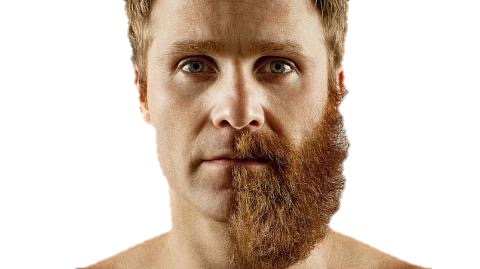
Hair loss is a process, but beard/mustache deficiency is usually a congenital condition or one that occurs from adolescence onwards. This condition can lead to a lack of self-confidence in men and a concern about appearing smaller (childish) than they actually are.
The Haarex Clinic Approach: We view beard transplantation not as a “hair transfer” but as a “Facial Contouring” procedure. The alignment of your cheekbones, the sharpness of your jawline, and the proportion of your mustache to your lips determine the golden ratio of your face. We rebuild this ratio.
⚠️ Critical Warning: Facial Skin Is Not Like Scalp Skin!
Facial skin is much thinner than scalp skin, has greater blood flow, and has different elasticity. A 1 mm error on the scalp can be coreved by hair, but a 1 mm error on the face, an incorrect angle, or pitting can result in a lifelong flaw on your face. This is why beard transplantation requires much more experience and precision than hair transplantation.
Why Should You Get a Beard and Mustache Transplant?
The reasons our patients come to our clinic generally fall into three main categories:
- Genetic Beardless or Sparseness: Beard hair not growing at all due to familial reasons, or growing unevenly in certain areas (e.g., empty cheeks, full chin).
- Hiding Scars and Burn Marks (Scar Camouflage): Covering up traffic accident scars, burns, surgical scars, or cleft lip (hare lip) scars on the face with a beard/mustache. This provides tremendous psychological relief to the individual.
- Aesthetic Shaping: For those who have a beard but it is unkempt, lacks a defined sideburn line, or who want to start their beard higher or lower.
Techniques Used: Customized Solutions with DHI and Sapphire FUE
At Haarex Clinic, we do not stick to a single method for beard and mustache transplantation. Each face has a different anatomy, skin structure, and beard density. Therefore, following a preliminary examination, our experts decide which of the Sapphire FUE or DHI (Pen) techniques (or a combination thereof) will give you the most natural result.
When is the Sapphire FUE Technique Preferred?
If there are large gaps in the beard area (such as complete beardless) and a high number of grafts need to be implanted, Sapphire FUE is ideal. Thanks to the micro-channels opened with real sapphire tips:
- Very dense channels can be opened without damaging the skin tissue.
- The required angles for the beard (15-20 degrees) are achieved flawlessly with sapphire tips.
- The healing process is much faster than with metal tips, and no scars remain.
When is the DHI (Choi Pen) Technique Preferred?
The DHI method eliminates the channel creation stage. Specifically:
- f thickening is to be performed by inserting hair between existing beard hairs,
- If only localized corrections are needed, such as for sideburns or mustaches,
- If the skin structure is very thin and prone to bleeding, the DHI (Pen) technique is our preferred choice.
Haarex Criterion: Regardless of the technique used, our only unchanging rule is "Correct Angle and Direction." Your beard hairs should not be upright but grow parallel to your face and in their natural flow.
How Many Grafts Are Needed for Beards and Mustaches?
Beard transplantation does not require thousands of grafts like hair transplantation, but strategic distribution is essential. The number of grafts needed varies depending on the width of the person's face and the desired density. Haarex Clinic's average values are as follows:
| Area | Description | Average Number of Grafts |
|---|---|---|
| Mustache (Full) | For full fullness above the lips. | 400 - 800 Grafts |
| Goatee | Combination of chin tip and mustache. | 1000 - 1500 Grafts |
| Sideburns | Side lines where hair and beard meet. |
500 - 800 Grafts |
| Full Beard |
Includes cheeks, chin, mustache, and neck.
|
2500 - 3500 Grafts |
| Scar Covering | Varies depending on the size of the scar. |
100 - 500 Grafts |
Design Phase: Mapping Your Face
Beard transplantation begins before the actual transplant. The most critical moment in the Antalya beard transplantation process is when your doctor picks up a pen and draws on your face.
Cheek Line
This determines facial expression. If it is too high, it makes the eyes look small; if it is too low, it makes the face look wide. The line running from the cheekbone to the lip is designed to be “curved” or “sharp/straight” according to the person's preference.
Neck Line
The most common mistake is finishing the neck line too high (at the jawbone). This looks unnatural (“double chin” appearance). A natural beard should curve around 1-2 cm above the Adam's apple.
Where is the Donor Area?
In beard and mustache transplantation, the donor area is again the hair at the back of the neck (between the two ears). However, there is a very subtle detail here: The finest hairs at the very bottom of the neck or above the ears are selected. This is because beard hairs are thick, but selecting the finest roots (single grafts) is vital for the transitions on the face to look natural.
Surgery Day: Comfort and Sensitivity in the Facial Area
The facial area is much richer in nerve endings than the scalp. For this reason, our patients are most concerned about whether it will hurt. At Haarex Clinic, the beard and mustache transplant procedure is as follows:
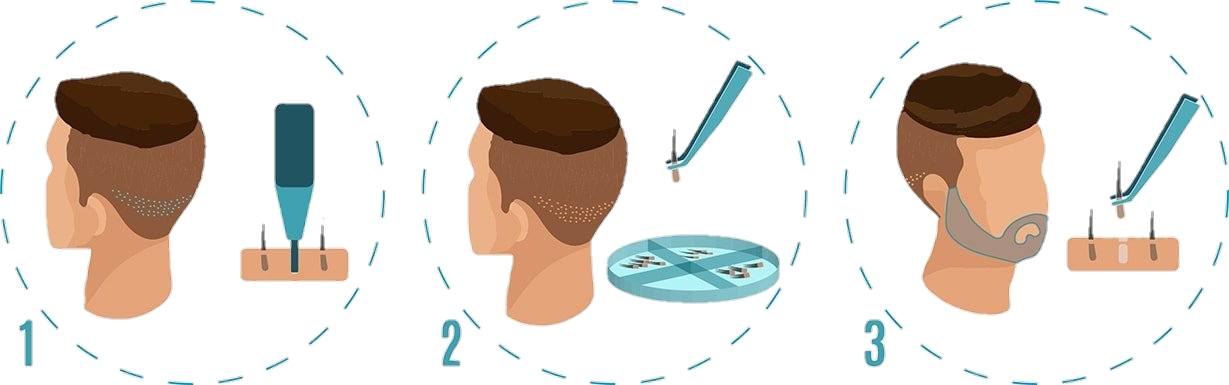
1. Anesthesia Protocol (Facial Specific)
Standard anesthesia applied to the scalp may be felt slightly more on the face. That is why we use “Gradual Anesthesia.”
Step 1: Twenty minutes before the procedure, strong anesthetic creams are applied to the area to be treated (cheeks, mustache) and the skin is numbed.
Step 2: Then, complete numbness is achieved using the “Nerve Block” technique or pressurized anesthesia. This minimizes the pain of the needle.
2. Transplantation Stage: Precise Application According to Technique
The transplantation stage proceeds in two ways according to the specified method:
- In the DHI Method: No channels are opened. Our doctor places the root, inserted into a special Choi pen, directly into the skin with a millisecond touch.
- In the Sapphire FUE Method: First, microscopic channels are opened with sapphire tips, then the grafts are placed into these channels.
In both methods, you are awake and can listen to music or chat (except for mustache transplantation, where lip movement should be restricted).
3. Duration
Although it varies depending on the number of grafts, beard transplantation takes an average of 4-6 hours. It is a shorter but more labor-intensive process than hair transplantation.
Recovery Timeline: From Red Spots to Thick Beards
Since the face is a difficult area to conceal, the recovery process affects social life. Here is what you will experience day by day:
Special Precautions for Those Undergoing Mustache Transplantation
The mustache area (upper lip) is the most mobile and most susceptible to infection area of the face (breathing and eating area). Therefore, extra rules apply to our patients undergoing mustache transplantation:
-
Eating: For the first 3 days, eating foods that require opening the lips wide (such as hamburgers, wraps, etc.) is prohibited. You should eat small bites using a fork and knife.
-
Drinking: It is recommended to use a straw for the first 3 days. This is important to prevent the mustache from getting wet and infected.
-
Facial Expression Control: Excessive smiling or yawning can cause the grafts to shift. We recommend maintaining a “poker face” (neutral expression) for the first few days.
When Should You Shave Your Transplanted Beard? (Golden Rules)
The most common mistake after beard transplantation is shaving too early. It takes time for the roots to fully attach to the skin (re-vascularization) and become stable.
Shaving Schedule
- First 15 Days: Shaving is STRICTLY prohibited. Do not even use scissors.
- 15 Days - 1 Month: Only trimming the ends with scissors is allowed.
- 1st Month - 6th Month: A clipper (with guard/comb) can be used. However, zero-number clippers that come into contact with the skin are not recommended.
- After the 6th Month: You can now shave with a razor. Your skin has completely healed.
How to Solve the Problem of the Difference Between Neck Hair and Beard Hair?
Our patients have a legitimate concern: “The hair on my neck is thin, but my beard hair is thick. Will it look patchy when transplanted?”
This is where Haarex Clinic's expertise comes into play.
Adaptation (Metaplasia): It is an interesting biological fact that after hair follicles are transplanted to the beard area, they adapt to the blood supply structure of the area after a period of time (approximately 1-2 years), thickening and taking on a beard-like appearance.
Mixed Transplant Strategy: If the patient has their own beard hair under the chin (in the chin area), we take the “real beard hair follicles” from there as the donor and transplant them to the cheeks. Where there is not enough, we take a supplement from the back of the head. This ensures 100% natural tissue compatibility.
Frequently Asked Questions About Beard and Mustache Transplantation
Do transplanted beards grow, or do they remain the same length?
The transplanted hair follicles are alive and carry the genetics of your scalp hair. This means that the transplanted beard hair will grow in the same way as your scalp hair. In fact, it may even grow faster than normal beard hair. Therefore, you will need to trim it regularly with scissors or a trimmer.
Will there be any scars on my face? When will the red spots go away?
Thanks to the micro-surgical methods (DHI and Sapphire FUE) used at Haarex Clinic, there will be no permanent scarring. Both techniques are tissue-friendly. The red spots (scabs) that form after the procedure will completely fall off within 10 days. The slight pinkish discoloration that follows will completely return to your skin tone within 2 weeks to 2 months, depending on your skin type.
Is only the sideburn area or chin tip grafting performed?
Yes, beard transplantation does not necessarily have to be performed on the entire face. “Regional Transplantation” is very common. Mini sessions of 500-1000 grafts are often performed to blend the sideburns, fill in a receding chin tip, or cover a scar.
Should I use beard serum or minoxidil after beard transplantation?
We do not recommend any chemicals for the first month after the operation. However, after the first month, using vitamin serums or minoxidil sprays recommended by your doctor to increase blood circulation and strengthen the quality of the roots can improve the result by 10-20%.
Will the skin color in the transplanted area darken?
There may be temporary darkening due to increased blood flow during the transplant, but it is not permanent. However, if you do not protect your face from the sun during the healing process (first month), there is a risk of discoloration. Therefore, using a high SPF sunscreen is essential.
A Characteristic Face, A Strong Expression
A lack of facial hair isn't your destiny. Achieve a naturally thick beard that perfectly matches your facial features with Antalya's most experienced team. Whether you're covering a small scar or designing a brand new beard look, you can achieve it.
That masculine expression you want to see when you look in the mirror is just a WhatsApp message away.
🧔 Free Beard Analysis and Design