

Chris Bumstead — multiple-time Mr. Olympia Classic Physique champion — is known for his elite conditioning, symmetry, and stage presence. In bodybuilding, aesthetics matter from head to toe. Over the years, fans have closely analyzed not only his physique but also his hairline.
Online discussions have increasingly asked:
Did Chris Bumstead get a hair transplant?
Has his hairline changed over time?
How much would such a procedure cost in 2026?
In this detailed guide, we break down the before-and-after comparisons, analyze visible hairline shifts, examine the most likely procedure used (if any), and estimate cost.
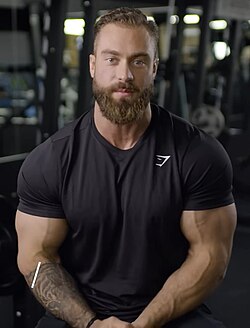
In early competition years, Chris Bumstead appeared to have:
Strong frontal density
Slightly high but natural hairline
Mild temple recession consistent with maturation
It’s important to note that many men in their 20s and 30s develop a mature hairline without progressing into advanced hair loss.
However, under harsh bodybuilding stage lighting, even subtle thinning becomes amplified.
In competitive bodybuilding, certain factors can influence hair:
Genetics (male pattern hair loss)
Hormonal fluctuations
Stress
Use of performance-enhancing substances
While not every bodybuilder experiences hair thinning, androgen sensitivity can accelerate temple recession in predisposed individuals.
This context makes hairline discussions around Chris Bumstead understandable.
When comparing earlier competition footage to more recent appearances:
Before
Mild temple thinning
Slightly uneven frontal corners
Light scalp visibility under stage lighting
After
Fuller temple areas
More symmetrical frontal outline
Stronger frame around facial structure
The change appears subtle rather than dramatic — which is consistent with conservative hairline refinement rather than aggressive reconstruction.
As of 2026, there is no official public confirmation from Chris Bumstead that he underwent a hair transplant.
However, visual comparisons suggest:
Stabilized temple recession
Increased frontal density
Improved corner reinforcement
If a procedure occurred, it was likely conservative and strategically planned.
If Chris Bumstead underwent surgery, the most probable technique would be:
Follicular Unit Extraction (FUE)
Why FUE?
No linear scar
Suitable for short hairstyles
Faster recovery
Natural placement of grafts
In FUE, individual follicular units are extracted from the donor area and implanted into thinning zones.
Because Bumstead often wears short-to-medium hairstyles, avoiding visible scarring would be essential.
Based on visible density changes:
1500–2500 grafts likely
Focused on temple reinforcement
Possible minor frontal thickening
There is no evidence of advanced crown reconstruction.
In bodybuilding, facial framing plays a significant role in stage presence.
A refined hairline:
Enhances facial symmetry
Improves overall aesthetic balance
Strengthens jawline perception
Contributes to youthful appearance
Even small adjustments in the frontal third can create noticeable visual improvement.
Alternative explanations include:
Longer hair styling
Strategic parting
Volume-enhancing products
Beard-to-hair contrast creating illusion of density
Under stage lighting, even subtle changes in grooming can dramatically alter appearance.
Without direct confirmation, styling evolution cannot be ruled out.
Modern FUE timeline:
Week 1–2 → Healing and scabbing
Month 1 → Temporary shedding
Month 3–4 → Early regrowth
Month 6 → Visible density
Month 12 → Final matured result
Professional athletes often schedule procedures during off-season to minimize public attention during recovery.
Estimated pricing depends on location.
🇺🇸 United States
$10,000 – $25,000+
🇨🇦 Canada
CAD $9,000 – $20,000
🇹🇷 Turkey
€2,500 – €6,000
Elite-level privacy, PRP add-ons, and premium surgeon fees may increase the total cost.
Transplanted hair from the donor area is resistant to DHT, meaning:
Permanent survival
Normal growth cycles
Natural blending with existing hair
However, native hair can continue thinning without preventative treatment.
Modern hair restoration is designed to be undetectable.
Successful procedures:
Avoid aggressive lowering
Maintain age-appropriate hairline
Use natural irregularity
Blend seamlessly
Chris Bumstead’s hairline appears balanced and natural — whether due to genetics, styling, medical treatment, or surgical refinement.
At this time:
Chris Bumstead has not officially confirmed undergoing a hair transplant.
Visual changes appear subtle and consistent with conservative refinement.
If surgical intervention occurred, it was likely FUE-based and density-focused.
There is no strong evidence of dramatic reconstruction.
The speculation surrounding Chris Bumstead’s hairline reflects the growing normalization of hair restoration among athletes and public figures.
Whether achieved through:
Styling evolution
Preventative treatments
Or surgical intervention
his current appearance aligns with modern aesthetic standards — balanced, natural, and proportionate.
In 2026, subtle hairline refinement is common, especially among image-conscious professionals. Chris Bumstead’s case demonstrates how even minor adjustments can significantly enhance overall facial harmony.


