

Few Hollywood stars have been under as much visual scrutiny as Chris Evans. From his early television roles to becoming Captain America in the Marvel franchise, chris evans hair has frequently been discussed online — particularly in relation to possible hair restoration.
Has Evans experienced hair loss? Did Evans get a hair transplant? And if so, what procedure might explain the transformation?
In this in-depth 2026 guide, we analyze the before and after evolution, the possible surgical techniques involved, expected hair transplant cost, and whether the results align with modern hair restoration methods.
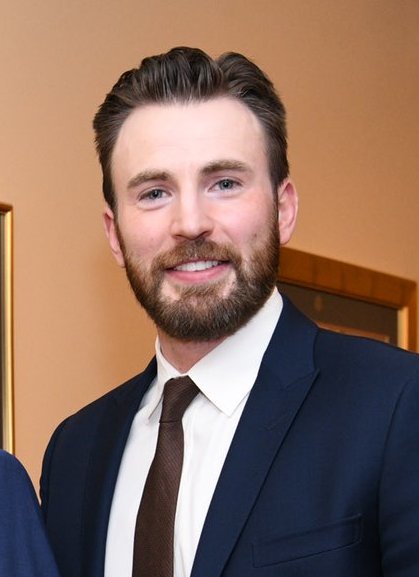
In his early acting years, Chris Evans appeared to have:
A strong, youthful hairline
Thick natural hair
High frontal hair density
However, as he entered his 30s, some red-carpet appearances suggested:
A slightly maturing hairline
Mild temple recession
Subtle thinning consistent with early male hair loss
This type of recession is extremely common and often linked to genetic sensitivity to DHT, the hormone responsible for progressive hair loss in men.
Comparing earlier and later photos:
Before
Mild temple recession
Slight thinning in certain lighting
Hairline appearing marginally higher
After
Restored frontal framing
Consistent thickness across the hairline
Fuller appearance resembling a full head of hair
The improvement appears subtle rather than dramatic — a key sign of natural-looking work.
There is no official confirmation that evans get a hair transplant. However, observers have noted:
Increased frontal hair density
Stronger temple structure
Consistent thickness in high-definition filming
If Evans underwent an evans hair transplant, it would likely have been conservative and focused on refinement rather than full reconstruction.
The most probable method used in celebrity cases today is follicular unit extraction (FUE).
Why FUE?
It offers minimal scarring
It avoids a linear strip scar
It allows harvesting of individual hair follicles
It provides natural placement and density control
During this hair transplant procedure, surgeons extract individual follicular units from the donor area and implant them into thinning zones.
Given Chris Evans’ short hairstyles in many roles, a technique with minimal scarring would be ideal.
Another method is follicular unit transplantation (FUT), also known as the strip method.
FUT:
Removes a strip of scalp
Leaves a linear scar
Can harvest large graft numbers
FUE:
Extracts grafts individually
No visible linear scar
Faster recovery
More common among celebrities
If Evans had a procedure, follicular unit extraction is more consistent with modern celebrity standards.
Based on visual analysis:
Likely 1500–2500 grafts
Focus on frontal reinforcement
Possibly temple refinement
Because Evans never appeared severely bald, the procedure would likely enhance natural hair rather than rebuild from scratch.
If a transplant occurred, the likely timeline would be:
Week 1–2:
Healing and scabbing
Month 1:
Temporary shedding of transplanted hairs
Month 3–4:
New growth begins
Month 6:
Noticeable improvement
Month 12:
Long lasting results fully visible
The consistent thickness seen in recent years suggests matured graft growth.
Actors depend heavily on image. For someone portraying superheroes and leading men:
A stable hairline frames the face
Higher hair density enhances on-camera presence
A full head of hair conveys youth and vitality
For Hollywood figures, subtle hair restoration is often part of long-term image management.
Celebrity procedures often involve elite surgeons and privacy services.
United States:
$8,000 – $20,000+
United Kingdom:
£6,000 – £15,000
Turkey (premium clinics):
€2,000 – €5,000
The hair transplant cost depends on:
Number of grafts
Surgeon reputation
Clinic technology
Location
High-profile individuals may pay significantly more for discretion.
Some argue that improved grooming, lighting, and styling could explain the difference.
While professional styling enhances volume, it cannot permanently reverse genetic hair loss.
Sustained improvements in hair density over multiple years typically suggest medical or surgical intervention rather than temporary cosmetic effects.
If a transplant occurred, the results appear:
Age-appropriate
Conservative
Harmonized with facial proportions
Consistent with natural hair growth patterns
The key hallmark of a successful procedure is invisibility — people notice improvement but cannot identify surgery.
Transplanted hair follicles are typically taken from the permanent donor zone at the back of the scalp.
These follicles are:
Genetically resistant to DHT
Less prone to thinning
Capable of producing hair for decades
This explains why well-performed procedures provide long lasting results.
Modern FUE ensures:
No linear scar
Tiny extraction marks
Rapid healing
Short hairstyle compatibility
Minimal scarring is crucial for actors who frequently change hairstyles for roles.
Some possibilities include:
PRP therapy
Finasteride
Minoxidil
Laser therapy
However, these treatments typically maintain existing hair rather than rebuild temple recession significantly.
Thus, if Evans experienced noticeable temple improvement, surgical intervention is more likely.
While there is no official confirmation of an evans hair transplant, visual evidence suggests:
Early mild hair loss
Subsequent density improvement
Natural-looking frontal restoration
Stable, full head of hair appearance
If Chris Evans underwent hair restoration, it was likely:
Conservative
Executed with follicular unit extraction
Focused on natural enhancement
Designed for minimal scarring
Built for long lasting results
The evolution of chris evans hair demonstrates what modern hair transplant procedures can achieve — subtle, refined, and natural improvements rather than dramatic transformations.
Whether or not Evans publicly confirms it, his case represents the new standard in celebrity hair restoration: precision, discretion, and natural aesthetics.
In 2026, advanced techniques like follicular unit extraction continue to redefine what is possible in combating male hair loss — delivering restored hair density and renewed confidence without obvious signs of surgery.


