

When considering a hair transplant, one of the most common and important questions patients ask is:
Should I choose FUE or DHI hair transplantation in Antalya?
Both methods are modern, effective, and widely used in hair restoration, yet they differ in technique, planning, and suitability depending on the patient’s hair loss pattern, expectations, and donor capacity. In this in-depth guide, we compare FUE hair transplant and DHI techniques step by step to help you understand which option is more sensible for you.
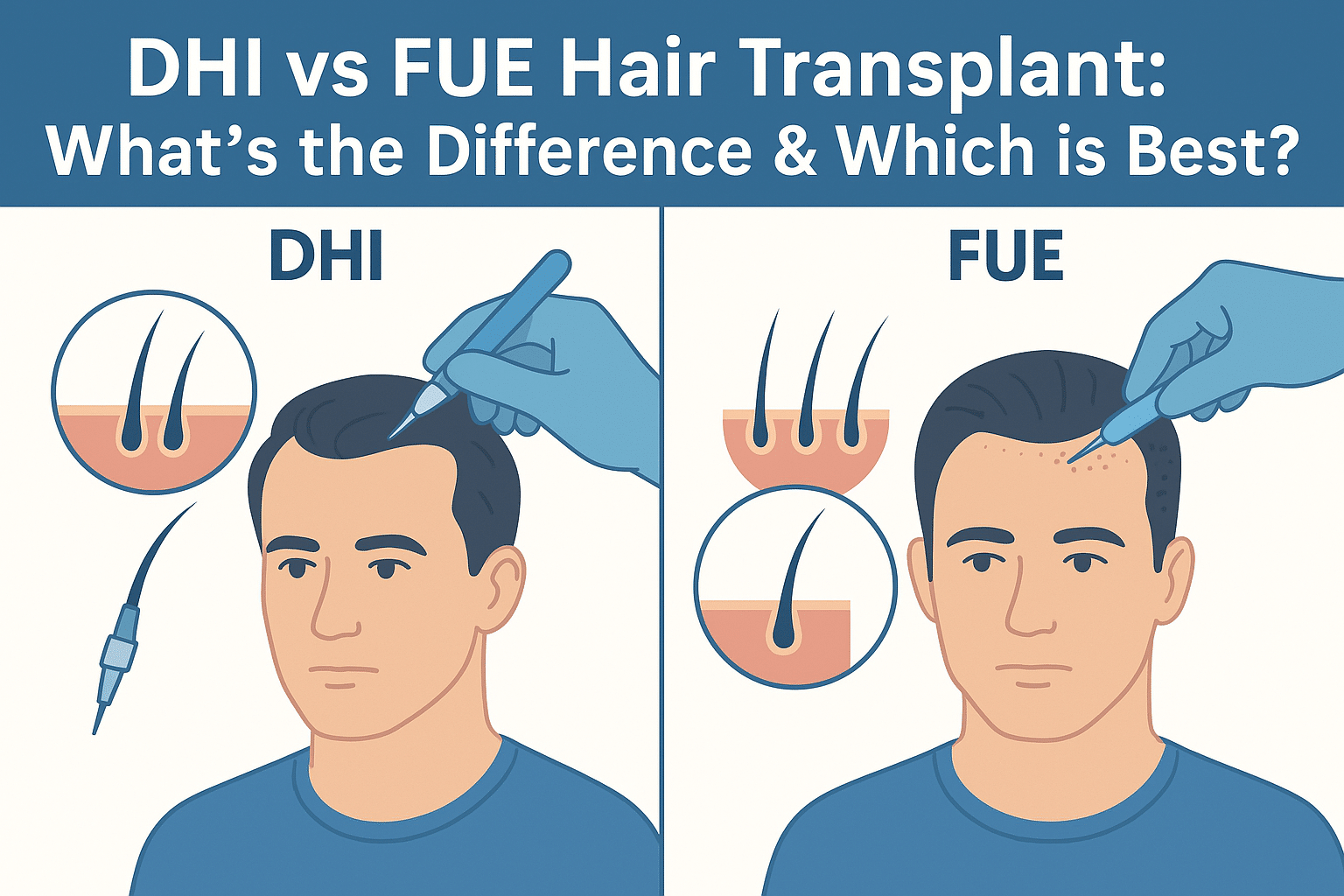
Modern hair transplantation is based on relocating healthy follicular units from the donor area (usually the back of the scalp) to thinning or bald areas. The difference between methods lies in how grafts are extracted and implanted.
Both FUE and DHI are advanced, minimally invasive hair transplant techniques that avoid the outdated strip method and its permanent linear scar.
FUE (Follicular Unit Extraction) involves:
extracting individual follicles from the donor area
creating micro-channels in the recipient area
placing grafts into these channels
In modern clinics, this is often enhanced with sapphire FUE, where sapphire blades are used instead of steel to create finer, more precise incisions.
Key Characteristics of the FUE Method
follicles are extracted from the donor individually
channels are opened before implantation
suitable for covering large bald areas
allows transplantation of a high number of grafts
DHI (Direct Hair Implantation) is a modified FUE-based approach. The difference lies in implantation.
With DHI:
follicles are extracted from the donor area
grafts are implanted directly using a special implanter pen
channel opening and implantation happen simultaneously
This makes DHI especially popular for smaller areas and precision work.
Both techniques use the same donor principle:
grafts are extracted from the donor one by one
no strip removal
no linear scar
When performed correctly:
neither FUE nor DHI should leave visible scars
donor density can be preserved
The condition of the donor area is far more important than the technique itself.
FUE Method
extraction and implantation are separate steps
channels are opened first
grafts are placed afterward
DHI Techniques
extraction and implantation are more continuous
grafts are implanted immediately after extraction
no pre-made channels
This difference directly affects recovery time, density planning, and suitability.
When it comes to hair growth, there is no inherent winner.
Important facts:
transplanted follicles behave the same biologically
growth timeline is similar for both methods
final density depends on planning, not technique
In both FUE and DHI:
initial shedding occurs
visible hair growth starts after 3–4 months
final results appear after 9–12 months
The hair transplant procedure itself does not change the genetic behavior of the grafts.
This is a critical point.
FUE hair transplant is better suited for a high number of grafts
DHI is usually preferred for moderate graft counts
For patients with:
advanced hair loss
large bald areas
need for extensive coverage
➡️ FUE is generally the more sensible choice.
DHI has advantages in:
hairline refinement
dense packing in small zones
working between existing hairs
That’s why DHI is often chosen for:
frontal hairline design
temples
touch-up procedures
For smaller areas, DHI techniques can offer excellent control.
Both methods are minimally invasive, but there are subtle differences.
FUE Recovery
slightly longer healing due to channel openings
small scabs form in recipient area
full recovery within days
DHI Recovery
sometimes slightly longer swelling due to direct implantation
fewer visible channels
similar overall downtime
In real-world practice, recovery time is comparable when performed correctly.
Neither modern FUE nor DHI should cause:
a linear scar
obvious marks
However:
overharvesting can cause donor thinning
poor technique can lead to visible scars
The surgeon’s experience is more important than the method itself.
Sapphire FUE uses sapphire blades to:
create smaller, cleaner incisions
reduce tissue trauma
support faster healing
This has made sapphire FUE particularly popular in Hair Transplant in Antalya, where large sessions and natural hairlines are commonly planned.
Choose FUE hair transplant if you:
need a high number of grafts
have extensive hair loss
want maximum coverage
are suitable for sapphire FUE
Choose DHI techniques if you:
need work in smaller areas
want precise density
already have existing hair
prefer direct implantation
The most sensible method depends on:
hair loss pattern
donor capacity
hair thickness
expectations
long-term planning
That’s why reputable clinics offering Hair Transplant in Antalya always recommend an individualized assessment rather than a “one method for everyone” approach.
Myth: DHI always gives better density
Reality: Density depends on planning and graft quality
Myth: FUE leaves visible scars
Reality: Only poor technique causes visible scars
Myth: One method has better hair growth
Reality: Growth is biologically identical
👉 Neither FUE nor DHI is universally better.
👉 FUE is more sensible for large-scale restoration.
👉 DHI is more sensible for precision and smaller areas.
The real key to success is:
proper diagnosis
ethical graft planning
experienced surgical team
When done correctly, both methods deliver natural, permanent results.
Choosing between FUE and DHI should never be about trends or marketing. It should be about what your scalp actually needs.
In the hands of experienced specialists, both techniques represent the gold standard of modern hair restoration—especially when performed as part of a personalized plan in Antalya.


