

Reaching the 6-month mark after a hair transplant is an exciting milestone. For many patients, this is when real change becomes visible. The early healing phase is over, shedding has stopped, and transplanted hair is actively entering its growth phase. But is 6 months the final stage? Or is there still more improvement ahead?
In this detailed 3000-word guide, we’ll explain:
What happens biologically at 6 months
How the hair growth cycle affects outcomes
What kind of hair transplant results are realistic at this stage
Why some patients see faster growth than others
What to expect between 6 and 12 months post
Long-term outlook and final result timeline
If you're currently at the 6-month stage — or approaching it — this guide will help you understand exactly where you stand.
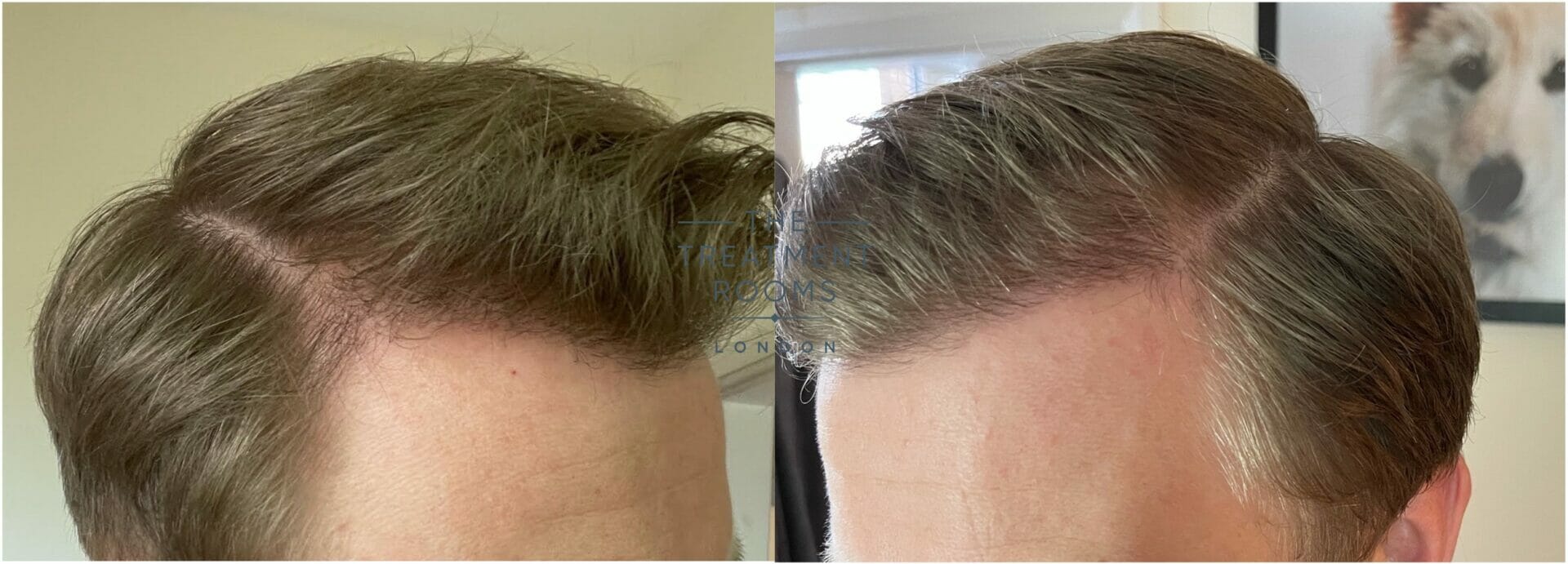
To understand results at 6 months, it’s important to review what happened earlier.
Month 0–1 (Immediate Post-Op)
Grafts are implanted in the recipient area
Scabs form and fall off
The donor area begins healing
Transplanted hairs shed within 2–4 weeks
Shedding is normal and expected. It does not mean failure.
Month 2–3
Dormant phase
Little visible growth
Some patients experience shock loss of nearby existing hair
Month 3–4
Early regrowth begins
Fine, thin hairs sprout
Density still appears low
Month 4–5
More consistent hair growth
Texture may feel soft or wiry
Coverage slowly improves
By the time you reach 6 months, the real transformation begins.
At 6 months post op, most patients experience:
50–60% of final density
Clear visible improvement
Ongoing thickening of transplanted follicles
Stronger texture development
This stage is often when patients first feel confident about their decision.
However, it is not yet the final result.
The transplanted follicles follow the natural growth cycle of hair:
Anagen Phase (Growth Phase)
Active hair growth
Lasts several years
Catagen Phase (Transition Phase)
Short resting transition
Telogen Phase (Resting Phase)
Hair sheds before restarting
After transplant surgery, grafts temporarily enter a resting phase before restarting growth.
By month 6, most transplanted follicles have re-entered the anagen phase.
That is why noticeable improvement occurs during this period.
At this stage, patients usually see:
✔ Defined hairline shape
✔ Filling of previously thinning hair zones
✔ Increased mid-scalp coverage
✔ Less visible scalp
✔ Reduced appearance of baldness
However:
Density may still appear lighter than expected
Hair shaft thickness is not fully developed
Crown growth may lag behind frontal growth
Crown areas often take longer due to blood flow patterns.
Even though hairs sprout and coverage improves, the transplanted hair continues maturing beyond 6 months.
Between month 6 and month 9:
Hair thickens
Shaft diameter increases
Curl and texture normalize
Density becomes fuller
True full results are usually visible between 12–15 months.
Let’s compare:
6 Months
50–60% density
Visible growth
Hair may appear fine
Good progress
9 Months
70–80% density
Thicker hair
Better styling options
12 Months Post
Maximum density
Fully matured hair shafts
Natural blending with existing hair
Final result
Patients often notice dramatic improvement between months 6 and 12.
Some patients worry if growth appears slower at month 6.
Factors influencing speed include:
Age
Genetics
Extent of prior hair loss
Blood circulation
Scalp condition
Smoking habits
Medical history
Growth timelines vary individually.
Even at 6 months, some patients may only have 40–50% visible density.
This can still be completely normal.
Some patients experience shock loss of existing hair after surgery.
Shock loss may:
Thin surrounding hair
Temporarily reduce density
Cause concern early on
In most cases:
Existing hair regrows within 3–6 months
Density stabilizes by month 6–9
If thinning hair was already weak before surgery, shock loss may expose underlying hair loss progression.
By month 6:
The donor area should be fully healed
No visible scabs remain
Redness should be resolved
Extraction points are barely noticeable
In FUE procedures, dot scars fade significantly over time.
Donor density should appear balanced if harvesting was performed correctly.
Yes.
At 6 months:
You can style normally
You can cut hair as desired
Hair products are safe
Blow-drying is allowed
Transplanted follicles are permanently anchored at this stage.
To maximize long term results:
Follow medical advice
Maintain scalp health
Consider PRP if recommended
Protect against further hair loss
Use prescribed medications if advised
Hair transplant surgery restores transplanted follicles, but it does not stop genetic hair loss in non-transplanted areas.
Protecting existing hair is important.
If surrounding areas show thinning hair:
It may be natural progression
It may require medical therapy
It does not mean transplant failure
Remember:
Hair restoration surgery improves transplanted zones but does not freeze time.
Many patients feel:
Relief
Renewed confidence
Visible transformation
Motivation
This is typically when friends and family begin noticing improvement.
The psychological impact is often significant.
“Is this my final density?”
No — you still have 6 more months of improvement.
“Why is crown slower?”
Crown hair grows slower due to blood flow patterns.
“Why is hair still thin?”
Thickness improves between month 6 and 12.
“Can I see full results earlier?”
Some patients with fast growth cycles see near-complete results at month 9.
After 12 months post:
Transplanted hair behaves like natural hair
It can be cut, dyed, styled
It grows permanently
It follows normal growth cycle
The final result is typically evaluated at 12–15 months.
In some crown cases, full maturation may take 16–18 months.
You should see:
✔ Clear hairline formation
✔ Consistent hair sprouting
✔ Reduced scalp visibility
✔ No infection or complications
✔ Stable donor area
If these markers are present, your transplant is progressing normally.
Seek advice if:
No growth at all by month 6
Persistent redness
Pain or swelling
Patchy dead zones
True graft failure is rare but should be evaluated early.
Transplanted hair has re-entered its active growth phase.
Hair growth is clearly visible.
Hair transplant results are emerging.
But remember:
The journey is not complete.
Between month 6 and 12 months post, density increases, hair thickens, and full results become evident.
Patience remains essential — but if you are seeing noticeable improvement at this stage, you are right on track.


