Hair Transplant Antalya
Hair Transplant Antalya at Haarex Clinic is planned as a complete hair restoration journey: online assessment, donor area analysis, natural hairline design, suitable technique selection, operation-day planning, first-wash guidance and long-term follow-up. Your plan is shaped around your hair loss pattern, hair shaft characteristics, facial proportions, crown condition and realistic density goals—not around a standard package applied to everyone.
The objective is to use the donor area responsibly while creating a natural transition in the frontal hairline, balanced fullness through the mid-scalp and direction-aware planning in the crown. Depending on clinical suitability, Sapphire FUE, DHI or selected unshaven hair transplant options may be considered.
Hair Transplant Antalya: Key Bilgi Before You Decide
Use this overview to understand the process quickly. Exact graft needs, operation duration, travel schedule and package scope are confirmed only after a personalized assessment.
Why Do International Patients Consider Antalya for Hair Transplantation?
Antalya combines international transport connections, a wide range of accommodation options and a calm coastal setting with access to organized medical tourism services. For patients travelling from abroad, the practical question is not only where the procedure takes place, but how consultation, arrival, operation scheduling, first-wash planning and return-home guidance are coordinated.
Haarex Clinic supports international patients with clear pre-arrival communication, consultation planning, operation scheduling and guidance for accommodation, transfer and aftercare arrangements. The exact services included are stated in the patient’s personalized offer rather than assumed as a standard package.
A Personalized Plan Before a Technique or Graft Number Is Recommended
Haarex Clinic’s approach begins with the patient’s real starting point: hair loss pattern, donor capacity, existing hair, hair shaft thickness, facial proportions, crown involvement and future hair loss risk. Technique selection follows this analysis.
Read the Haarex Clinic approachHair Transplant Antalya Videos: Patient Experiences and Procedure Details
Watch real video content from the Haarex Clinic journey before reviewing the documented before-and-after cases below. Every video starts automatically without sound. The native player controls remain available, so visitors can turn the sound on whenever they choose.
International Patient Hair Restoration Journey
A real patient-focused video supporting the consultation, clinic experience and hair restoration journey.
Selected Hair Transplant Procedure Stages
Visual support showing how planning and selected clinical stages connect during the procedure.
A Short Hair Restoration Experience
The vertical video starts automatically in silent mode and can be unmuted through the player controls.
Planning, Procedure and Patient Experience
Additional video context for visitors who want to understand the journey before requesting an assessment.
Before and After Hair Transplant Results at Haarex Clinic
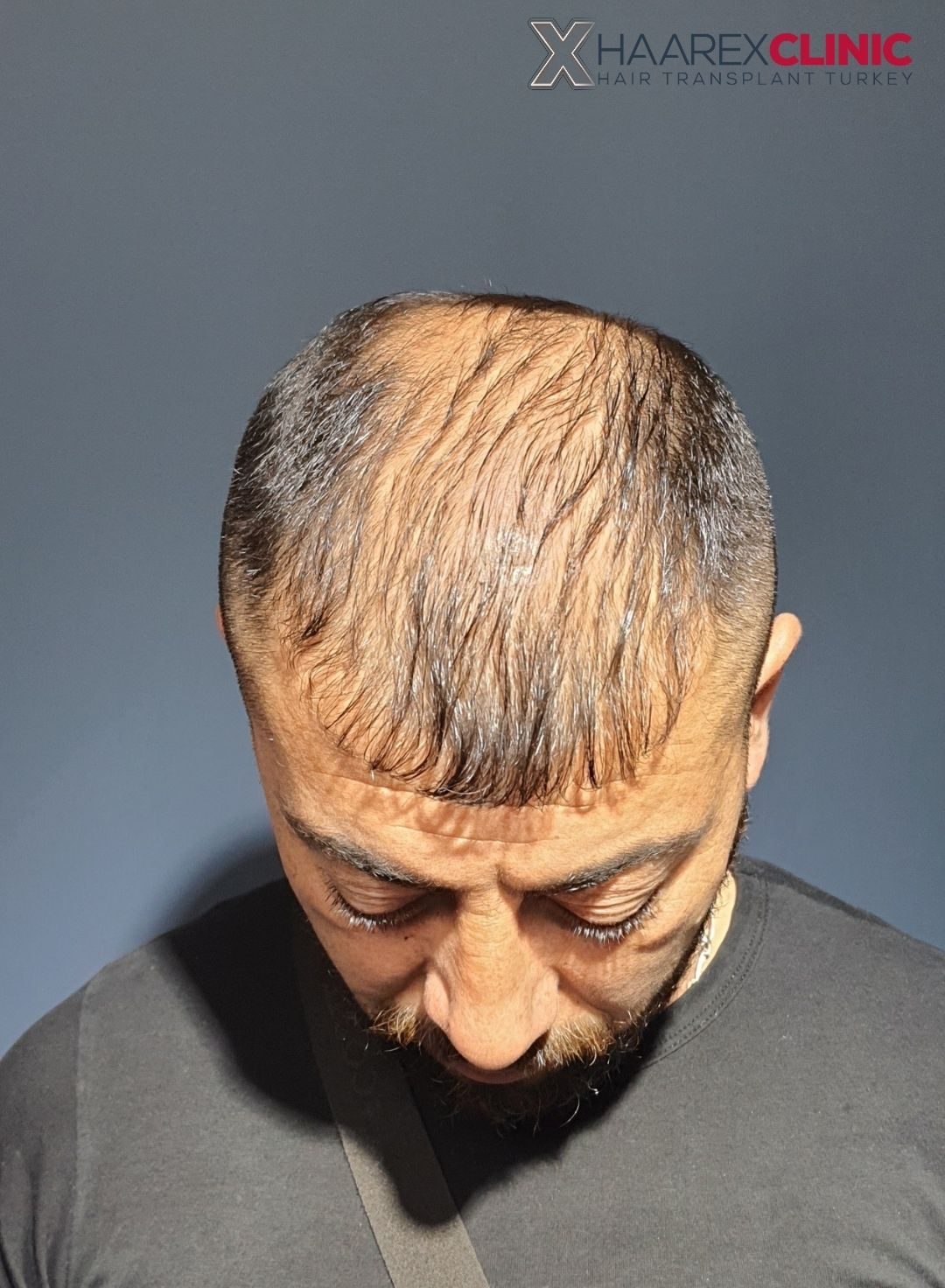
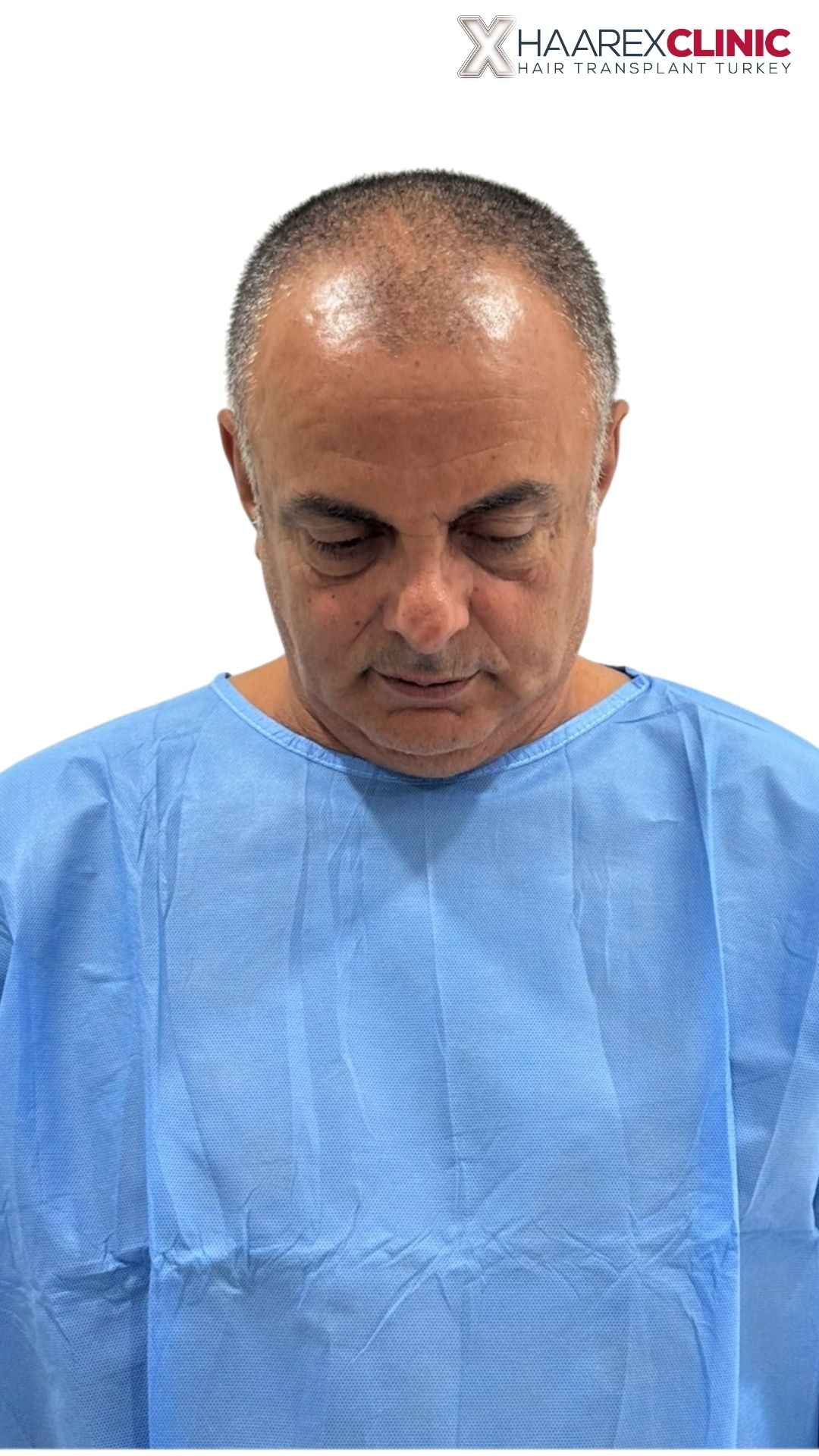
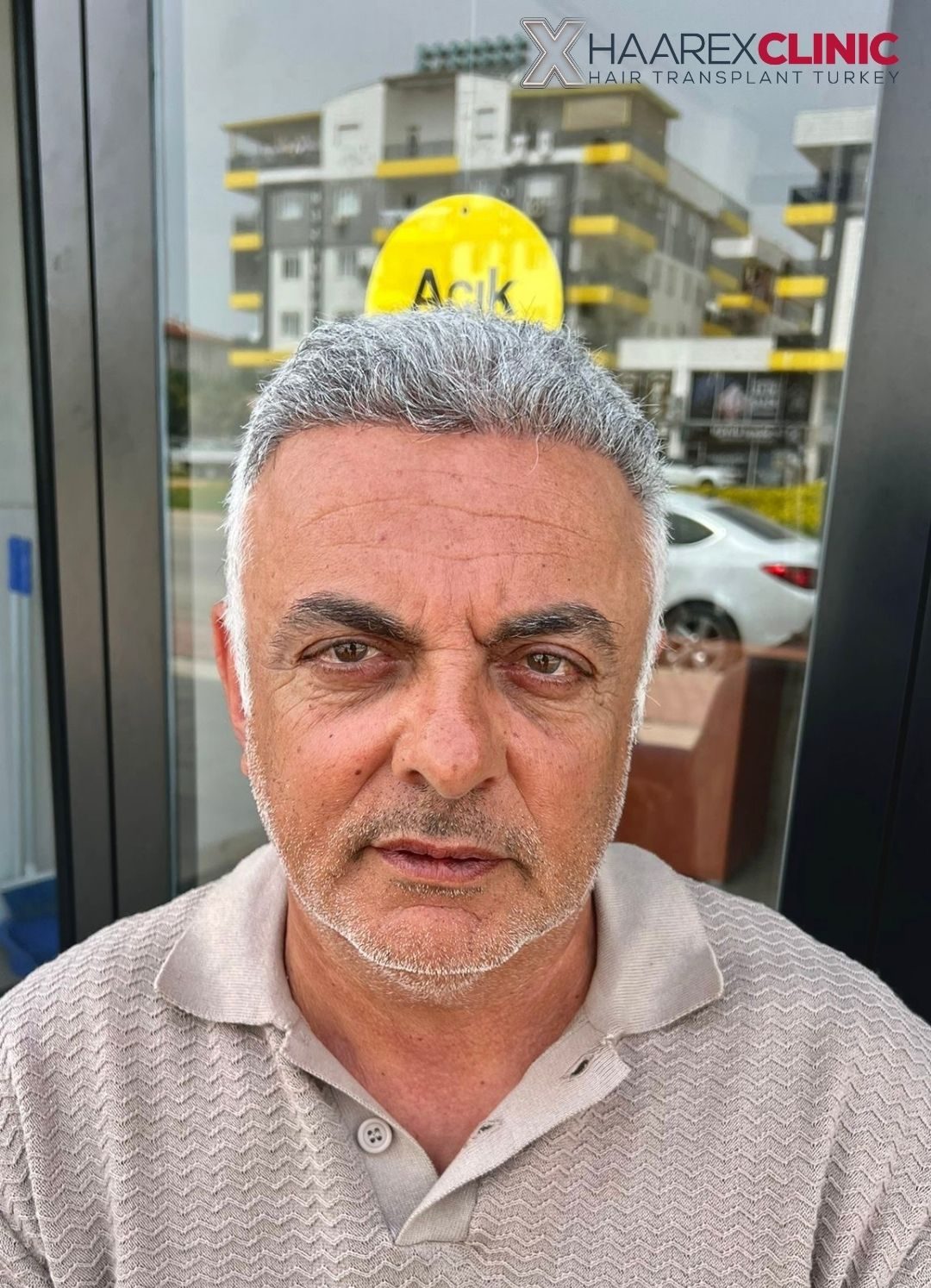
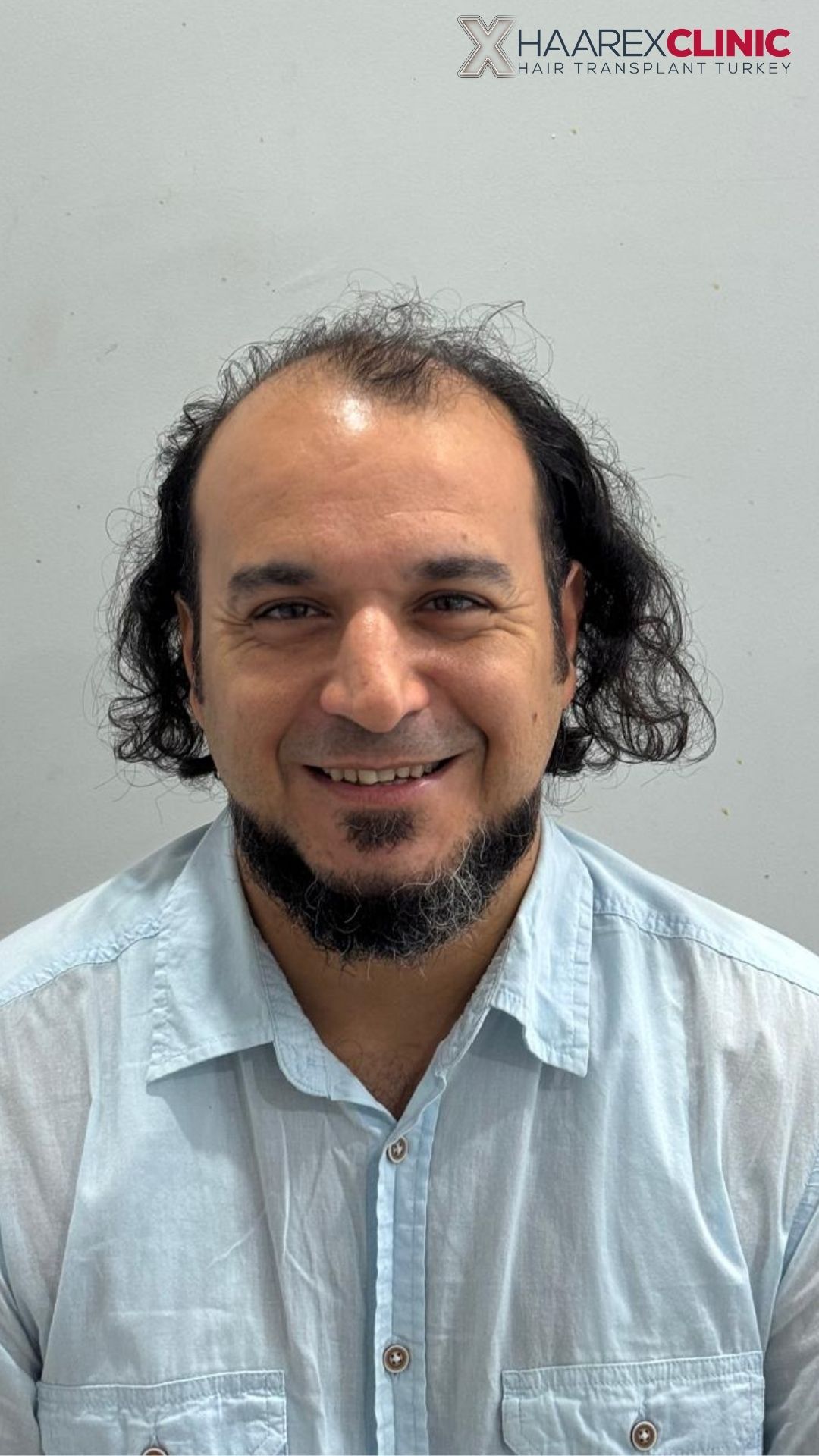
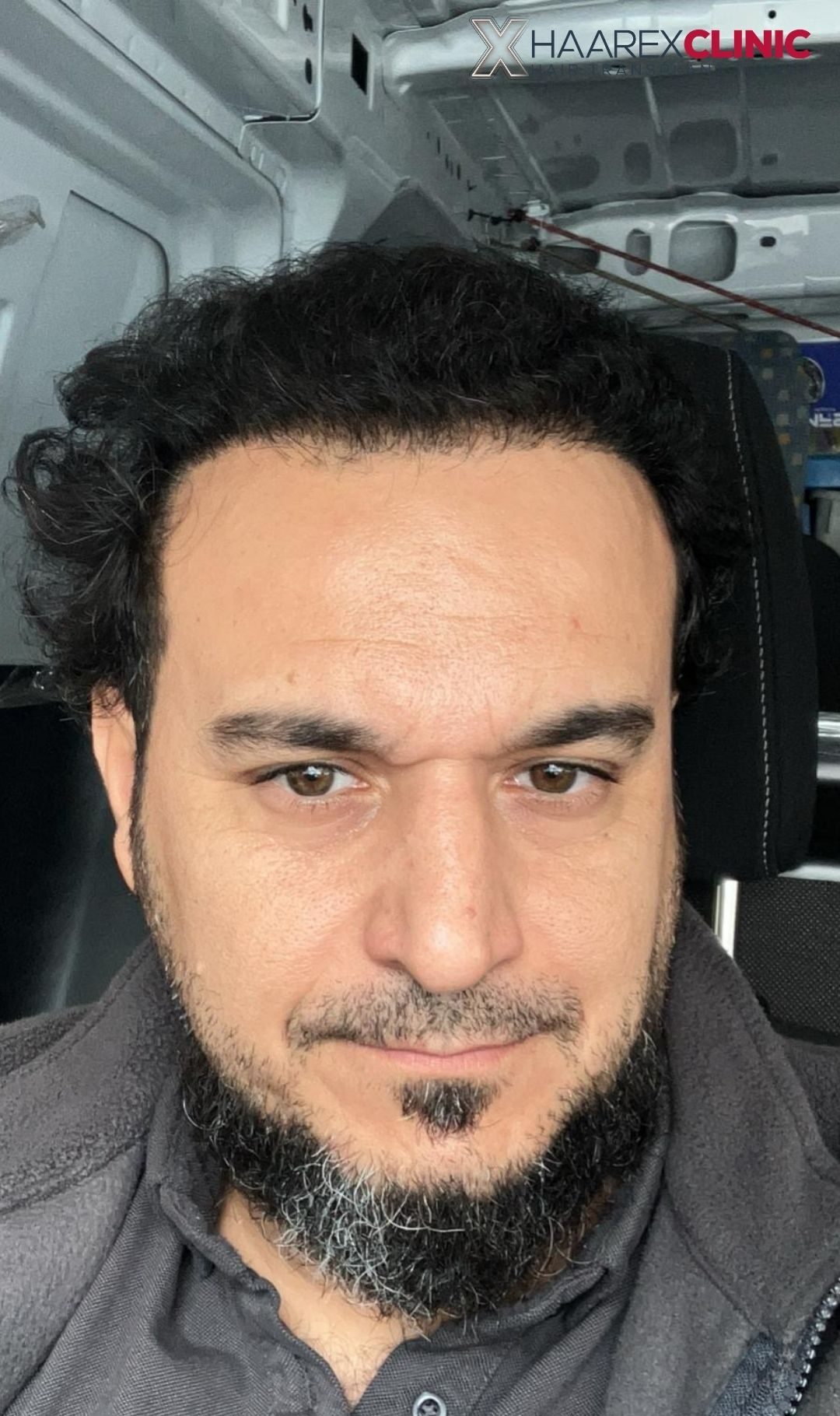
Use the sliders to compare each patient’s starting point with the visible result. Hair transplant outcomes vary according to donor capacity, hair characteristics, treated area, graft distribution, healing response and result month. These images should be reviewed as individual examples rather than a guarantee of the same result.
 Before
After
Before
After
Frontal and Mid-Scalp Restoration
Compare the visible change in frontal framing and coverage while keeping in mind that density perception is influenced by hair thickness, styling, lighting and the result period.
 Before
After
Before
After
Hairline and Density Transformation
The comparison supports a more realistic evaluation of hairline position, frontal transition and the visible density effect created through personalized graft distribution.
 Before
After
Before
After
Personalized Coverage Planning
This case illustrates why the starting pattern, safe donor capacity and priority zones should be evaluated together rather than judging success only by a quoted graft number.
Additional Hair Transplant Antalya Result Images
These additional result visuals are presented as single documented before-and-after compositions without a slider. They help visitors review more examples quickly and compare different hair loss patterns, coverage needs, hairline designs and visible density outcomes.
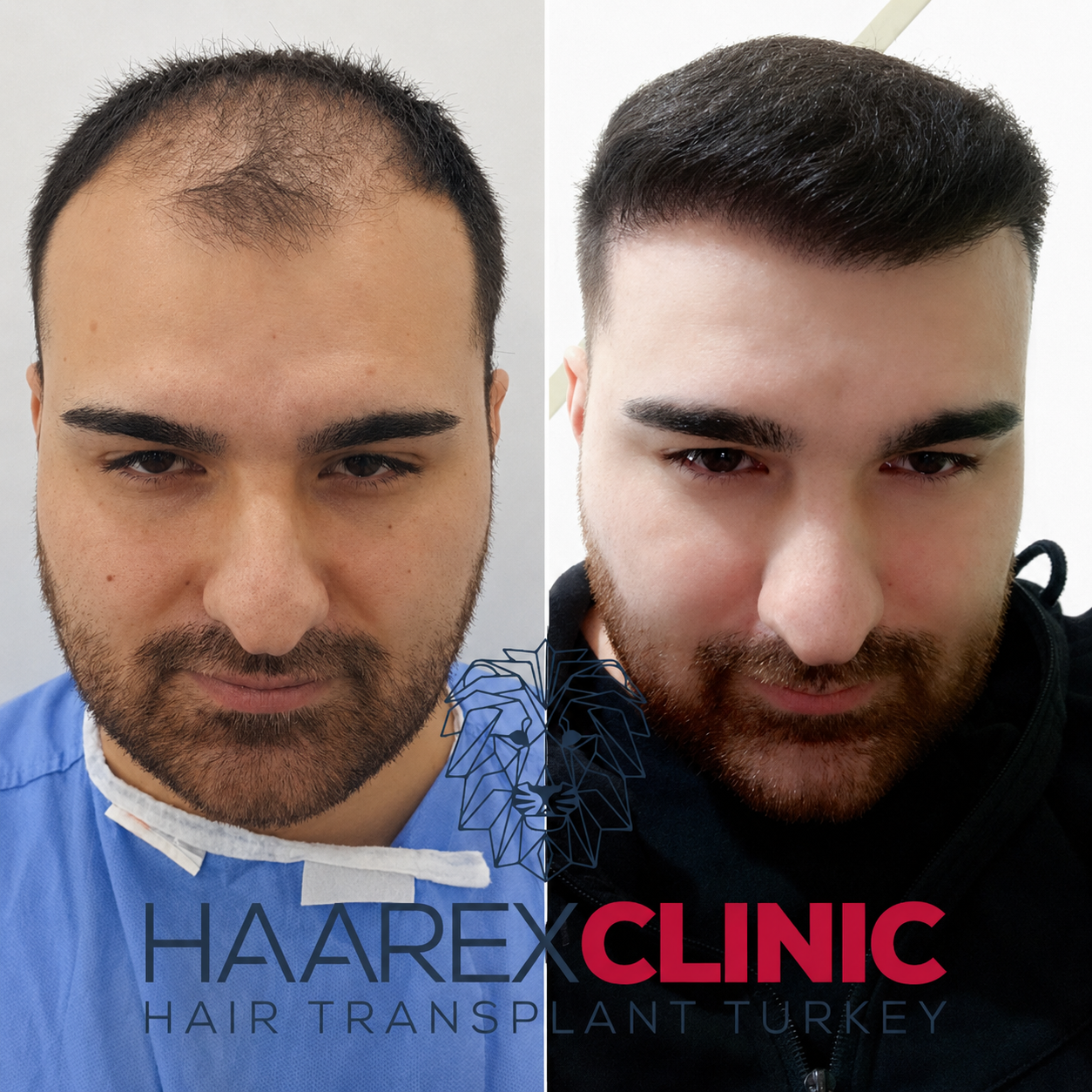 Before & After
Natural Hairline and Frontal Frame
A direct result image showing visible frontal restoration, a stronger frame around the face and a more balanced overall appearance.
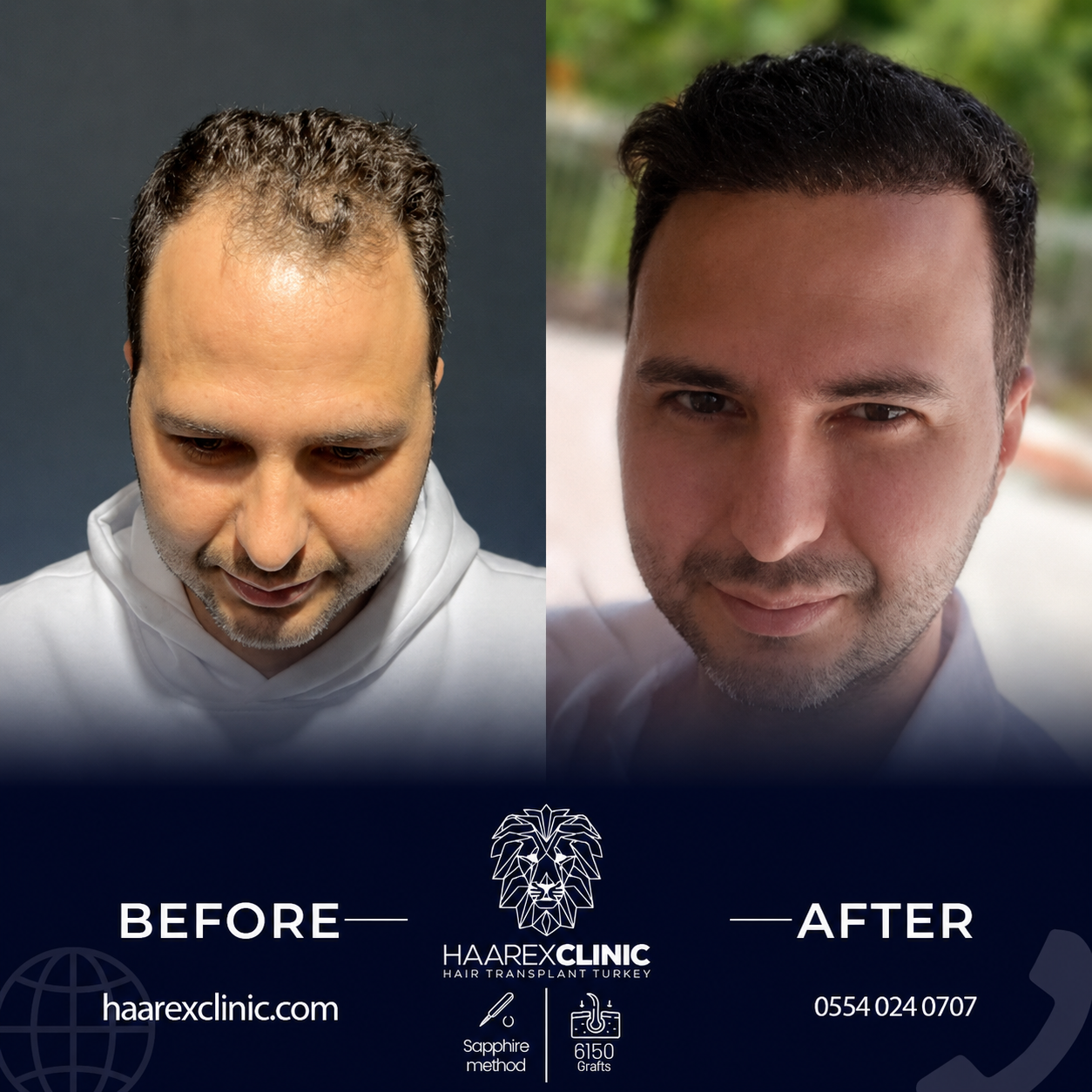 Before & After
Frontal Density Improvement
This example supports a quick comparison of starting openness, recipient area planning and the visible change achieved in the frontal zone.
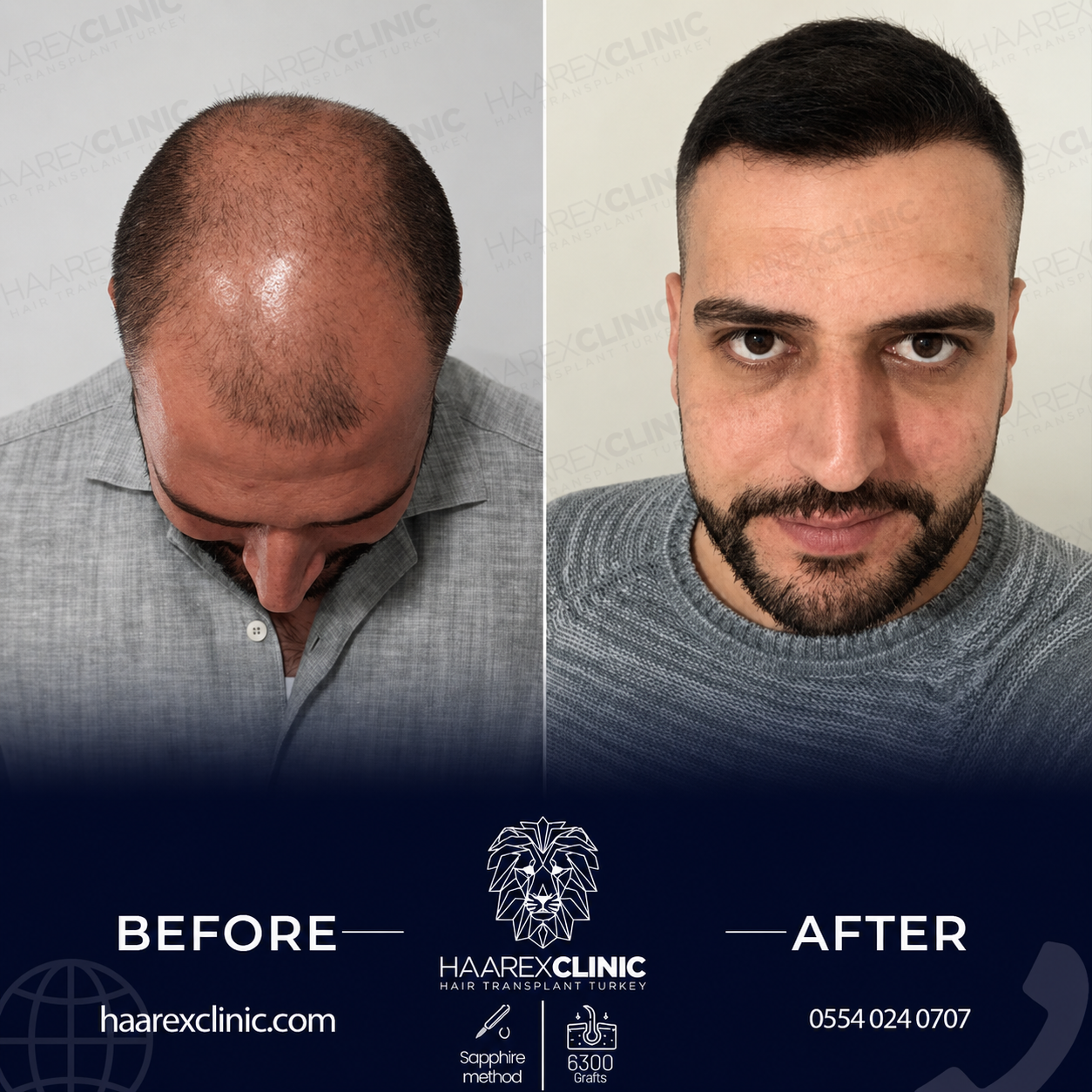 Before & After
Coverage and Hairline Balance
A useful visual for visitors who want to review how hairline design and density distribution work together in a documented result image.
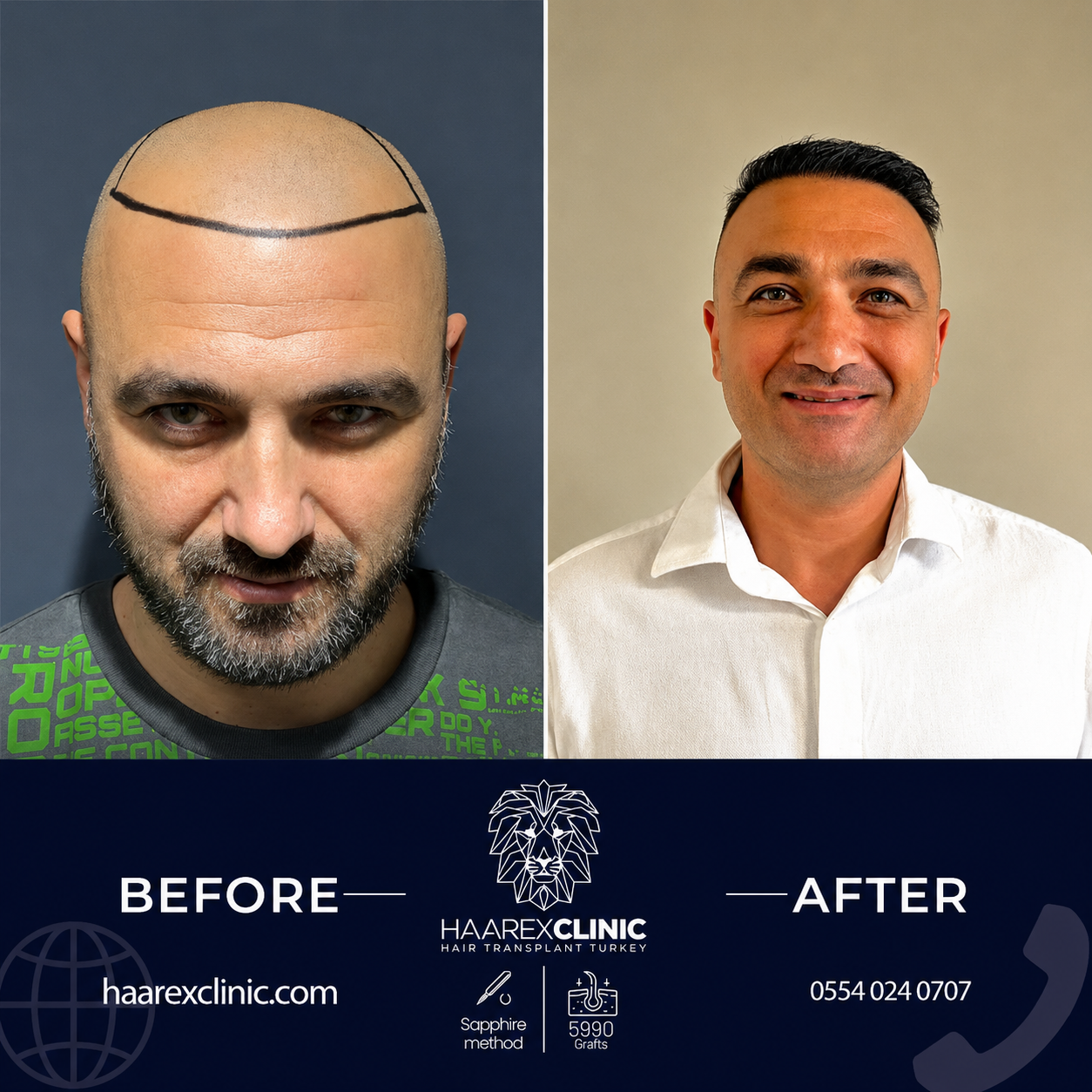 Before & After
Personalized Restoration Example
This result image adds more context for visitors comparing donor capacity, treated area priorities and overall aesthetic improvement.
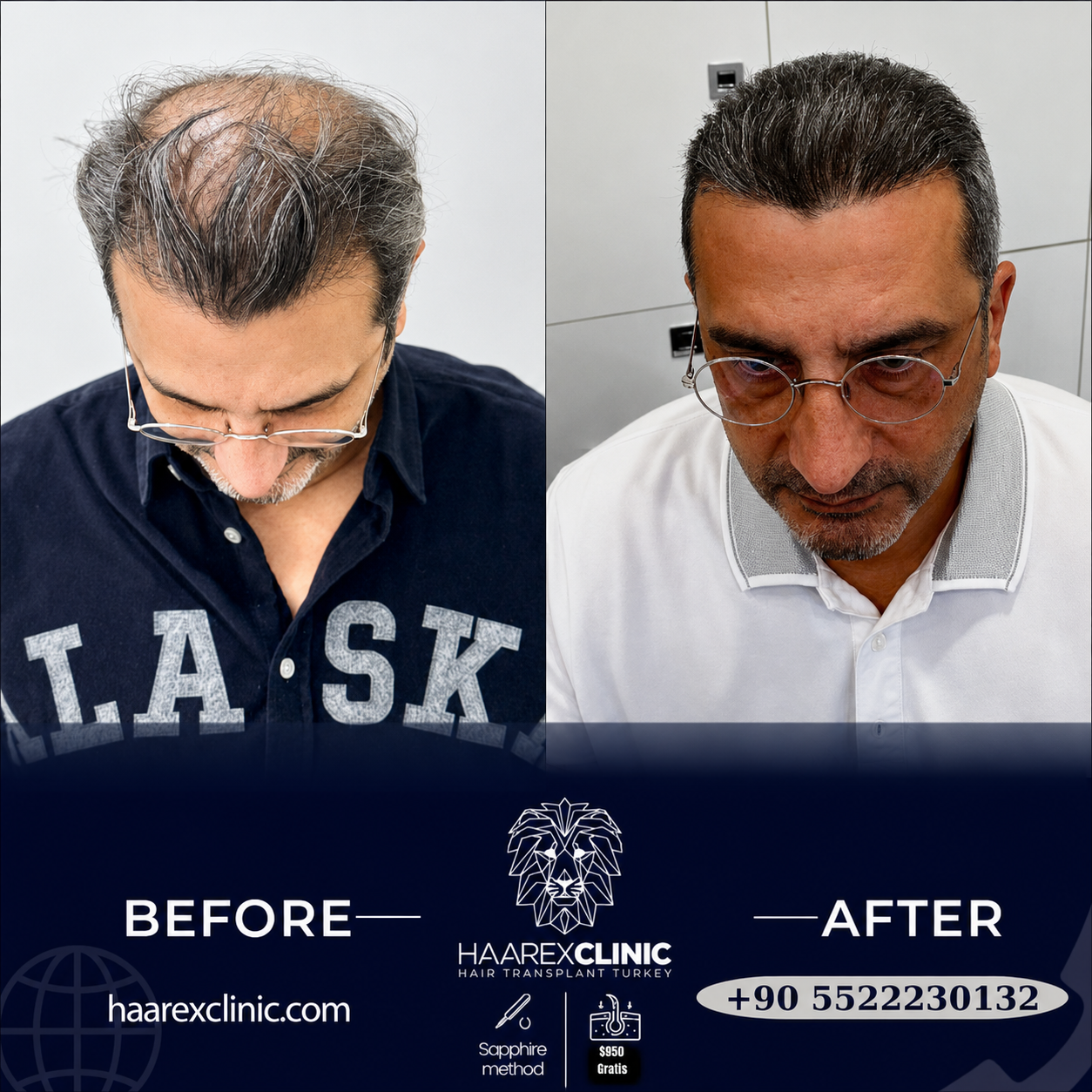 Before & After
Real Hair Restoration Result
Another flat before-and-after visual that helps strengthen result diversity on the page and gives users more examples to review.
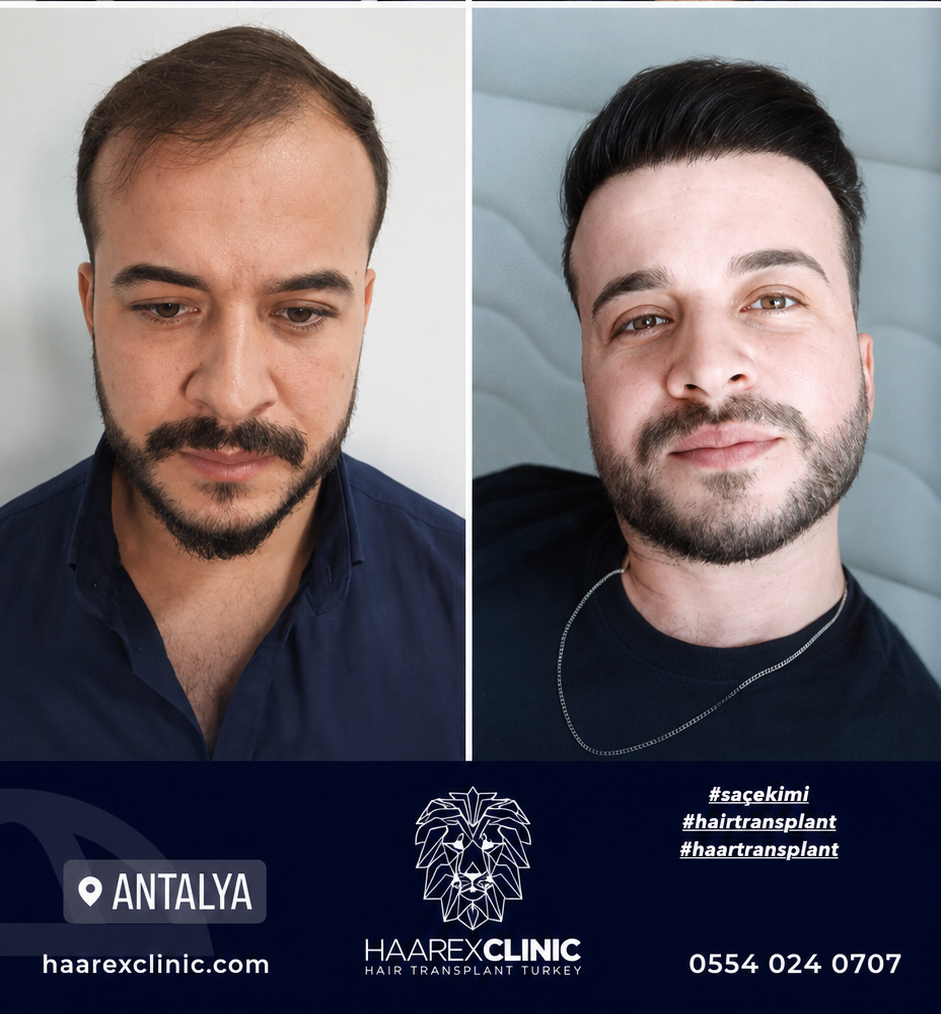 Before & After
Additional Documented Hair Transplant Result
This sixth single-image comparison expands the result gallery and gives visitors another documented example of hairline, coverage and visible density change.
Real Patient Experiences from Haarex Clinic Antalya
Read patient feedback from people who experienced hair transplant planning, treatment and follow-up care with Haarex Clinic in Antalya.
Patient names are presented as privacy-friendly display names while preserving the shared treatment experience.
What Is Hair Transplant Antalya?
Hair Transplant Antalya is a surgical hair restoration procedure planned for patients with genetic hair loss, a receding hairline, crown thinning, diffuse thinning, localized loss after trauma or a need for additional density after a previous hair transplant. Healthy hair follicles are usually taken from the nape and side donor areas and placed into the recipient area according to the natural hair growth direction, density needs and aesthetic goals. When choosing the method, Sapphire FUE and DHI hair transplant options can be compared according to the patient’s hair structure.
In modern hair transplant planning, the basic unit is the follicular unit. A follicular unit may contain one, two, three or more hair shafts. Therefore, graft count and hair count are not the same thing. Single grafts are valuable for a natural transition along the frontal hairline, while double and multiple grafts can be used strategically behind the line to increase visual density.
The success of a hair transplant depends on graft viability, atraumatic extraction from the donor area, correct channel depth and direction, controlled graft waiting time, preserved blood supply in the recipient area and adherence to aftercare instructions. For this reason, assessment should not be reduced to the question of “how many grafts will be implanted?” The real planning is about which grafts will be placed in which area, at which angle, at what density and with which long-term goal.
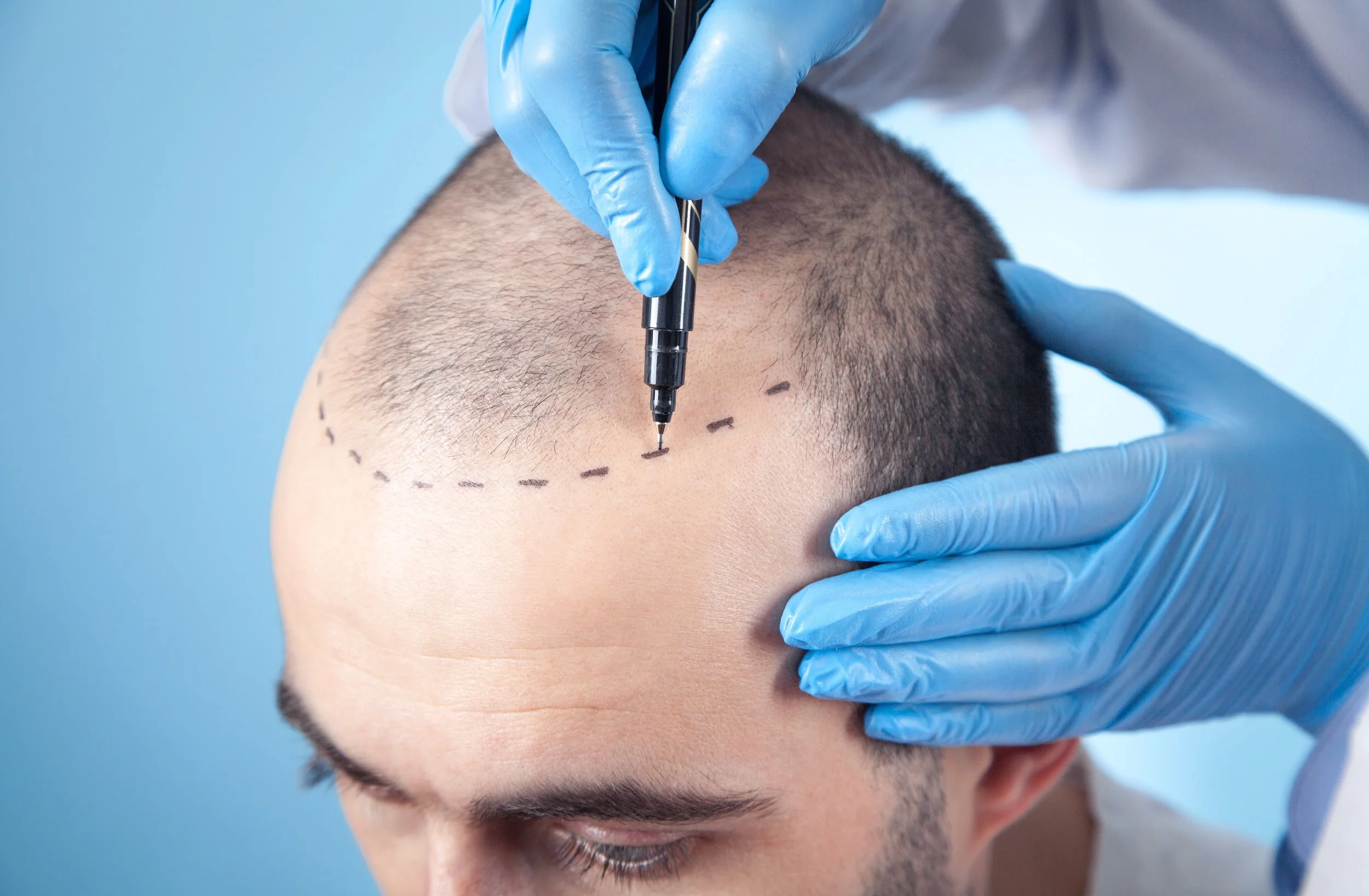
Who Is Suitable for Hair Transplant Antalya?
Hair Transplant Antalya may be evaluated for people with a receding hairline, frontal thinning, mid-scalp thinning, crown openness, female pattern thinning or a need for additional density after a previous hair transplant. However, not every type of hair loss means a person is a suitable candidate for hair transplantation. Suitability is determined by donor area strength, stability of hair loss, hair shaft thickness, scalp quality, general health condition, age and realistic expectations.
Planning should be more cautious in patients with rapidly progressing hair loss at a young age. A very low and aggressive hairline may look aesthetic early on, but as hair loss progresses it can create an unnatural appearance and insufficient donor reserve. Therefore, the hairline should be planned not only for the current look but also by considering possible future hair loss.
If there is diffuse and irregular thinning, active scalp disease, uncontrolled systemic problems, a very weak donor area, unrealistic density expectations or rapidly ongoing hair loss, the procedure may be postponed or a supportive treatment plan may be recommended. At Haarex Clinic, a procedure is recommended only when a medically and aesthetically meaningful plan can be created for the patient.
How Is the Donor Area Evaluated in Hair Transplant Planning?
The donor area is the most valuable resource in a hair transplant plan. Hair follicles in the nape and side areas are considered more resistant to genetic hair loss, but this area is not unlimited. Taking more grafts than necessary may lead to thinning in the donor area, a patchy appearance, more visible dot-like scars or reduced reserve for a possible second session in the future.
Donor planning does not consider only the density visible from the outside. Hair shaft diameter, the number of hairs per follicular unit, miniaturization findings in the donor area, contrast between hair color and skin color, skin elasticity, previous surgical scars and the patient’s long-term hair loss risk are assessed together. Thick hair may provide stronger coverage with fewer grafts, while the same graft number may create more limited visual density in fine hair.
| Donor Assessment Criteria | Technical Meaning | Effect on Planning |
|---|---|---|
| Donor density | Determines the safe graft extraction range | Reduces the risk of overharvesting |
| Hair shaft thickness | Changes the visual density effect | Graft distribution and target density are adjusted accordingly |
| Follicular unit structure | Shows the ratio of single, double and multiple grafts | Classification is made for the hairline and density zones |
| Miniaturization | Shows the long-term stability of the donor area | A more conservative approach is needed in weak donor areas |
| Previous procedure history | Affects reserve, scar tissue and extraction safety | Revision or additional session strategy may change |
At Haarex Clinic, donor area planning is not considered only for the day of the procedure. The aim is not to take the maximum possible number of grafts in the first session, but to preserve the homogeneous appearance of the donor area while using the aesthetic benefit in the most appropriate zones. This approach is especially important for patients whose hair loss may continue in the future.
How Is a Natural Hairline Designed During Hair Transplant Planning?
The hairline is the most visible part of a hair transplant result. A natural hairline should not look like a straight line drawn with a ruler. A softly transitioned, age-appropriate line should be designed by considering forehead width, facial proportions, temple structure, age, degree of hair loss and possible future hair loss.
Single grafts are generally needed along the front line. Uncontrolled placement of multiple grafts at the frontal edge may create a harsh, thick and artificial look. Micro-irregularities, slight natural asymmetry, harmony of the temple transition with the face and correct growth directions help the result look more natural.
Macro Design
The overall height of the hairline, its relationship with the forehead, temple transition and facial proportions are evaluated. Hairlines planned too low may not look natural with age.
Micro Transition
Single grafts are used in the front line and stronger grafts behind it to create a soft density transition. The goal is a natural frame, not a sharp line.
Angle and Direction
The growth direction of hair changes in different areas of the scalp. Channel or placement angle should be planned to support the natural growth direction.
How Does Haarex Clinic Plan the Hair Transplant Process?
At Haarex Clinic, hair transplant planning starts with mapping the hair loss, analyzing the donor area, determining the technical needs of the recipient area and turning the patient’s aesthetic expectations into a realistic plan. Hairline design, density and graft distribution are not the same for every patient.
The frontal area, mid-scalp and crown require different density strategies. In the frontal area, a natural line that frames the face is the priority. In the mid-scalp, visual fullness is targeted. In the crown, the natural spiral direction and the possibility of covering a wider area are analyzed carefully. If donor capacity is limited, priority is given to areas that create stronger aesthetic impact instead of trying to cover every area with equal density.
Which Hair Transplant Methods Are Used?
Hair transplant methods are selected according to the patient’s hair type, donor area, stage of hair loss, existing hair density, target coverage and social recovery expectations. FUE, Sapphire FUE and DHI techniques have different advantages; however, no method is the single “best” choice for every patient. The right method should be determined after clinical evaluation.
FUE Hair Transplant
In the FUE approach, follicular units are extracted one by one from the donor area. Punch diameter, extraction direction, reducing graft trauma and maintaining homogeneous donor distribution are critical in this method.
Sapphire FUE Hair Transplant Antalya
In Sapphire FUE, sapphire-tipped blades may be used during the channel opening stage. When channel width, depth, angle and direction are planned correctly, it supports a natural density distribution.
DHI Hair Transplant Antalya
DHI method, in suitable cases, allows grafts to be placed directly with a Choi implanter pen. It can be considered in selected areas where work is needed between existing hairs. In suitable candidates who prefer a more discreet procedure, unshaven hair transplant can also be evaluated as an alternative.
| Method | Technical Focus | Suitability Note |
|---|---|---|
| FUE | Individual graft extraction and controlled donor distribution | Can be planned for larger restoration areas |
| Sapphire FUE | Angle, direction and density control during channel opening | Can be evaluated for frontal-mid scalp and natural hairline planning |
| DHI | Graft placement control and precise application in selected areas | May be suitable for density support between existing hairs |
| Unshaven Hair Transplant | Planning aimed at reducing social visibility during recovery | Evaluated in selected cases depending on graft number and donor access |
Your Hair Transplant Journey in Antalya, Step by Step
The sequence below explains what international patients can expect from the first message to long-term follow-up. Details such as graft range, technique, operation duration, arrival date and package scope remain personalized.
Send Clear Hair Photos
Share front, top, crown and donor-area views together with your age, hair-loss history, previous procedures and expectations.
Receive a Preliminary Assessment
The team reviews the visible hair-loss pattern, donor appearance and potential method options before giving preliminary guidance.
Confirm Travel and Appointment Details
Available dates, Antalya arrival, accommodation or transfer guidance and clinic schedule are clarified according to the personalized plan.
Complete the In-Clinic Evaluation
Hairline design, donor assessment, graft range and method suitability are reviewed and confirmed before the procedure.
Complete the Procedure and Early Care
After the procedure, the patient receives graft-protection instructions, sleeping guidance, washing information and activity restrictions.
Continue Follow-Up After Returning Home
Recovery photos and questions can be shared during crusting, shock shedding, early growth and result maturation stages.
How Does the Hair Transplant Operation Day Proceed?
Operation day is the stage where previous planning is applied in a controlled way. When the patient arrives at the clinic, the operation plan is reviewed again, the hairline is evaluated one last time, photographs are taken and the treatment areas are prepared. At this stage, it is important to make sure the patient’s expectations and the medical plan are aligned.
After local anesthesia, graft extraction from the donor area begins. Extracted grafts are protected under suitable conditions during the waiting period, and single and multiple grafts are classified. Then, depending on the chosen technique, the channel opening or direct placement stage begins. Throughout the operation, it is important to avoid unnecessary long exposure of grafts outside the body, prevent drying and protect the root structure.
| Stage | Operation Day Process | Technical Goal |
|---|---|---|
| 01 | Clinic welcome, photography and plan approval | Final check of the hairline and transplant area |
| 02 | Hair and donor area preparation | Creating a suitable working area for graft extraction and implantation |
| 03 | Local anesthesia application | Increasing patient comfort and preparing the treatment area |
| 04 | Graft extraction and graft separation | Classifying single/multiple grafts for their correct use areas |
| 05 | Channel opening or DHI placement plan | Ensuring angle, direction, density and depth control |
| 06 | Post-operative information and aftercare plan | Protecting grafts during early healing |
How Is Hair Transplant Antalya Performed Step by Step?
At Haarex Clinic, the Hair Transplant Antalya process is structured as preliminary assessment, operation planning, procedure day preparation, graft extraction, graft preservation, implantation, first wash and result follow-up. At every stage, the goal is to preserve graft viability, manage the donor area safely and create a natural direction-density balance in the recipient area.
| Step | Haarex Clinic Process | Technical Goal |
|---|---|---|
| 1 | Online preliminary assessment with photos and patient information | Initial analysis of hair loss pattern and donor appearance |
| 2 | Hair, scalp and donor area assessment at the clinic | Clarifying the suitable graft range and method selection |
| 3 | Hairline, temple transition and density plan | Natural design suitable for age and facial proportions |
| 4 | Local anesthesia and donor area preparation | Patient comfort and safe graft extraction |
| 5 | Graft extraction and graft classification | Separating single and multiple grafts for the correct areas |
| 6 | Channel opening or direct placement stage | Angle, direction, depth and density control |
| 7 | Post-operative care instructions and first wash | Protecting grafts and supporting early healing |
| 8 | Result follow-up at 3–4 months, 6 months and 9–12 months | Evaluating growth, density and maturation progress |
How Is the Channel Opening Process Planned in Hair Transplant Antalya?
Channel opening is the critical stage where micro-sites are created for graft placement. The angle, direction, depth, width and density of the channels directly affect the final hair growth direction. Channels opened at the wrong angle may cause hair to grow against the natural flow; channels that are too deep or too wide may cause graft trauma, irregular healing or an unnatural density appearance.
In Sapphire FUE planning, the channel opening stage is handled as a separate technical step. Channel width should match graft thickness. Thinner and more controlled channels are preferred for single grafts, while multiple grafts require a suitable channel plan that does not damage the recipient area. When targeting density, channels should not be opened so densely that they compromise blood supply, because healthy recipient area circulation is important for graft survival.
| Channel Parameter | Technical Explanation | Effect on Result |
|---|---|---|
| Angle | Determines the angle at which hair exits the skin | Supports natural laying direction and combability |
| Direction | Supports hair growth to the right, left, forward or in a spiral direction | Creates a look compatible with existing hair |
| Depth | Allows the graft to sit at the correct level within the skin | Important for graft stability and surface smoothness |
| Density | Determines channel spacing and regional graft distribution | Balances coverage with blood supply |
During channel opening, the frontal hairline, mid-scalp and crown are not treated with the same logic. The frontal line requires a lower angle and soft direction transitions. In the mid-scalp, visual density and harmony with existing hair are important. In the crown, spiral distribution should be planned by considering the natural whorl direction.
How Are Grafts Placed During Hair Transplant Antalya?
Graft placement is one of the most delicate stages of a hair transplant. Not every graft has the same characteristics. One graft may contain a single hair shaft, while others may contain two, three or more hairs. Therefore, grafts are separated according to their structure before implantation and placed in areas that match the aesthetic goal.
Using single grafts in the frontal hairline creates a natural and soft transition. Double grafts are placed just behind the line and multiple grafts further back to strengthen the illusion of density. This prevents the hairline from looking like a hard edge and allows density to increase gradually toward the back. This distribution is important for imitating natural hair structure.
Graft placement depth must also be adjusted carefully. Placement that is too superficial may affect graft stability; placement that is too deep may create bumpiness, irregularity or an unwanted healing appearance. During placement, the root structure should not be damaged, the follicle should not be compressed and the graft should be positioned in the channel in the correct direction.
| Graft Type | Use Area | Aesthetic Goal |
|---|---|---|
| Single graft | Frontal hairline and temple transitions | Soft, natural and non-sharp beginning |
| Double graft | Transition behind the hairline and frontal-mid area | Increasing density without compromising naturalness |
| Triple/multiple graft | Mid-scalp and suitable crown planning | Stronger coverage and volume effect |
How Is the Number of Grafts Determined for Hair Transplant Antalya?
Graft number is one of the most frequently asked topics in hair transplantation, but it does not determine result quality by itself. The same graft number can create different visual effects in different patients. This is because hair shaft thickness, hair color, skin color, curl pattern, donor quality and the number of hairs per graft vary.
The frontal hairline, mid-scalp and crown do not require the same graft distribution. In the frontal area, a natural frame is the priority. In the mid-scalp, the perception of density is strengthened. The crown may cover a wider area, and because of the spiral direction of hair growth, the same graft number may not provide as strong a coverage effect as in the front. For this reason, planning should be based not only on arithmetic graft count but also on regional distribution and aesthetic priority.
| Area | Planning Principle | Technical Point to Consider |
|---|---|---|
| Frontal hairline | Soft and natural transition | Single grafts, micro-irregularity and correct angle |
| Frontal-mid area | Increasing visual density | Balanced fullness with double/multiple grafts |
| Crown area | Restoration that supports the spiral direction | Realistic coverage goal in a wider area |
| Temple transitions | Supporting facial balance | Avoiding overly sharp and low planning |
What Is the Recovery Process Like After Hair Transplant Antalya?
Recovery after Hair Transplant Antalya is based on protecting grafts in the early period and allowing the scalp to recover in a controlled way. Mild redness, swelling, crusting, tenderness or tightness in the donor area may be seen in the first days. These findings are among the expected early healing changes in many patients.
First wash and the following washing routine help clean crusts in a controlled way without damaging the grafts. In the early period, it is important to avoid friction, scratching, heavy exercise, sauna, pool, sea, direct sun exposure and alcohol/smoking, as these may negatively affect healing.
Shock shedding may occur as a temporary phase after the procedure. This does not mean the transplanted hair has been permanently lost; as the hair cycle reorganizes, new growth may begin over time. Result maturation requires patience. To review patient experiences about the post-operative period, hair transplant reviews can also be viewed. During this period, the after hair transplant recovery guide helps patients follow aftercare steps more clearly.
When Are Hair Transplant Results Seen?
Hair transplant results develop gradually. The appearance immediately after the procedure is not the final result. In the early period, crusting and redness decrease, then temporary shedding may occur. New hair growth usually starts within a few months; however, density, thickening and natural hair form take longer to develop.
| Period | Expected Process | Note for the Patient |
|---|---|---|
| First 1–3 Days | Tenderness, mild swelling and early healing | Contact and friction on the transplant area should be avoided |
| 7–14 Days | Crusting decreases and the scalp looks cleaner | Washing instructions should be followed carefully |
| 1 Month | Temporary shock shedding may occur | This period should not cause panic |
| 3–4 Months | Early new growth may become noticeable | Hair may start thin and uneven |
| 6 Months | Density increase becomes more visible | The result is still in the maturation phase |
| 9–12 Months | Hair thickness and density become more evident | Frontal area results can be evaluated more clearly |
| 12–18 Months | Crown area and overall maturation may be completed | Final evaluation is made according to the individual process |
Prepare for Hair Transplant Antalya Safely
Share your medical history, current medicines, allergies, previous operations and hair-loss treatments accurately. Follow the clinic’s personalized instructions regarding alcohol, smoking, hair washing, clothing and any medicines that may require medical review.
Open the Before Hair Transplant GuideProtect the Grafts During Early Recovery
Follow instructions for sleeping position, first washing, gentle daily washing, exercise, sweating, sun exposure, swimming, sauna, alcohol and smoking. Contact the clinic when a symptom feels unusual rather than relying on general internet advice.
What Are the Advantages and Limitations of Hair Transplant Antalya?
Hair transplantation can be a strong aesthetic solution when performed for the right candidate, with the right technical plan and realistic expectations. before hair transplant preparation guide can help manage this decision process more consciously. However, because it is a surgical procedure, its advantages and limits should both be understood. This section is prepared to help patients make a more informed decision. To understand real-case expectations more clearly, the hair transplant before and after page can also be reviewed.
| Advantages | Limitations |
|---|---|
| Because the patient’s own hair follicles are used, there is natural growth potential | The donor area is limited, and poor planning may cause reserve problems in the future |
| The facial frame can be strengthened with the right hairline | An overly low or artificial line may not look natural in the long term |
| Personalized density can be planned for the frontal, mid-scalp and crown areas | Unlimited density in all areas is not always possible |
| Different technique options such as FUE, Sapphire FUE or DHI can be evaluated | Every technique may not be suitable for every patient |
| The recovery process can progress in a controlled way with proper care | Result maturation takes months and requires patience |
Technical Limitations to Know Before Hair Transplant Antalya
Hair transplantation is a surgical procedure, and it is not possible to guarantee the same result for every patient. Donor area capacity, hair shaft characteristics, the rate of ongoing natural hair loss, scalp healing response, graft quality and aftercare may affect the result. Therefore, realistic expectation management is one of the most important parts of planning.
Temporary redness, swelling, crusting, itching, tenderness and shock shedding may occur in the early period. Rarely, infection, folliculitis, irregular density, visible donor thinning or lower-than-expected growth may occur. To reduce these risks, hygiene standards, proper candidate selection, donor-protective graft extraction and detailed aftercare instructions are important.
Promises of excessive density, unrealistic hairline planning, extracting more grafts than the donor area can safely support or recommending the same method to every patient are not appropriate approaches. At Haarex Clinic, the aim is to evaluate patient safety, natural appearance and long-term planning within the same framework.
What Should Your Personalized Hair Transplant Offer Explain?
Before comparing offers, make sure each item is written clearly. Transfer or accommodation support may be organized for international patients, but it should be treated as included only when it appears in the personalized offer.
Assessment
Visible donor condition, hair-loss pattern, target areas and realistic graft range.
Technique
Why Sapphire FUE, DHI or another suitable approach is recommended.
Procedure Scope
Target regions, density priorities, hairline plan and operation-day stages.
Care and Follow-Up
First-wash planning, aftercare instructions and remote follow-up communication.
Travel Support
Whether transfer, accommodation guidance or related services are included.
Total Price
Currency, included services, exclusions and any optional supportive treatments.
Hair Transplant Prices Antalya
Hair Transplant Antalya prices may vary according to the graft number, method used, donor area condition, width of the transplant area, technical difficulty of the operation, supportive care needs and follow-up scope. Price evaluation should not be based only on graft number, because the same graft count may mean a different technical process and different operation difficulty in different patients.
The tables below are intended to provide a general idea during the planning stage. The exact scope should be determined after hair photos, donor area assessment and personal treatment goals are reviewed.
Sapphire FUE Hair Transplant Prices
| Graft Range | Price | Suitable Area |
|---|---|---|
| 1,000 – 1,500 Grafts | £1,250 | Hairline correction / small areas |
| 1,500 – 2,500 Grafts | £1,500 | Hairline + temple areas |
| 2,500 – 3,500 Grafts | £1,750 | Frontal area restoration |
| 3,500 – 4,500 Grafts | £2,000 | Frontal + mid-scalp coverage |
| 4,500 – 5,500 Grafts | £2,500 | Large area coverage |
DHI Hair Transplant Prices
| Graft Range | Price | Suitable Area |
|---|---|---|
| 1,000 – 1,500 Grafts | £1,500 | Increasing density |
| 1,500 – 2,500 Grafts | £1,750 | Hairline + density increase |
| 2,500 – 3,500 Grafts | £2,000 | Frontal area restoration |
| 3,500 – 4,500 Grafts | £2,250 | Frontal + mid-scalp coverage |
| 4,500 – 5,500 Grafts | £2,500 | Cases requiring maximum density |
PRP, Magellan PRP and Mesotherapy Support After Hair Transplant Antalya
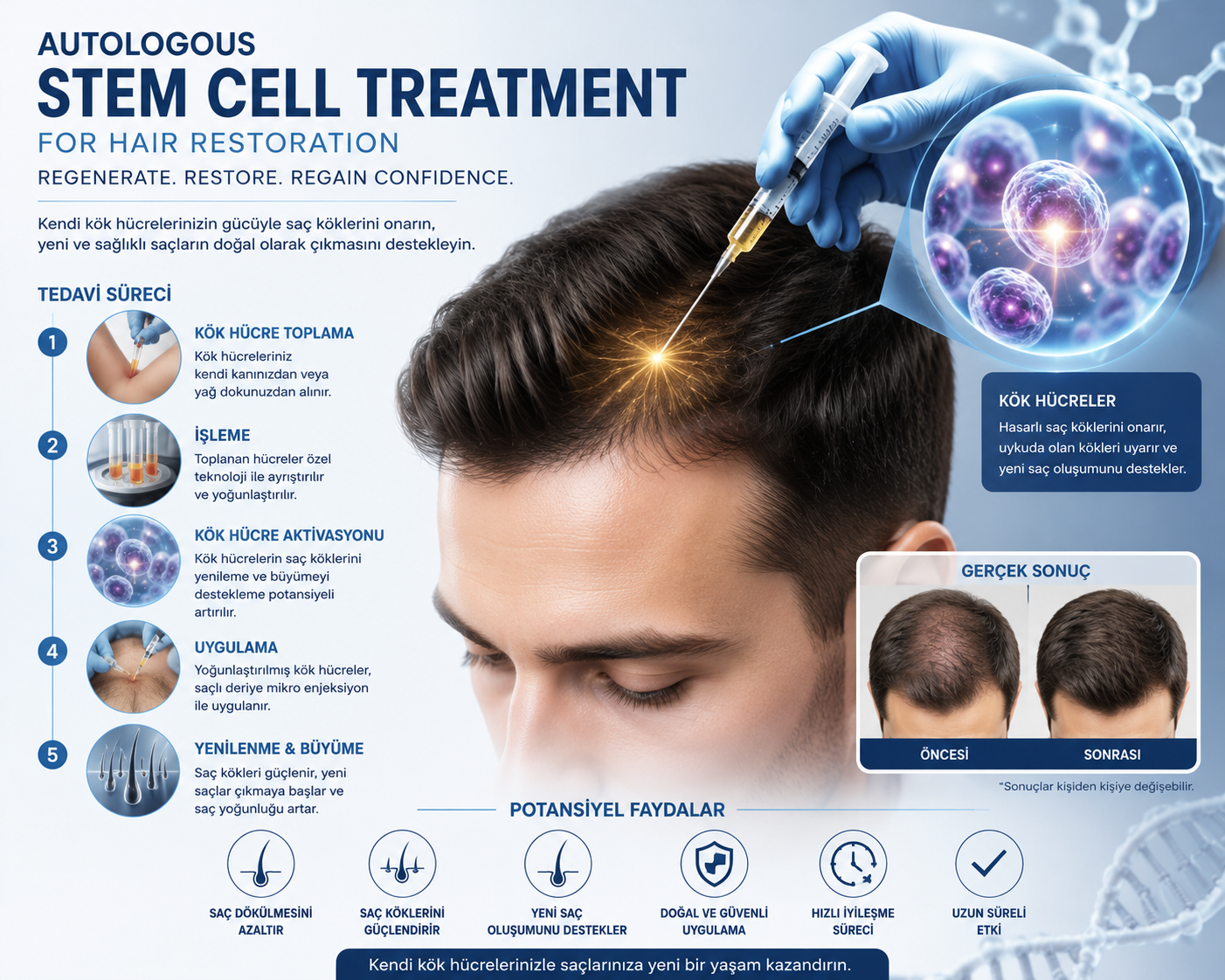
Hair transplantation is the process of placing grafts into areas that are bald or thinning. PRP, Magellan PRP, hair mesotherapy, exosome treatment or autologous stem cell treatment and similar supportive applications may be considered in suitable cases to support scalp quality, existing hair or the aftercare side of the recovery process. These applications do not replace hair transplantation.
The need for supportive treatments is not the same for every patient. Decisions should consider early-stage thinning, preservation of existing hair, scalp quality, previous treatment history and post-transplant care goals. At Haarex Clinic, this planning is made after a personalized evaluation.
PRP Hair Treatment
May be evaluated in suitable cases for existing hair quality and scalp support.
Magellan PRP Treatment
May be considered in selected plans that require a more concentrated platelet-rich plasma preparation.
Hair Mesotherapy Treatment
May be considered as complementary care when targeted scalp support is planned.
Exosome Treatment for Hair Loss
May be evaluated in suitable patients as part of scalp quality and supportive care planning.
Autologous Stem Cell Treatment
May be considered as a supportive option in personalized hair restoration plans.
Scalp Support Plan
Personal planning can be made according to existing hair preservation and post-procedure care goals.
Explore Hair Transplant Services and Patient Guides
Continue your research with Haarex Clinic service pages, preparation and recovery guides, patient experiences, result examples, pricing information and supportive treatment options. These links remain grouped by search intent so visitors and search engines can reach the most relevant next page clearly.
Get Your Personalized Hair Transplant Quote
Send your contact details and hair photos directly to Haarex Clinic. Our team will review your donor area, hair loss type, hairline expectations, crown condition, previous treatment history and suitable method options to prepare a personalized consultation response.
Start Your Consultation Process
Fill out the form and upload your photos. Your request will be sent to info@haarexclinic.com.
Frequently Asked Questions – Hair Transplant Antalya
The most important assessment includes donor area capacity, hair loss pattern and realistic expectations. Graft number alone should not decide the plan; hair shaft thickness, hairline design, crown needs and long-term hair loss risk should be analyzed together.
No. A high graft number is meaningful only if the donor area can support it safely. Excessive extraction may cause donor thinning and limited restoration options in the future. The right approach is balanced graft distribution that creates aesthetic impact.
Single grafts are usually preferred in the frontal hairline for a natural look. Density is increased behind the line with double and multiple grafts. This helps the front line look soft and naturally transitioned rather than harsh.
Channel opening determines the growth angle, direction, depth and density of the hair. Incorrect angle or direction may cause hair to grow against its natural flow. Therefore, channel planning should be made separately for the hairline, mid-scalp and crown.
Overharvesting may cause donor thinning, an uneven appearance, more visible dot-like scars or insufficient reserve for a future session. This is why donor area safety is a core part of hair transplant planning.
A very low hairline may look appealing at a young age, but it may not look natural with aging and ongoing hair loss. It may also consume grafts unnecessarily. A line suitable for age and facial proportions provides a more long-term aesthetic result.
In Sapphire FUE, after grafts are extracted, the channel opening stage is planned separately and grafts are placed into these channels. In DHI, direct placement with an implanter pen may be performed in suitable cases. The more suitable method depends on hair structure, recipient area and target density.
The duration varies according to graft number, method, donor area condition and the width of the transplant area. Operation day includes plan approval, preparation, local anesthesia, graft extraction, channel opening or placement and aftercare briefing.
The first wash helps soften crusts in a controlled way and clean the scalp. Because incorrect washing or harsh contact may damage grafts, first-wash instructions should be followed carefully.
Shock shedding is a temporary phase that can be seen in many patients. It does not mean the transplanted hairs are permanently lost. New growth usually begins gradually within a few months.
Intense exercise should be avoided in the early period. Sweating, pressure and increased blood circulation may irritate the transplant area. Return to light activity should be planned according to healing status and clinical approval.
Heavy sweating in the first healing days may irritate the transplanted area. Avoiding sauna, hot environments, intense sports and direct sun exposure is an important part of early care.
Smoking is not recommended during the early healing period because it may negatively affect blood circulation and healing quality. The clinic’s personalized instructions should be followed regarding when to stop and when to restart.
Transplanted hairs are usually taken from donor areas that are more resistant to hair loss, so they may maintain their permanence for many years. However, existing natural hair may continue to thin. Therefore, long-term planning and supportive care when needed are important.
The crown area may mature more slowly because it is a wider area with different blood supply dynamics and a spiral growth direction. Therefore, crown results may develop gradually up to 12–18 months in some patients.
Early growth is usually noticed around 3–4 months, and density begins to become more visible at 6 months. The final appearance can usually be evaluated more clearly at 9–12 months, and in some areas within 12–18 months.