

One of the first questions people ask before a hair transplant procedure is simple—but the answer isn’t:
How many grafts do I need?
Some clinics throw out numbers like “3,000 grafts for everyone” or “5,000 graft mega-session,” but real planning is much more precise. Your graft count depends on the hair loss classification, the size of the thinning area, your donor area capacity, hair characteristics, and what kind of result you expect.
In this guide, you’ll learn how grafts are calculated, what’s realistic for different levels of hair loss (from mild hair loss to advanced hair loss), and how surgeons estimate your exact hair graft requirement—step by step.
A graft is a small naturally occurring group of hair roots taken from the donor and implanted into balding or thinning zones.
A typical graft may contain:
1 hair
2 hairs
3 hairs
sometimes 4 hairs (less common)
In modern surgery, grafts are often called follicular unit grafts because they match the natural grouping of hair follicles in the scalp.
A single follicular unit graft = one naturally occurring unit of 1–4 hairs.
Patients often confuse:
number of hair grafts (units moved)
with
total number of hairs (the actual strands)
For example:
2,500 grafts might contain 5,000–6,000 hairs depending on hair type and density.
So when comparing clinic offers, always ask:
How many grafts?
What’s the average hairs per graft?
What density is planned?
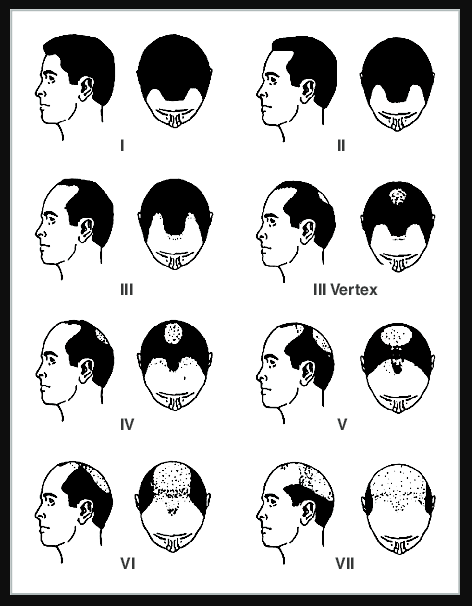
Most surgeons use the norwood scale as a practical hair loss classification system for men, ranging from Norwood 1 to Norwood 7.
Why this matters:
It predicts future progression
It helps plan conservatively
It guides total hair transplant grafts needed now and later
Even if you’re treating a small area today, your surgeon must consider where your hair loss is heading.
There is no universal number. Your hair graft requirement depends on six core variables:
Size of the Balding/Thinning Area
A small temple recession needs far fewer grafts than widespread thinning.
Severity Level (Mild, Moderate, Advanced)
mild hair loss = small recession or localized thinning
moderate hair loss = frontal + mid-scalp thinning
advanced hair loss = large front + mid + crown involvement
extensive hair loss = near-total top scalp loss, limited donor capacity
Donor Area Capacity
Your donor area is the “bank” that funds the transplant. If it’s limited, you must prioritize areas carefully.
Hair Characteristics
Things that change graft needs:
Thick vs thin hair
Straight vs curly
Dark vs light (contrast with scalp)
Density of healthy and strong hair
Thicker, wavy hair can create better coverage with fewer grafts.
Target Density
Higher density requires more grafts. Natural-looking results often focus on:
higher density in the frontal hairline
moderate density in mid-scalp
lighter coverage in crown (if needed)
Technique and Surgeon Strategy
Both fue follicular unit extraction and follicular unit transplantation can achieve excellent results, but donor management differs.
Below are realistic ranges that many surgeons use as a starting point. Actual numbers vary based on head size, area size, and goals.
Mild Hair Loss (Early Norwood 2–3 Temples)
Usually involves:
hairline corners
early recession
Typical grafts: 800 – 1,800
This can restore a natural-looking frontal frame without overbuilding a youthful hairline.
Moderate Hair Loss (Norwood 3–4 Front + Mid)
Often includes:
frontal hairline + forelock
thinning mid-scalp
Typical grafts: 2,000 – 3,500
This range is common for men who want visible improvement while preserving donor supply.
Advanced Hair Loss (Norwood 5–6 Front + Mid + Some Crown)
At this stage:
the balding zone is much larger
crown may be thinning or bald
prioritization is essential
Typical grafts: 3,500 – 5,500+
Some cases require staged procedures rather than a single session.
Extensive Hair Loss (Late Norwood 6–7)
In extensive hair loss, donor limitations become the main challenge.
Typical grafts: 4,500 – 7,000+ (often across multiple sessions)
Realistic expectations matter most here: full teenage density is not possible, but strategic coverage can still look excellent.
Surgeons often calculate grafts by region:
Hairline / Frontal Hairline
highest cosmetic priority
must look natural up close
requires precise angles and density
Typical target density: 35–55 grafts/cm² (varies)
Mid-Scalp
supports overall coverage
often needs moderate density
Typical target density: 25–40 grafts/cm²
Crown (Vertex)
requires more grafts than it looks
can “eat” your donor supply
often treated conservatively
Typical target density: 20–35 grafts/cm²
This is why some surgeons delay crown work until frontal stability is secured.
FUE Follicular Unit Extraction
With fue follicular unit extraction, individual grafts are harvested one by one:
minimal scarring
flexible donor harvesting
great for international patients and quicker recovery
Follicular Unit Transplantation (FUT)
With follicular unit transplantation:
a strip is harvested from donor zone
often yields more grafts in some cases
leaves a linear scar
The technique doesn’t change how many grafts you need, but it changes:
how safely grafts can be harvested
how donor supply is preserved over time
Clinics often use a straightforward formula:
Measure the bald/thin area in cm²
Choose a target density (grafts per cm²)
Multiply area × density = grafts needed
Example:
60 cm² area
target 35 grafts/cm²
60 × 35 = 2,100 grafts
Then the plan is adjusted based on:
donor capacity
hair thickness
future loss risk
Many clinics market “mega-sessions,” but safety matters more than marketing.
A safe maximum depends on:
patient health
extraction method
team experience
graft survival strategy
donor quality
A skilled team can place high graft counts safely, but an aggressive approach can compromise:
donor appearance
graft survival
long-term planning
Your donor hair is finite.
A good plan protects:
the back of the scalp
the sides
the natural density pattern
Overharvesting can lead to:
patchiness
thinning donor look
limited future options
A responsible surgeon prioritizes healthy and strong hair preservation over chasing unrealistic graft counts.
Your graft number is only part of success. Hair growth happens in phases:
Weeks 2–6: shedding (normal)
Months 3–4: early regrowth
Months 6–9: visible density
Months 12–15: mature results
A higher graft count doesn’t mean immediate results—it means more potential density once growth cycles complete.
Patients often ask for a “perfect” number of grafts. But the best results come from:
good design
correct density distribution
preserving donor supply
planning for future progression
In other words, the best transplant is not the biggest—it’s the smartest.
Graft count affects pricing, planning, and package structure. Many patients researching Hair Transplant Cost in Antalya compare clinics based on “how many grafts are included,” but they should also compare:
graft survival quality
natural hairline design
donor protection
medical standards
A clinic that promises “more grafts” is not always better.
For international patients, Hair Transplant Cost in Antalya should be evaluated together with outcomes, safety, and long-term donor management—not just the number.
You likely need:
800–1,800 grafts if you have mild recession
2,000–3,500 grafts for moderate frontal + mid-scalp thinning
3,500–5,500+ grafts for advanced loss
4,500–7,000+ grafts for extensive loss (often staged)
But the true answer requires a professional assessment of:
your donor capacity
area size
hair type
future hair loss risk


