

James Franco has been in the public eye for more than two decades. From his breakout roles in the early 2000s to major Hollywood productions and red-carpet appearances, fans have closely followed his evolving look — including his hair. Over the years, speculation has surfaced online regarding a possible James Franco hair transplant, with many observers comparing older and newer photos to analyze changes in his hairline and density.
But did James Franco actually undergo a hair transplant? Or are the visible differences simply the result of aging, styling, lighting, and natural hair variation?
In this detailed before and after analysis, we will objectively examine:
His hair evolution over time
Signs of potential male pattern hair loss
What typically indicates a hair transplant
Whether his transformation aligns with modern techniques
How celebrity hair restoration speculation should be interpreted
Let’s explore the facts carefully and professionally.
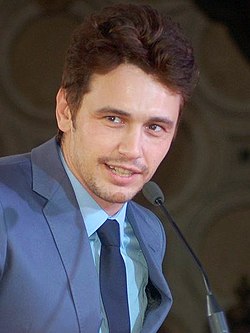
During his early acting career in the late 1990s and early 2000s, James Franco displayed a naturally dense and full hairline. His temples were strong, and his frontal hairline appeared intact without visible recession.
At that stage:
Hair density was high
Temple angles were sharp and youthful
No visible thinning was apparent
Overall hair coverage looked balanced
This phase reflects a typical healthy male hairline in early adulthood.
As Franco moved into his mid-to-late 30s, some observers noted subtle changes. In certain photos and film appearances, there appeared to be:
Slight recession at the temples
Mild thinning in the frontal region
Slight reduction in density under bright lighting
These patterns are consistent with early-stage male pattern baldness, a condition that affects millions of men worldwide. Male pattern baldness typically begins with:
Gradual temple recession
Frontal hairline thinning
Crown density reduction
It is a progressive condition influenced by genetics and hormonal sensitivity.
However, in Franco’s case, the thinning appeared mild rather than aggressive.
Speculation about a James Franco hair transplant largely stems from comparisons between photos taken during:
His early career
Mid-career appearances
Recent red carpet events
In more recent years, his hair has appeared:
Fuller along the frontal hairline
More evenly distributed at the temples
Slightly denser overall
This perceived improvement has led many online discussions to suggest he may have undergone hair restoration.
But visual comparison alone does not confirm surgery.
Before assuming a hair transplant occurred, it’s important to consider other variables that significantly impact hair density appearance.
Hairstyling
Professional stylists can create the illusion of fuller hair through:
Strategic cutting
Layering techniques
Volume-enhancing products
Blow-drying methods
Shorter hairstyles can sometimes make thinning appear less noticeable, while textured cuts add volume.
Lighting Conditions
Harsh overhead lighting can exaggerate thinning. Soft lighting can enhance fullness.
Red carpet lighting, film lighting, and casual photography vary dramatically.
Hair Fibers and Cosmetic Enhancers
Many public figures use temporary cosmetic products such as:
Keratin hair fibers
Thickening sprays
Volumizing powders
These solutions create a denser visual effect without surgery.
Natural Hair Growth Cycle Fluctuations
Hair follows a natural growth cycle:
Anagen (growth phase)
Catagen (transition phase)
Telogen (resting/shedding phase)
Temporary shedding can occur due to stress, lifestyle changes, or health conditions. Once the growth cycle stabilizes, density may improve naturally.
If James Franco did undergo a procedure, the most likely method would be Follicular Unit Extraction (FUE).
Why FUE?
Minimal visible scarring
Faster recovery
Natural-looking results
High precision placement
FUE involves extracting individual hair follicles from a donor area (usually the back of the scalp) and implanting them into thinning regions.
This technique leaves tiny dot scars that are nearly invisible when performed properly.
Given the absence of visible linear scarring in publicly available images, FUE would be the logical assumption if surgery occurred.
However, there is no confirmation that he had any procedure.
A key indicator in transplant analysis is hairline design.
Natural hairlines typically:
Have slight irregularity
Include single-hair grafts at the front
Avoid perfectly straight lines
In recent images, Franco’s hairline appears natural and age-appropriate — not overly low or artificially straight.
This suggests either:
Natural maturation of his hairline
Conservative restoration
Skillful styling
It does not strongly indicate an aggressive transplant.
Another clue in transplant speculation is the donor area.
After FUE, the back of the scalp may show:
Tiny dot scarring
Slight thinning if overharvested
Reduced density if many grafts were removed
Publicly available images do not clearly show visible donor thinning or scarring.
This again leaves the situation inconclusive.
Non-surgical options can significantly improve hair density.
Common treatments include:
Minoxidil (topical growth stimulant)
Finasteride (DHT blocker)
PRP therapy (platelet-rich plasma)
These treatments can:
Strengthen existing follicles
Reverse miniaturization
Improve hair thickness
Slow progression of hair loss
If Franco used medical therapy consistently, it could explain improved density.
In cases of mild temple recession and frontal thinning, a typical transplant might involve:
1,500 to 2,500 grafts
This would be enough to:
Reinforce the hairline
Restore temple fullness
Increase frontal density
Such a procedure would appear subtle and natural.
Again, there is no official confirmation that this occurred.
Public figures face intense visual scrutiny. Even minor changes are amplified.
Reasons rumors spread:
High-resolution photography
Social media comparisons
Public fascination with aging
Hair transplant awareness increasing globally
As hair restoration becomes more common and socially accepted, speculation increases.
No.
James Franco has not publicly confirmed undergoing hair transplantation surgery.
Without:
Direct statement
Medical disclosure
Public acknowledgment
All discussion remains speculative.
Hair naturally changes over time.
Common patterns include:
Slight temple recession
Mild density shifts
Changes in hair texture
A mature hairline is normal and often mistaken for hair loss.
Franco’s current hairline looks consistent with a natural adult male pattern rather than dramatic surgical reconstruction.
Hair loss affects confidence for many men — celebrities included.
Whether through styling, medical therapy, or surgery, improving hair appearance is a personal choice.
Modern hair restoration is common and no longer stigmatized.
Based on visual analysis:
Mild thinning was observed at certain stages
Recent appearances show improved density
No obvious surgical signs are visible
No official confirmation exists
The changes could be explained by:
Styling improvements
Natural density fluctuation
Medical therapy
Conservative, well-executed FUE (unconfirmed)
There is insufficient evidence to definitively state he underwent surgery.
While before-and-after comparisons show subtle differences, many factors influence hair appearance over time. Without direct confirmation, it is impossible to conclude whether he underwent a transplant.
What is clear is that:
Hair changes naturally with age
Modern hair restoration options are discreet
Visual comparison alone does not prove surgery
Ultimately, Franco’s current look reflects confidence and maturity — with or without surgical enhancement.


