

Joe Buck, the longtime voice of Fox Sports, has been a familiar presence in American sports broadcasting for decades. Known for covering the Super Bowl, World Series, and other major sporting events, Buck’s public image has evolved over the years — including noticeable changes in his hair.
Unlike many celebrities where hair transplant rumors remain speculation, Joe Buck has openly discussed his experience with hair restoration. This transparency makes his story one of the more documented cases of a public figure undergoing a hair transplant procedure.
In this comprehensive 3000-word analysis, we’ll explore:
Joe Buck’s early hair loss
The “hair plug addict” controversy
What procedure he reportedly underwent
His before and after transformation
Lessons from his experience
What modern hair transplant techniques would look like today
Let’s examine the full picture.
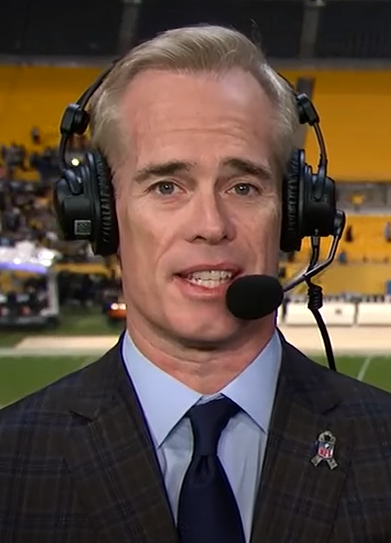
In the early 1990s, Joe Buck hair began thinning noticeably. Like many men experiencing male pattern baldness, his hairline started to recede, and density on top decreased.
Early signs included:
Thinning frontal hairline
Temple recession
Crown density reduction
Visible scalp under studio lighting
Because Buck’s career placed him constantly on camera, hair loss became more noticeable than it might for someone outside the public eye.
Joe Buck has openly addressed his hair restoration journey in interviews and television appearances. At one point, he jokingly referred to himself as a “hair plug addict,” acknowledging that he had undergone multiple hair transplant procedures.
This rare level of honesty distinguishes Buck from many public figures who avoid confirming cosmetic procedures.
His openness sparked public curiosity about the details of the Buck hair transplant process.
When Joe Buck began undergoing hair restoration, techniques were very different from today’s advanced methods.
In the 1990s:
Large graft “hair plugs” were common
Multi-hair graft clusters were used
Density often appeared unnatural
Scarring was more visible
These early hair transplant procedures sometimes produced a “pluggy” look.
Joe Buck’s earlier transplant attempts reportedly reflected the limitations of that era.
Joe Buck has spoken about complications following cosmetic procedures. While not directly related to his hair transplant, he experienced a serious vocal cord issue after undergoing a separate cosmetic procedure (a hair-related treatment involving PRP injections).
This complication temporarily affected his broadcasting career.
This episode highlights an important lesson:
Even routine cosmetic procedures require careful medical supervision.
When comparing Joe Buck’s earlier television appearances to more recent ones, several changes are visible.
Before
Noticeable thinning
Receding hairline
Reduced density
Early transplant appearance inconsistent
After
Fuller frontal hairline
Improved hair density
More uniform distribution
Natural-looking hairline
The modern Joe Buck hair appearance is significantly more refined than earlier transplant attempts.
As hair restoration evolved, so did Joe Buck’s results.
Modern techniques such as:
Follicular Unit Transplantation (FUT)
Follicular Unit Extraction (FUE)
allow surgeons to transplant individual follicular units rather than large plugs.
Today’s procedures:
Use single-hair grafts at the hairline
Create natural angulation
Avoid the plug-like appearance
Minimize scarring
Buck’s improved results likely reflect advances in technology and surgical expertise.
A contemporary hair transplant procedure typically involves:
Extracting individual hair follicles
Preparing grafts under magnification
Designing a natural hairline
Implanting grafts at precise angles
Unlike early plug techniques, modern FUE creates micro-incisions that heal with minimal visibility.
The transformation seen in Buck’s hair aligns more closely with modern methods than early plug surgery.
Hair loss is progressive.
Many patients require:
Initial transplant
Secondary refinement session
Density enhancement
Joe Buck’s comment about being a “hair plug addict” suggests multiple procedures over time.
Repeated sessions can:
Improve density
Refine hairline
Correct earlier plug work
One of the biggest improvements in Buck’s appearance is hairline naturalness.
Modern hairlines avoid:
Straight unnatural borders
Uniform thickness
Plug clustering
Instead, surgeons use:
Irregular patterns
Single-hair grafts at front
Gradual density transition
This artistic design element is critical in natural outcomes.
Joe Buck’s journey provides several lessons:
Early transplant techniques were limited
Technology dramatically improved over decades
Multiple procedures may be required
Transparency reduces stigma
Choosing experienced surgeons matters
His case demonstrates how hair restoration evolved from pluggy aesthetics to natural transformations.
As a prominent broadcaster for Fox Sports, Buck’s image is closely scrutinized.
Hair plays a role in:
Youthful appearance
On-camera confidence
Public perception
Hair restoration is increasingly normalized among public figures.
Compared to early plug-era procedures, Buck’s current hair appears:
Fuller
Natural
Balanced
Age-appropriate
While early results may have been less refined, later improvements reflect modern standards.
Today’s patients benefit from:
FUE extraction
Sapphire blades
Dense packing
PRP support
Medical therapy stabilization
Hair plug techniques are now obsolete.
Modern results focus on subtlety and realism.
Hair loss affects self-confidence.
For someone constantly on national television, restoring hair may:
Improve confidence
Reduce appearance anxiety
Enhance public presentation
Buck’s openness about his experience likely helped destigmatize hair restoration.
The story of the Buck hair transplant illustrates the evolution of hair restoration technology.
From early plug-style grafts to modern natural-looking results, Joe Buck’s transformation demonstrates how far surgical techniques have advanced.
Unlike many public figures, Buck openly acknowledged his procedures — even jokingly calling himself a “hair plug addict.”
Today, his hair appears consistent with contemporary transplant standards: natural, refined, and balanced.
His journey serves as a reminder that:
Early techniques were imperfect
Modern surgery produces far better outcomes
Multiple sessions may be needed
Choosing experienced professionals is critical
Hair restoration has come a long way — and Joe Buck’s before-and-after story reflects that evolution.


