

Few Hollywood icons have experienced as much public discussion around their appearance as John Travolta. From his breakout role in Saturday Night Fever to his recent appearances, Travolta’s evolving look especially his hair has fueled endless speculation.
Did John Travolta lose his hair naturally?
Did he undergo hair restoration surgery?
And if so, what technique could explain the natural results seen in recent years?
This in-depth guide examines the evidence, the science, and the most likely explanations behind John Travolta’s hair transformation through a professional hair-restoration lens.
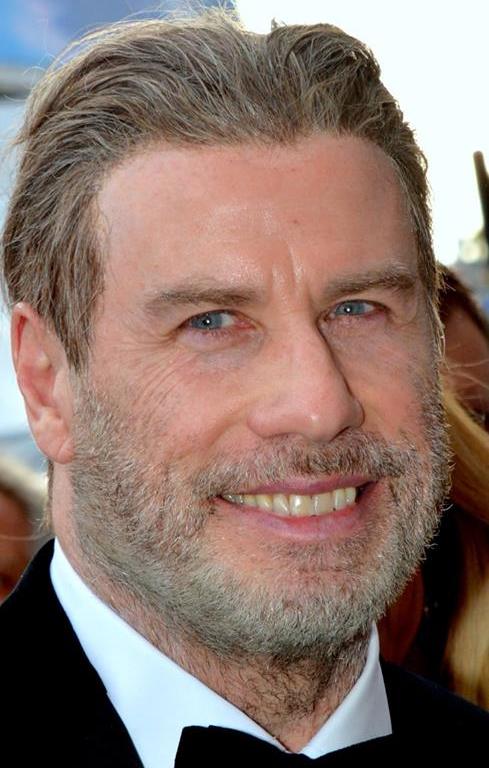
In the late 1970s, Travolta was the embodiment of youthful confidence—thick hair, strong density, and a perfectly balanced hairline. Over time, however, subtle changes became noticeable.
Dense frontal hairline
No visible thinning
Classic leading-man look
Gradual receding hairline
Temporal thinning
Signs consistent with pattern balding
Periods of shaved or bald appearance
Sudden reappearance of a full head of hair
Highly consistent density across frontal and mid-scalp zones
These changes raised one central question: Was this a transplant, a system, or something else?
Before analyzing Travolta’s hair transplant rumors, it’s important to understand how male hair loss typically progresses.
Usually begins at the temples
Progresses to the crown
Stabilizes over time
Rarely reverses naturally
Once follicles miniaturize, they do not regrow without medical or surgical intervention.
This is why Travolta’s later-life density sparked so much discussion.
There has never been an official public confirmation. However, hair restoration specialists can analyze visible clues.
Density distribution
Hairline design
Direction and angle of hair growth
Donor-recipient balance
Travolta’s recent appearances show:
Even density in the frontal zone
No harsh or “pluggy” look
A hairline appropriate for his age
These characteristics are commonly associated with modern hair transplant surgery, not older techniques.
Among all modern methods, follicular unit extraction best explains the visual outcome often attributed to hair transplant John Travolta rumors.
No linear scarring
Natural follicle placement
High control over hairline design
Fast recovery for public figures
If transplant John Travolta speculation is correct, FUE would be the most logical technique used.
One reason Travolta’s case stands out is the realism.
Poor transplants often show:
Straight, unnatural hairlines
Over-dense frontal packing
Mismatch with facial aging
In contrast, Travolta’s hair:
Matches his facial structure
Shows age-appropriate recession
Maintains realistic density
This strongly supports natural results rather than cosmetic shortcuts.
Some critics argue Travolta uses a hair system or wig. While this is always possible, several factors argue against it:
Consistent appearance across events
No visible attachment lines
Natural movement and texture
High-quality systems exist, but achieving this level of consistency under studio lighting and social media scrutiny is extremely difficult.
In the age of HD cameras and constant online exposure, social media has amplified attention on celebrity hairlines.
Zoomed-in screenshots
Side-by-side comparisons
Viral speculation
Travolta’s transformation became a trending topic precisely because it did not look artificial.
Genetics play the dominant role in male hair loss. Even with perfect care, most men experiencing pattern balding will eventually thin.
That’s why a dramatic return to a full head of hair later in life almost always indicates medical or surgical intervention.
For celebrities, the standards are much higher:
Zero visible scarring
Undetectable results
Minimal downtime
Long-term durability
Modern hair restoration surgery—especially FUE—was designed to meet these demands.
A successful transplant depends on a strong donor supply. Travolta’s age and hair characteristics suggest:
Adequate donor density
Conservative graft usage
Strategic placement
This ensures longevity and avoids overharvesting.
One of the biggest mistakes in celebrity transplants is recreating a teenage hairline.
Travolta’s current look avoids that:
Slight recession preserved
Natural temporal angles
Balanced facial proportions
This design philosophy is exactly what modern surgeons aim for.
Patients often bring celebrity photos to consultations. Travolta’s case is valuable because it shows:
Hair loss is normal—even for icons
Restoration can look undetectable
Age-appropriate results matter more than density
It’s a realistic benchmark—not an exaggerated fantasy.
Hair loss is progressive. Even transplanted patients must manage native hair.
Many celebrities combine:
Transplantation
Medical hair loss treatments
Styling strategies
This integrated approach protects long-term results.
There is no official confirmation—but based on visible evidence, consistency, and modern surgical outcomes:
John Travolta’s hair strongly resembles results achievable with follicular unit extraction
The appearance aligns with natural results
The hairline design respects age and facial structure
The density suggests surgical planning—not chance
If Travolta did undergo hair transplant John style restoration, it would represent a high-quality, expertly executed procedure.
Whether through surgery, advanced systems, or a combination, John Travolta’s hair transformation demonstrates one essential truth:
The best hair restoration is the one nobody can prove.
His journey—from early stardom, through visible hair loss, to renewed confidence—offers a powerful example of how modern techniques can restore not just hair, but presence.
Professional analysis of public appearances suggests that John Travolta did not experience sudden hair loss. Instead, his pattern followed a classic timeline seen in many men.
Late 30s – Early 40s: Early temple recession begins
Mid 40s: Frontal thinning becomes noticeable
50s: Clear signs of advanced pattern balding
Late 50s – 60s: Either shaved look or concealed thinning
This gradual progression is typical of men who eventually consider hair restoration surgery, especially those in the public eye.
Many observers noted periods where Travolta appeared with a shaved or bald look. This is not uncommon among men who later pursue restoration.
Allows hair loss to stabilize
Prevents ongoing cosmetic stress
Creates a clean baseline for future intervention
In clinical practice, many patients who eventually undergo hair transplant surgery spend years alternating between shaved and concealed looks before committing.
One of the strongest arguments for natural results lies in density realism.
Poor transplants often:
Overpack the frontal hairline
Ignore age-related thinning
Create “helmet hair”
Travolta’s visible density:
Is strongest in the frontal zone
Gradually tapers backward
Matches age expectations
This controlled density is a hallmark of modern follicular unit extraction, where graft survival and blood supply are prioritized over excessive packing.
Many celebrity transplants fail because surgeons try to erase all recession. Travolta’s case does the opposite.
Mild temporal recession
Mature hairline curvature
Natural forehead proportion
This approach respects facial aging and avoids the artificial “too young” appearance that often exposes cosmetic work.
One common giveaway of aggressive transplantation is donor damage. In Travolta’s case, no signs of overharvesting have been publicly visible.
This suggests:
Conservative graft extraction
Even donor distribution
Long-term planning
A properly managed donor area ensures flexibility for future procedures and avoids the “see-through” look common in rushed celebrity transplants.
High-profile individuals rarely rely on a single solution.
It is entirely plausible that Travolta combined:
One or more hair transplant John–style procedures
Medical maintenance
Styling optimization
This layered strategy is common among actors who must maintain consistency across films, events, and years.
Hair that looks good in person can fail under studio lighting.
Travolta’s hair performs well under:
HD film cameras
Flash photography
Red carpet lighting
Close-up social media imagery
This suggests correct angle placement, depth control, and recipient-site planning—areas where poor technique immediately shows.
While speculative, many clinicians observe similar behavioral changes in patients with successful restoration.
Post-restoration individuals often show:
Increased willingness to appear without hats
More varied hairstyles
Greater comfort with close-up photography
Travolta’s public appearances in later years align with this pattern.
Patients frequently ask surgeons:
“Can I get results like this?”
Travolta’s example is valuable because:
The result is age-appropriate
Density is realistic
No obvious surgical markers exist
It represents what good hair restoration should look like—not perfection, but believability.
While high-end systems exist, long-term consistency strongly favors transplantation.
Hair systems require:
Frequent maintenance
Adhesive replacement
Risk of detachment
Limited styling freedom
Travolta’s sustained look across years and appearances suggests a more permanent solution.
If Travolta did undergo hair restoration surgery, the most impressive aspect is not density—it’s durability.
Successful long-term results require:
Stable graft survival
Controlled hair loss progression
Ongoing scalp health
These factors separate elite outcomes from short-term cosmetic fixes.
Travolta’s case teaches several key lessons:
Hair loss is common—even among icons
Restoration works best when subtle
Age-appropriate planning beats aggressive density
The goal is confidence, not detection
Patients who chase “celebrity density” often fail. Those who chase celebrity realism succeed.
While no public confirmation exists, professional analysis strongly suggests that John Travolta’s transformation aligns with outcomes achievable through modern follicular unit extraction–based hair restoration surgery.
Key indicators include:
Consistent frontal density
Natural hairline recession
Lack of visible scarring
Stable appearance across years
Whether achieved through one procedure or a combination approach, the result stands as a textbook example of how hair restoration should look when done correctly.
One of the most striking aspects of John Travolta’s transformation is not density—but believability. Many celebrity procedures fail not because they lack grafts, but because they ignore visual psychology.
Travolta’s hair avoids the classic transplant giveaways:
No straight or artificial hairline
No abrupt density wall in the frontal zone
No mismatch between hair age and facial aging
Instead, the appearance suggests intentional imperfection, which is the hallmark of elite hair restoration work.
Hair restoration outcomes depend heavily on natural hair properties. Based on archival footage and recent appearances, Travolta appears to have had several favorable traits:
Medium-to-thick hair shaft diameter
Straight to slightly wavy texture
Even pigmentation
No extreme contrast between scalp and hair color
These characteristics amplify coverage and help create a full head of hair effect without excessive graft numbers.
A critical detail often overlooked by non-specialists is that Travolta’s hairline is not fully restored to youth—and that’s precisely why it works.
A preserved, mild receding hairline:
Maintains facial realism
Matches age-related bone structure
Prevents the “helmet hair” look
This is consistent with modern best practices in hair restoration surgery, where maturity is respected rather than erased.
Travolta’s look demonstrates an important principle:
Perceived density matters more than actual density.
This illusion is achieved through:
Strategic frontal density with gradual tapering
Correct angulation of graft placement
Directional flow that minimizes light reflection
Conservative crown management
Overpacking the hairline often leads to vascular compromise and unnatural results—both of which Travolta’s appearance avoids.
In today’s era of ultra-HD cameras and relentless social media scrutiny, cosmetic procedures are easier than ever to detect. Travolta’s hair, however, remains largely free from criticism even in:
Close-up interviews
Red carpet flash photography
High-resolution paparazzi images
This suggests correct depth control and follicle orientation—technical details that separate average outcomes from elite ones.
For high-profile individuals, hair restoration is rarely a single-step solution. A layered approach is far more common.
It is entirely plausible that Travolta combined:
One or more surgical sessions
Medical hair loss management
Strategic styling and grooming
This multi-level strategy ensures consistency over decades, not just months.
In professional consultations, Travolta’s case is frequently referenced—not because it is dramatic, but because it is restrained.
It demonstrates that:
Hair loss is normal—even for icons
Restoration does not require exaggeration
The best results do not draw attention
This makes his case more educational than many overly aggressive celebrity transformations.
While high-end hair systems can look convincing short-term, long-term consistency is difficult to maintain—especially under constant public exposure.
Hair systems require:
Regular replacement
Adhesive maintenance
Styling limitations
Risk of visible edges
Travolta’s sustained appearance across years strongly aligns with outcomes typically seen after follicular unit extraction, rather than temporary solutions.
The most compelling argument in favor of surgical restoration is time.
If a result:
Remains stable over many years
Shows no attachment artifacts
Ages naturally with the individual
It almost always indicates a permanent solution rather than camouflage.
Travolta’s transformation offers realistic lessons for non-celebrities:
You don’t need a teenage hairline
Natural beats dense
Age-appropriate design matters
Subtlety lasts longer than trends
Confidence comes from realism, not perfection
Patients who adopt these principles consistently achieve better outcomes.
While no official statement exists, a professional, evidence-based evaluation strongly suggests that John Travolta’s current hair appearance aligns with outcomes achievable through modern follicular unit extraction–based hair restoration surgery.
Key supporting indicators include:
Natural recession preservation
Balanced frontal density
Absence of visible scarring
Long-term consistency
If Travolta did undergo a procedure, it would represent a textbook example of how elite-level hair restoration should be executed.
John Travolta’s hair journey is not a story of excess—but of restraint.
It proves that:
Hair restoration works best when it respects age
The most successful results go unnoticed
The goal is confidence, not curiosity
In a world obsessed with extremes, Travolta’s case stands as a masterclass in quiet excellence.


