

Few actors in modern cinema have had a visual identity as strong and instantly recognizable as Johnny Depp. From the sharp, dark look of Edward Scissorhands to the wild, textured style of Pirates of the Caribbean, Depp’s appearance has always been part of his on-screen magic.
But over the years, fans noticed subtle changes in johnny depp hair—sparking a question that still circulates online:
Did Johnny Depp have a hair transplant?
In this detailed analysis, we examine Depp’s hair evolution, signs of hair loss, expert perspectives on hair transplants, and whether his look suggests a real hair transplant procedure or something far more subtle.
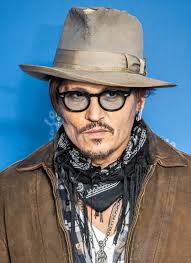
In the late 1980s and early 1990s, Depp’s hair was:
Thick and dense
Low and natural at the hairline
Free of visible thinning
During films like Edward Scissorhands, his hair showed no signs of male pattern baldness. His temples were full, density was strong, and the hairline sat comfortably low—typical of a man in his 20s with excellent genetics.
As Depp entered his late 30s and early 40s, subtle changes became visible:
Slight receding hairline at the temples
Mild thinning hair at the frontal zone
Less density under harsh lighting
This pattern is completely normal and consistent with early-stage male pattern baldness—a condition affecting the majority of men as they age.
Johnny Depp’s hair became a frequent topic because:
He was constantly in close-up shots
His hairstyles often exposed the hairline
Fans compared decades of film appearances
Unlike celebrities who suddenly reappear with dramatically thicker hair, Depp’s changes were gradual—making the story harder to interpret.
No.
There has been:
❌ No interview confirmation
❌ No public statement
❌ No medical disclosure
Despite years of speculation, Depp has never stated that he underwent hair restoration or a hair transplant procedure.
When specialists analyze celebrity cases, they search for specific markers:
Hairline Reconstruction
A transplant often creates:
A sharper frontal edge
Increased symmetry
Clearly reinforced temples
Depp’s hairline, however, has remained:
Asymmetrical
Slightly irregular
Naturally uneven
This irregularity strongly suggests no surgical hairline reconstruction.
Density Timeline
After hair transplants, density usually increases noticeably within 6–12 months.
In Depp’s case:
Density fluctuates from role to role
No sudden or permanent density jump is visible
Changes align more with styling, lighting, and aging—not surgery.
Donor Area Clues
Modern transplants leave minimal scarring, but:
Overharvesting
Texture changes
Density imbalance
can sometimes be detected. No such donor-area indicators are visible in Depp’s public appearances.
Johnny Depp is a master of style transformation.
His hair has been:
Long, layered, and textured
Tied back or partially covered
Enhanced with volume and movement
Longer, textured hairstyles can:
Conceal thinning hair
Mask a receding hairline
Create the illusion of fullness
This alone explains much of the perceived change.
One common misconception is that hair loss automatically leads to hair transplants.
In reality:
Many celebrities manage hair loss without surgery
Medical treatments and styling can preserve appearance
Not all hair loss requires intervention
Depp’s case fits this pattern perfectly.
Possibly.
Non-surgical hair restoration options include:
Medical scalp treatments
Hair-loss stabilization therapies
Professional grooming strategies
These methods can:
Preserve existing hair
Improve hair shaft thickness
Slow progression of male pattern baldness
They do not create new hairlines—but they can significantly improve appearance.
During Pirates of the Caribbean, Depp’s hair:
Appeared thicker due to dreadlocks and extensions
Was partially covered by headwear and styling
Benefited from cinematic lighting and makeup
This era fueled many depp hair transplant rumors, but in reality, it was a perfect storm of costume design and styling.
As men age:
Hair shafts become finer
Growth cycles slow
Density naturally decreases
Depp’s later appearances show exactly this pattern:
Thinner strands
Softer density
A mature, age-appropriate hairline
None of this indicates surgical alteration.
From a medical and aesthetic standpoint, there are good reasons:
His hair loss never became severe
No large bald zones developed
A transplant could have disrupted his natural, rugged look
For someone whose image relies on authenticity, restraint is often the best choice.
In Hollywood, we see two paths:
Aggressive correction
Natural aging with maintenance
Johnny Depp clearly chose the second.
This approach often:
Ages better
Avoids unnatural results
Maintains character consistency
Celebrities who have had hair transplants usually show:
Abrupt hairline lowering
High frontal density
Very clean, symmetrical edges
Depp shows none of these traits.
If Depp has male pattern baldness, it appears:
Mild
Slow-progressing
Mostly frontal
This is one of the easiest patterns to live with—and often does not require surgery.
The rumor persists because:
Fans expect celebrities to “fix” hair loss
Before/after photos are taken out of context
Styling differences are misinterpreted
But speculation is not evidence.
Key lessons:
Hair loss doesn’t define attractiveness
Surgery is optional, not mandatory
Style and confidence matter more than density
Depp’s career never suffered because of hair changes—proof that presence outweighs hairlines.
Theoretically, yes—but practically, unlikely.
At his age:
Conservative approaches are preferred
Surgical density may look artificial
Natural appearance is usually the goal
Most surgeons would advise against aggressive intervention.
Johnny Depp’s case reminds us:
Not every celebrity chooses surgery
Not every hair loss story ends with a transplant
Personal image matters more than trends
Based on:
No confirmation
No surgical markers
Gradual, natural changes
Heavy influence of styling and roles
👉 There is no credible evidence that Johnny Depp had a hair transplant.
His hair evolution is best explained by:
Natural aging
Mild hair loss
Strategic styling
Possible non-surgical maintenance
Johnny Depp’s look has always been about individuality, not perfection. His hair—like his characters—evolved naturally over time. In an era obsessed with flawless hairlines, his case is a reminder that authenticity often looks better than artificial correction.


