

Justin Bieber has been in the spotlight since his teenage years. Because his image evolved publicly from adolescence to adulthood, fans have closely followed every detail — including his hairline. In recent years, speculation has surfaced online asking whether he may have undergone a hair transplant.
Did Justin Bieber have a hair transplant in 2026?
Has his hairline changed significantly?
If so, what procedure would likely be used — and what would it cost?
This comprehensive guide analyzes the visible changes, the most probable techniques, and realistic pricing in 2026.
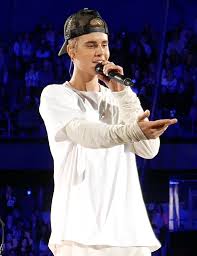
In his early rise to fame (2009–2013), Bieber was known for:
Thick, swooped teenage hairstyle
Dense frontal hairline
High-volume styling
At that stage, there were no visible signs of thinning. His hair was youthful, full, and styled heavily forward.
However, it is important to remember that early fame began in adolescence — when hairlines are typically at their strongest.
As Bieber transitioned into adulthood, subtle shifts became noticeable:
Slight maturation at the temples
Less aggressive forward styling
Occasional shorter cuts revealing the frontal line
These changes are completely normal as men age from their late teens into their late twenties.
A maturing hairline does not automatically equal hair loss. However, online comparisons have sparked discussion about possible intervention.
As of 2026, there is no official confirmation that Justin Bieber underwent a hair transplant.
Unlike some public figures who openly discuss cosmetic procedures, Bieber has not publicly addressed undergoing surgical hair restoration.
Speculation primarily stems from:
Side-by-side photo comparisons
Changes in haircut style
Social media commentary
Without confirmation, analysis must remain observational rather than definitive.
Earlier Appearances:
Slight temple recession
Natural maturation
Less defined corner structure
More Recent Appearances:
Balanced frontal outline
Stable temple density
Fuller visual framing
The changes appear subtle rather than dramatic.
Importantly, there is no clear evidence of aggressive lowering — which is often seen in surgical overcorrection cases.
If Justin Bieber did undergo a hair transplant in 2026, the most probable technique would be:
Follicular Unit Extraction (FUE)
Why FUE?
No linear scar
Minimal downtime
Natural-looking density
Ideal for high-profile individuals
FUE involves extracting individual hair grafts from the donor area and implanting them into thinning zones.
Because Bieber frequently wears short or closely cropped styles, avoiding visible scarring would be essential.
Based on visual assessment — if a procedure occurred — it likely required:
1500–2500 grafts
Focus on temple reinforcement
Conservative frontal density enhancement
There is no indication of advanced baldness requiring large-scale reconstruction.
Before assuming surgery, consider alternative explanations:
Hairstyle changes
Texture cutting
Volume-enhancing products
Professional grooming
Lighting differences
Stage lighting and high-resolution photography can dramatically affect perceived density.
Bieber’s evolving fashion aesthetic may explain much of the visual difference.
Modern FUE procedures follow a predictable biological cycle:
Week 1: Scabbing and mild redness
Month 1: Temporary shedding
Month 3–4: Early regrowth
Month 6: Noticeable improvement
Month 12: Final matured result
If Bieber had undergone surgery, the gradual nature of hair growth would align with subtle improvement rather than overnight change.
Hair transplant costs vary by location and surgeon reputation.
🇺🇸 United States (Celebrity-Level Clinic)
$12,000 – $30,000+
🇬🇧 United Kingdom
£8,000 – £20,000
🇹🇷 Turkey (Premium Clinics)
€3,000 – €7,000
For a high-profile celebrity like Bieber, costs could exceed $35,000 due to:
Privacy measures
Discretion agreements
VIP surgical scheduling
Post-operative concierge care
Modern hair restoration prioritizes:
Age-appropriate hairlines
Natural asymmetry
Subtle density gradients
Avoiding straight, artificial edges
Aggressive lowering often looks unnatural over time.
If Bieber did undergo a transplant, the conservative result suggests high-level surgical planning.
Transplanted hair taken from the donor zone is genetically resistant to DHT.
This means:
Permanent graft survival
Continued natural growth cycles
No need for replacement
However, native non-transplanted hair can continue thinning with age.
Hair restoration is increasingly normalized among public figures.
From actors to athletes and musicians, discreet cosmetic procedures are no longer taboo.
What has changed in 2026:
Techniques are more refined
Results are undetectable
Recovery is faster
Social stigma is reduced
Whether Bieber underwent surgery or not, the conversation reflects growing acceptance of cosmetic hair solutions.
At this time:
Justin Bieber has not officially confirmed undergoing a hair transplant.
Visible changes appear subtle and consistent with natural maturation and grooming evolution.
If a procedure occurred, it was likely conservative and FUE-based.
There is no strong evidence of dramatic surgical reconstruction.
The discussion surrounding a possible Justin Bieber hair transplant in 2026 highlights how closely fans track celebrity image changes.
While there is no official confirmation of surgery, subtle improvements in hairline symmetry and density have fueled speculation.
If intervention occurred, it would likely involve:
Follicular Unit Extraction (FUE)
Conservative graft placement
Natural, age-appropriate design
High-discretion clinical setting
Modern hair restoration allows subtle refinement without obvious surgical signs — making it difficult to definitively distinguish styling evolution from medical enhancement.
When analyzing celebrity hairline changes, the key factor is not just density — it is structural geometry.
In Justin Bieber’s case, what stands out over time is:
Subtle temple stabilization
Slight improvement in corner framing
More consistent frontal outline
Reduced light reflection through the hair under strong lighting
Importantly, there is no dramatic lowering of the hairline. Instead, any perceived change appears conservative — which is typical in modern celebrity procedures.
Many men mistake a maturing hairline for pathological hair loss.
A mature hairline:
Moves slightly higher
Develops minor temple recession
Stabilizes over time
True progressive loss:
Continues receding
Thins diffusely
Follows Norwood pattern progression
In Bieber’s case, the changes could be consistent with natural maturation rather than advanced hair loss.
If a procedure occurred, the likely targets would be:
Temple peak reinforcement
Slight corner density increase
Micro-frontal refinement
Estimated graft range:
1200–2000 grafts
Primarily frontal third
No major crown involvement
This type of refinement is subtle and often undetectable.
Elite-level hair restoration in 2026 follows strict design principles:
✔ No aggressive straight hairlines
✔ No dramatic forehead lowering
✔ Natural micro-irregularities
✔ Density gradient layering
✔ Respect for future aging
Bieber’s current hairline — whether surgical or natural — aligns with these conservative standards.
Justin Bieber’s hair texture plays a significant role in perception.
Factors enhancing visual density:
Slightly longer textured cuts
Volume-focused styling
Strategic forward direction
Matte styling products
Thicker hair shafts create the illusion of fullness even without graft addition.
If Bieber had undergone a transplant in 2026, it would likely have been timed:
During tour breaks
Between album cycles
During reduced public appearances
Because FUE recovery is relatively discreet (7–10 days visible healing), scheduling flexibility makes procedures easy to conceal.
For a global superstar, pricing may include:
Private surgical team
Non-disclosure agreements
Confidential facility scheduling
Dedicated post-operative concierge
Adjunct PRP treatments
Total cost in elite U.S. clinics could exceed:
$25,000 – $40,000+
International options could reduce cost significantly but discretion often keeps celebrity procedures domestic.
If surgical intervention occurred, long-term planning likely included:
Preventative DHT management
Scalp health optimization
Potential future minor touch-ups
Preservation of donor supply
Modern transplant strategy focuses on lifetime planning rather than one-time cosmetic correction.
The speculation surrounding Justin Bieber’s hairline illustrates a larger cultural shift:
Hair transplants are normalized
Younger patients intervene earlier
Conservative results are prioritized
Cosmetic refinement is no longer taboo
Today’s procedures aim to look like improved genetics — not obvious surgery.
At this time, there is no official confirmation that Justin Bieber underwent a hair transplant in 2026.
However, subtle improvements in symmetry and density — whether due to natural maturation, styling evolution, or surgical refinement — highlight how modern techniques have advanced.
If intervention occurred, it was likely:
Conservative
FUE-based
Focused on temple reinforcement
Designed for undetectable results
Structured for long-term stability
In 2026, celebrity hair restoration is less about dramatic change and more about strategic, natural enhancement.


