

Few actors in modern cinema have been under as much long-term visual scrutiny as Leonardo DiCaprio. From his teenage heartthrob years to his current status as an Oscar-winning icon, DiCaprio’s face—and especially his hair—has been photographed, filmed, analyzed, and debated for over three decades.
That’s why one question keeps resurfacing online:
Did Leonardo DiCaprio have a hair transplant?
In this comprehensive, evidence-based analysis, we’ll explore leonardo dicaprio hair changes over time, signs of hair loss, the role of genetics and styling, expert perspectives on modern hair transplant procedure indicators, and whether the popular dicaprio hair transplant theory holds up to scrutiny.
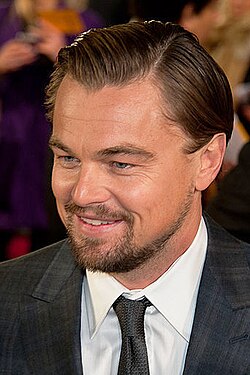
In the early 1990s, DiCaprio’s hair was one of his defining features:
Thick, youthful volume
A low, soft natural hairline
A visible widow’s peak that framed his face
During films like Titanic, his look projected a true full head of hair—dense, shiny, and unrestricted by thinning or recession. At this stage, there were no visible signs of hair thinning or male pattern baldness.
As DiCaprio entered his late 30s and 40s, subtle changes became noticeable:
Slight receding hairline at the temples
Reduced hair density under harsh lighting
Finer texture consistent with natural aging
These changes sparked widespread speculation about hair, especially when fans compared stills from different eras without accounting for age, styling, or lighting.
Male pattern baldness does not always mean severe baldness. In many men, it presents as:
Gradual temple recession
Preserved frontal forelock
Stable crown
DiCaprio’s pattern—if present at all—appears mild and slow-progressing. This is important because it influences whether surgical intervention is even medically necessary.
When comparing early and recent images:
His widow’s peak remains visible
The hairline has matured but not dramatically shifted
There’s no sharp reconstruction or symmetry typical of surgery
This continuity strongly suggests no surgical hairline redesign.
No.
There has been:
❌ No public confirmation
❌ No interview admission
❌ No medical disclosure
Despite decades of media attention, DiCaprio has never stated that he underwent a hair transplant procedure or any surgical hair restoration treatments.
Professionals assessing celebrity cases focus on several markers:
Hairline Geometry
After a transplant, hairlines often appear:
Lowered
More uniform
Less irregular
DiCaprio’s hairline still shows natural asymmetry and a consistent widow’s peak, which is difficult to preserve surgically without detection.
Density Timeline
Post-transplant fuller hair typically appears within 6–12 months.
In DiCaprio’s case:
Density fluctuates from role to role
No sudden, permanent increase is visible
This suggests styling variation rather than surgical change.
Donor Area Indicators
Even with modern techniques like follicular unit extraction, subtle donor-area signs can sometimes be detected.
There is:
No visible overharvesting
No density contrast at the back or sides
Again, no strong surgical indicators.
A major reason behind speculation about hair is DiCaprio’s ever-changing roles and styles:
Slicked-back looks exaggerate recession
Messy or layered styles enhance volume
Professional grooming improves perceived hair density
These visual shifts can create the illusion that someone “turned to hair” restoration, when in fact the change is cosmetic, not surgical.
As men age:
Hair follicles shrink slightly
Growth cycles slow
Strands become finer
This natural process explains why DiCaprio’s hair today looks different from his 20s—without invoking surgery.
Modern advances in hair care include:
Medical stabilization therapies
Professional scalp treatments
Improved grooming products
These methods can maintain fuller hair without adding new follicles. For celebrities with access to top-tier care, these tools are often enough.
Non-surgical hair restoration treatments may include:
Medical-grade topical therapies
Hormonal management
PRP or scalp-based treatments
These approaches help preserve existing hair but do not create new hairlines—matching DiCaprio’s observed pattern.
Medically possible? Yes.
Evidence-based? No.
If DiCaprio had undergone surgery, experts would expect:
A more defined frontal edge
Increased symmetry
Clear before/after density jump
None of these are present.
Many online rumors link celebrities to procedures like DHI Hair Transplant in Antalya, known for precision and minimal shaving. While this technique produces very natural outcomes, there is no credible evidence connecting DiCaprio to such a procedure.
It’s important to separate celebrity hair myths from documented cases.
Similarly, FUE Hair Transplant Antalya is often cited as a reason “you can’t tell anymore.” While FUE can be subtle, it still leaves:
Patterned density changes
Altered hairline geometry
DiCaprio’s hair evolution does not match typical FUE timelines or markers.
DiCaprio appears to show:
Mild thinning hair with age
No aggressive recession
No expanding bald zones
Thinning does not automatically mean surgery is needed—or used.
From an aesthetic standpoint:
His hair loss never became severe
A transplant could disrupt his iconic look
Natural aging suits his on-screen persona
Many surgeons would advise restraint in such cases.
DiCaprio is a perfect storm for speculation:
Long career span
Early iconic look
High public visibility
But speculation is not proof.
Celebrities who have had transplants typically show:
Abrupt transformation
Dramatically lowered hairlines
Dense frontal bands
DiCaprio shows none of these.
The strongest argument against a dicaprio hair transplant is consistency:
Same hairline shape over decades
Same widow’s peak
Gradual, age-appropriate change
Surgery usually introduces discontinuity—DiCaprio’s look does not.
Both DHI Hair Transplant in Antalya and FUE Hair Transplant Antalya represent cutting-edge options for patients with significant loss. DiCaprio’s case, however, illustrates that not all hair changes require—or benefit from—surgical intervention.
Sometimes, preservation is the smartest strategy.
Key lessons:
Mild hair loss doesn’t mandate surgery
Genetics and styling play huge roles
Natural aging can still look great
DiCaprio proves that confidence and consistency matter more than chasing perfection.
Based on:
No confirmation
No surgical markers
Stable hairline geometry
Gradual, natural changes
👉 There is no credible evidence that Leonardo DiCaprio had a hair transplant.
His hair journey is best explained by:
Mild, slow hair thinning
Strong genetics
Expert grooming
Possible non-surgical maintenance
Leonardo DiCaprio’s hair story is not about dramatic transformation—it’s about subtle evolution. In an era obsessed with instant fixes, his case reminds us that not every change is surgical, and not every celebrity turns to hair transplants.
Sometimes, the most natural look is exactly that—natural.
One of the biggest reasons leonardo dicaprio hair continues to look impressive is not the absence of aging—but the presence of density management.
Even when:
hair thinning is visible under harsh light
the receding hairline becomes slightly more pronounced
the overall hair density across the frontal and mid-scalp regions remains balanced. This balance is what preserves the illusion of a full head of hair, even decades after his early career peak.
A critical scientific point often ignored in celebrity discussions is this:
Hair follicles don’t suddenly vanish—they miniaturize.
In DiCaprio’s case:
Follicles appear to have thinned gradually
Growth cycles slowed with age
But follicles themselves remained active
This explains why he never developed large bald zones and why extreme intervention was never necessary.
DiCaprio’s widow’s peak is one of the most consistent features of his appearance.
Why this matters:
Surgical hairlines often soften or eliminate widow’s peaks
Recreating a natural widow’s peak surgically is difficult
DiCaprio’s widow’s peak has remained stable for decades
This continuity strongly argues against any hair transplant procedure involving frontal reconstruction.
It’s important to separate two concepts often confused:
Hair loss → follicles stop producing hair
Hair thinning → follicles produce finer hair
DiCaprio’s pattern aligns almost entirely with hair thinning, not aggressive male pattern baldness. This is why his look changed subtly—but never dramatically.
Many men eventually turn to hair restoration when:
Balding accelerates
Crown loss expands
Facial framing disappears
DiCaprio never reached that threshold.
From a clinical perspective:
His hairline matured, not collapsed
His donor-to-recipient imbalance never justified surgery
Non-invasive maintenance was the smarter option
Modern advances in hair care have dramatically changed outcomes for public figures.
Celebrities today often rely on:
Professional-grade scalp treatments
Precision grooming
Density-enhancing styling techniques
These tools can preserve fuller hair for many years—especially in men with favorable genetics like DiCaprio.
There will always be speculation about hair when it comes to iconic figures.
This happens because:
Fans compare 20-year-old images to 50-year-old appearances
Lighting, resolution, and styling differ drastically
Social media amplifies before/after narratives
But speculation is driven by perception—not medical evidence.
In the world of celebrities hair, there are two main paths:
Surgical correction (visible timeline shift)
Long-term preservation (gradual, natural evolution)
Leonardo DiCaprio clearly followed the second path.
This choice:
Preserves authenticity
Avoids overcorrection
Ages naturally on screen
Even with the most advanced techniques, a hair transplant procedure usually leaves behind:
Altered density patterns
Re-engineered frontal symmetry
A visible “reset” point in time
None of these markers appear in DiCaprio’s hair history.
A key reason DiCaprio’s appearance remains strong is proportion.
His natural hairline still frames the face
Slight recession adds maturity rather than imbalance
The widow’s peak maintains character
A lower, surgically altered hairline could actually have reduced realism.
For real patients considering hair restoration, DiCaprio’s case offers powerful lessons:
Not all hair loss needs surgery
Preservation can outperform reconstruction
A natural hairline often ages better than an “ideal” one
Confidence is not proportional to graft count
When all elements are considered—
biology, aging, hair follicles, styling, and long-term consistency—the most accurate conclusion remains unchanged:
Leonardo DiCaprio’s hair evolution reflects natural aging and smart maintenance, not surgical intervention.
There is still no credible evidence supporting a dicaprio hair transplant, despite decades of discussion.
Leonardo DiCaprio’s case is important because it reminds both patients and clinicians that:
Surgery is a tool, not a requirement
Subtlety often wins in the long term
The best hair restoration is sometimes knowing when not to intervene
From a clinical perspective, surgeons usually recommend a hair transplant procedure when three red flags appear together:
Rapid progression of hair loss
Loss of frontal framing of the face
Visible donor–recipient imbalance
Leonardo DiCaprio never showed this combination. His receding hairline progressed slowly, his facial frame remained intact, and no aggressive bald zones formed. This alone explains why surgical intervention was never a medical necessity.
Many viewers underestimate how much film technology affects perceived hair density.
Factors that influence perception:
Ultra-HD cameras amplify scalp contrast
Overhead lighting exposes thinning hair
Sweat, styling products, and wind flatten volume
In real life, DiCaprio’s hair density appears significantly stronger than in certain film stills. This gap between reality and camera perception is a major driver of online speculation.
A full head of hair does not require maximum density everywhere.
It requires:
Strategic density at the frontal third
Continuity between frontal and mid-scalp
Absence of sudden density drop-offs
DiCaprio’s hair still satisfies all three conditions, which is why—even with thinning—his overall look remains convincing.
One reason DiCaprio aged well hair-wise is follicle quality.
Healthy hair follicles:
Produce thicker shafts for longer
Maintain growth cycles better with age
Resist rapid miniaturization
This follicle resilience explains why his hair thinned gradually instead of collapsing into visible bald patches.
Not all male pattern baldness behaves the same.
DiCaprio appears to have:
Front-dominant mild recession
Minimal crown involvement
Strong lateral and posterior zones
This pattern often remains cosmetic rather than surgical—especially when managed early with non-invasive care.
Surgeons are cautious with patients who have:
A recognizable natural hairline
A defining widow’s peak
Strong facial identity tied to hair shape
Altering such a hairline risks:
Loss of character
Artificial symmetry
A result that looks “done”
DiCaprio’s untouched hairline is actually a textbook example of what not to fix.
If DiCaprio pursued anything at all, it would almost certainly fall under hair restoration treatments rather than surgery.
These may include:
Follicle-supportive medical protocols
Scalp-based regenerative care
Density-preserving routines
These methods help maintain fuller hair without changing hairline geometry—exactly what we observe.
Speculation about hair is strongest when:
The subject had iconic youth-phase hair
Aging is gradual, not dramatic
No official statement is given
DiCaprio fits all three criteria perfectly. Silence + visibility + nostalgia fuel endless theories.
Among celebrities hair management strategies, DiCaprio represents the “consistency model”:
Preserve instead of replace
Accept aging instead of resetting
Avoid drastic timeline shifts
This approach often yields the most believable long-term result.
Even today:
His hairline still supports facial proportions
Mild recession adds maturity, not imbalance
The widow’s peak prevents a flat frontal look
From an aesthetic point of view, his hair still performs its primary function: facial framing.
From a clinic standpoint, DiCaprio’s case teaches patients that:
Surgery is not mandatory for mild hair loss
Thinning ≠ balding
Preservation can outperform reconstruction
A natural hairline often ages better than a “perfect” one
Many patients rush toward surgery when observation would be wiser.
Leonardo DiCaprio’s hair story matters because it shows:
When not to operate
How genetics + maintenance can carry decades
Why restraint is sometimes the best medical decision
There is still no anatomical, chronological, or visual evidence of a dicaprio hair transplant.
In an era where every hairline is dissected online, Leonardo DiCaprio stands as proof that:
The most successful hair strategy is not always adding hair—but protecting what you already have.


