

Over the past decade, lewis hamilton hair has become a hot topic online. From early Formula 1 seasons to recent public appearances, visible changes in his hair density and hairline have sparked widespread speculation. Did Hamilton have a hair transplant? What procedure would explain the transformation? And how much would it cost in 2026?
In this in-depth guide, we analyze the possible hamilton hair transplant, the procedure most likely involved, the science behind it, and a realistic 2026 price range.
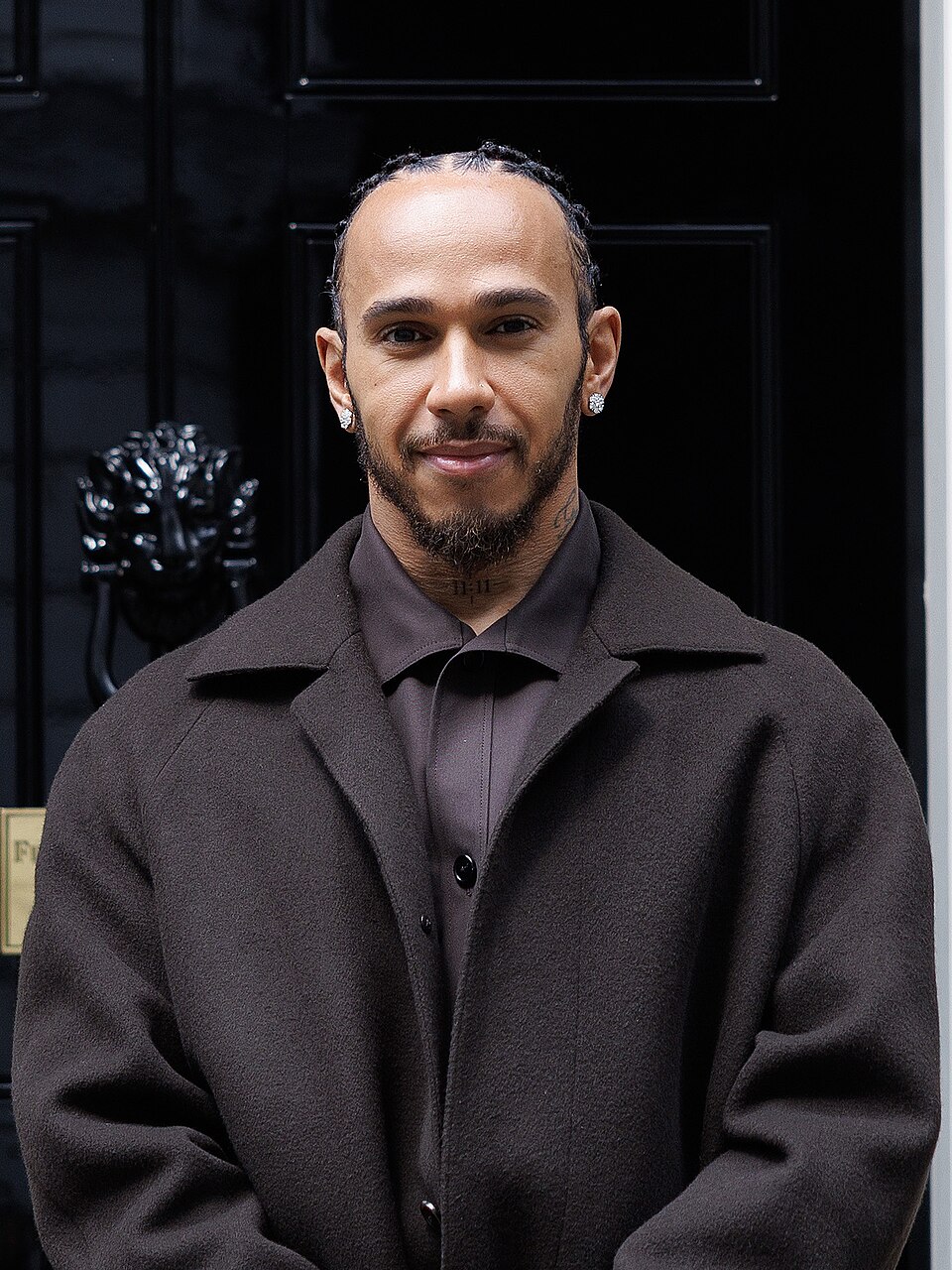
In the late 2000s and early 2010s, photos of Lewis Hamilton showed signs consistent with male pattern hair loss:
A visible receding hairline
Thinning at the temples
Reduced density in the frontal area of hair
This pattern aligns with early-stage male pattern baldness, a genetic condition affecting millions of men worldwide.
Male pattern baldness is driven by DHT (dihydrotestosterone), which gradually miniaturizes individual hair follicles, especially in the frontal and crown regions.
At that stage, Hamilton appeared to be experiencing progressive thinning rather than complete baldness.
In more recent appearances, Hamilton’s hair looks:
Fuller
Denser
More structured at the hairline
Less recessed in the temple area
The dramatic improvement led many to question:
Did Hamilton have a hair transplant?
While there is no official public confirmation, the change strongly suggests medical intervention — especially considering the improved density in the previously thinning areas.
The most probable technique used would be follicular unit extraction (FUE).
Why follicular unit extraction?
It leaves no linear scar.
It allows extraction of individual hair follicles.
It offers natural-looking results.
Recovery time is relatively short.
In this technique:
Hair follicles are extracted from the donor area (usually the back of the scalp).
The grafts are preserved carefully.
The surgeon implants them into the thinning area of hair.
Because Lewis Hamilton often wears his hair short or braided, a scar-free method like FUE would be ideal.
Some speculate that Hamilton may have opted for advanced hair loss treatment rather than surgery.
These treatments can include:
PRP (Platelet-Rich Plasma)
Prescription medication (Finasteride, Minoxidil)
Stem cell therapies
Laser stimulation
However, in cases of established receding hairline, medication alone typically does not restore dense frontal hair. It mainly slows progression.
Given the apparent improvement in density and structure, a hamilton hair transplant using follicular unit extraction seems more plausible.
A successful transplant depends heavily on the donor area.
The donor area must:
Be resistant to DHT
Have high density
Match the type of hair
Provide strong graft survival
Hamilton appears to have thick-textured hair, which improves coverage and visual density after transplantation.
Curly or coarse hair types often provide better scalp coverage compared to fine, straight hair.
If Lewis Hamilton underwent a transplant, the likely timeline would have been:
Day 1:
Local anesthesia
Extraction of grafts
Implantation
Week 1:
Scabbing and healing
Month 1:
Shedding phase (shock loss)
Month 3–4:
Early hair growth
Month 6:
Noticeable density improvement
Month 12:
Final results
Professional athletes often schedule procedures during off-season periods to minimize public visibility during recovery.
Based on visual analysis:
2000–3000 grafts may have been sufficient
Focus likely on the frontal zone
Temple reinforcement possible
Because Hamilton did not appear completely bald, this would have been a density restoration rather than full scalp reconstruction.
Hair transplant pricing in 2026 varies depending on location and clinic reputation.
🇬🇧 United Kingdom
£6,000 – £15,000
High-end celebrity clinics cost more.
🇺🇸 United States
$8,000 – $20,000+
🇹🇷 Turkey (premium clinics)
€2,000 – €5,000
VIP services available
A celebrity-level procedure in a private clinic with discretion services could cost significantly more.
High-profile individuals prefer follicular unit extraction because:
No visible linear scar
Faster healing
Natural density
Flexibility with hairstyles
For someone constantly in the public eye like Lewis Hamilton, this would be the most practical option.
A well-executed transplant should:
Match the natural type of hair
Follow original hairline geometry
Avoid artificial symmetry
Maintain age-appropriate positioning
Hamilton’s current appearance suggests careful planning and conservative design — if a procedure was indeed performed.
There is no official confirmation that hamilton have a hair transplant. However:
The density shift is significant.
The frontal reinforcement looks surgical rather than cosmetic.
The consistency of thickness suggests permanent graft survival.
The transformation aligns closely with modern transplant outcomes.
Some observers argue that braiding and longer hairstyles may create the illusion of density.
While styling can enhance appearance, it cannot permanently reverse advanced male pattern hair loss or a receding hairline.
Thus, cosmetic styling alone is unlikely to explain the transformation.
Post-transplant hair growth follows a predictable biological cycle:
Shock shedding
Dormant phase
Anagen (growth phase)
Thickening phase
Final results usually appear between 9–12 months.
Given the sustained improvement in recent years, any procedure Hamilton may have had would now be fully matured.
Athletes are not immune to male pattern baldness.
Common contributing factors:
Genetics
Hormonal sensitivity
Stress
Age progression
However, early intervention provides better aesthetic results.
Based on visible changes:
Early signs of male pattern hair loss
Clear improvement in density
Restored frontal structure
Consistent thick coverage
It is reasonable to assume that a hamilton hair transplant using follicular unit extraction may have been performed — though not officially confirmed.
The transformation of lewis hamilton hair over the years reflects what modern hair restoration can achieve.
If a procedure was done, it was likely:
Conservative
Natural
Technically precise
Focused on density restoration
In 2026, hair transplant technology continues to advance, offering discreet, high-success solutions for individuals experiencing male pattern hair loss.
Whether Lewis Hamilton publicly confirms it or not, his case demonstrates how modern hair loss treatment and transplant procedures can restore confidence and maintain a strong public image.


