

When people talk about actors who have aged with dignity, authority, and unmistakable presence, Liam Neeson is always near the top of the list. From dramatic roles to action-heavy performances later in life, Neeson’s look has remained remarkably consistent—especially his hair.
That consistency is exactly why one question keeps appearing online:
Did Liam Neeson ever have a hair transplant?
In this article, we’ll analyze Liam Neeson’s hair over the decades, examine whether there are any real indicators of surgical intervention, and explain why his case is often misunderstood when discussed in the context of hair transplants.
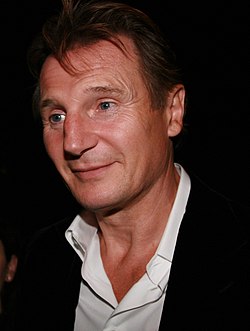
In the late 1970s and 1980s, Liam Neeson already had the defining traits that would follow him throughout his career:
A naturally high, mature hairline
Strong density across the top
Thick, coarse hair strands
Even early on, Neeson did not have a low or youthful hairline. This is a crucial point. Many people later mistake his naturally mature hairline for early hair loss, when in reality it was largely genetic.
Yes—but in a very controlled and age-appropriate way.
As Neeson aged:
The temples receded slightly
Hair density softened gradually
No aggressive bald patches developed
This pattern aligns with normal aging, not advanced male pattern baldness. Importantly, there was never a period where his hairline suddenly dropped, thickened, or changed shape dramatically.
There are three main reasons people speculate about a “Liam Neeson hair transplant”:
Longevity – His career spans decades, inviting constant comparison
High visibility – Close-up shots emphasize every detail
Expectation bias – People assume all aging actors “fix” their hair
But assumption is not evidence.
One of the strongest arguments against a hair transplant is geometry.
Across decades:
His frontal hairline stayed in the same position
The recession pattern remained symmetrical
No artificial straightening or reshaping occurred
After a hair transplant—especially modern ones—the hairline usually shows:
Improved symmetry
Reinforced frontal density
A visible design element
None of these markers appear in Neeson’s case.
Another key indicator is timeline.
Hair transplants typically show:
A clear “before” phase
A recovery period
A noticeable “after” density increase within 6–12 months
Liam Neeson’s hair density changed:
Slowly
Consistently
Predictably with age
There is no visible moment in his career that suggests a surgical reset.
Neeson’s hairstyles are often:
Short and conservative
Slightly textured
Designed to emphasize authority, not youth
In films like Taken and other later action roles, his hair appears fuller mainly due to:
Shorter cuts (which reduce scalp contrast)
Strategic lighting
Professional grooming
These are optical effects—not medical ones.
No.
There has been:
No interview admission
No public confirmation
No indirect acknowledgment
Given Neeson’s generally candid personality, it’s unlikely such a procedure would remain completely hidden if it had occurred.
Professionals analyzing potential celebrity hair transplants typically look for:
Sudden density increases
Reconstructed temple points
Donor-area changes
A “designed” hairline appearance
In Liam Neeson’s case:
Density declines naturally with age
Temple recession remains stable
Donor areas show no signs of intervention
From a clinical standpoint, there is no strong evidence of a hair transplant.
From a medical and aesthetic perspective, Neeson would not be an ideal candidate for surgery because:
His hair loss was never severe
His look relies on maturity and authority
Overcorrection could make him look unnatural
In many cases, surgeons advise not to intervene when hair loss is mild and age-appropriate—precisely Neeson’s situation.
In modern celebrity culture, there is growing appreciation for actors who age naturally. Liam Neeson represents this group.
Instead of chasing a youthful appearance, he maintained:
Consistent hairline identity
Realistic density
Visual authenticity
Ironically, this makes him look more credible—and powerful—on screen.
It’s possible he used:
Professional scalp care
Quality grooming routines
Medical-grade hair maintenance
These approaches help preserve existing hair without altering hairline shape. They are common among public figures and do not constitute a hair transplant.
Actors who have clearly had hair transplants typically show:
Dramatic hairline improvement
Younger-looking frontal framing
Noticeably thicker hair in a short time
Neeson shows the opposite:
Stable hairline
Gradual thinning
Age-consistent appearance
This comparison strongly favors the conclusion of no surgical intervention.
The idea of a “Liam Neeson hair transplant” persists because:
Hair loss discussions are emotional
People expect celebrities to intervene
Internet content favors speculation
But speculation without anatomical evidence remains just that—speculation.
Liam Neeson’s case offers valuable lessons:
Not every receding hairline needs correction
Maturity can be an aesthetic advantage
Consistency often looks better than reconstruction
For many men, especially over 50, doing nothing is sometimes the best decision.
Modern hair transplants can produce excellent results, but they are:
Optional
Highly individualized
Best suited for specific patterns of hair loss
Neeson’s pattern simply never crossed that threshold.
For patients with:
Rapid progression
Large bald zones
Loss of frontal framing
Surgical solutions may be appropriate. Many international patients explore options through experienced clinics such as Haarex Clinic, often in the broader context of Health Tourism in Antalya, where advanced techniques like Sapphire FUE Hair Transplant are used to achieve natural results.
Liam Neeson’s case, however, demonstrates when surgery is not necessary.
Based on:
Long-term hairline consistency
Absence of surgical markers
Gradual, natural aging
No public confirmation
👉 There is no credible evidence that Liam Neeson had a hair transplant.
His hair evolution is best explained by genetics, aging, and professional grooming—not surgery.
Liam Neeson’s hair story is important because it challenges a common myth: that every visible celebrity must secretly be fixing their hair.
Sometimes, the most convincing look is simply the result of:
Good genetics
Smart styling
Accepting time gracefully
And in Neeson’s case, that authenticity has become part of his iconic presence.


