

As a constantly visible public figure, Logan Paul lives under a microscope. Every haircut, every close-up, every angle posted on social media gets dissected—and when fans started noticing changes in logan paul’s hair, speculation exploded.
So what actually happened? Did Logan Paul undergo a hair transplant, try non-surgical hair restoration, or is this just another case of lighting, styling, and timing creating an illusion? Let’s unpack the evidence carefully, separating what’s publicly confirmed from what’s inferred, and explaining what experts look for when evaluating celebrity hair changes.
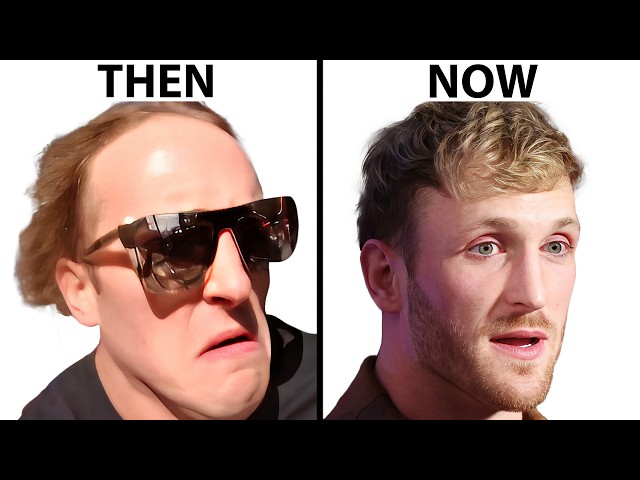
Logan Paul’s career evolved rapidly—from YouTube vlogs to boxing, WWE, and major business ventures. With that rise came relentless camera exposure. Fans comparing old clips to newer appearances noticed:
A subtly receding hairline in earlier years
Fuller frontal coverage later on
A cleaner, more defined paul’s hairline in recent photos
For a young male influencer, any perceived shift sparks talk of male pattern baldness, surgical procedures, or advanced treatments.
Looking back at early content, some viewers noted:
Mild temple recession
Slight thinning at the frontal corners
A hairline that matured rather than collapsed
This pattern is common and does not automatically equal hair loss that requires surgery. Many men experience a maturing hairline without progressing to advanced baldness.
The rumor mill intensified when side-by-side screenshots circulated online. In newer content, Logan’s hair appeared:
Denser at the temples
Better framed across the forehead
More consistent in volume
Fans quickly jumped to the conclusion of a paul hair transplant—but visual changes alone aren’t proof.
Here’s the crucial distinction: Logan Paul has publicly confirmed using platelet rich plasma (PRP) therapy for hair. PRP is a non-surgical treatment designed to support hair follicles, improve scalp health, and potentially thicken existing hair.
What he has not publicly confirmed:
Undergoing a follicular unit extraction transplant
Any invasive surgical procedures for hair
This matters. PRP can make hair look healthier and thicker—but it does not create new hairlines.
Platelet rich plasma works by:
Using the patient’s own growth factors
Supporting weakened hair follicles
Potentially improving density in thinning areas
A transplant—such as follicular unit extraction—moves follicles from a donor area to thinning zones, creating new, permanent hair growth where follicles were lost.
PRP can enhance; transplants replace. Logan Paul’s visible changes fit enhancement more than replacement.
When experts evaluate potential transplants in celebrities, they look for:
A redesigned, lower hairline
Uniform density across formerly thin areas
A noticeable timeline (shedding → regrowth)
Possible signs in the donor area
In Logan Paul’s case:
The hairline remains naturally irregular
Density changes appear gradual, not abrupt
No donor-area clues are visible
These findings weaken the argument for follicular unit extraction surgery.
Another overlooked factor is lifestyle. Logan Paul’s intense fitness routines, grooming, and professional styling can significantly alter how hair looks on camera.
Small changes that make a big difference:
Slightly longer length on top
Forward or textured styling
Improved hair health from better nutrition
On social media, these adjustments can look like dramatic transformation—without any surgery involved.
If Logan Paul were developing male pattern baldness, the pattern appears mild and frontal—no crown collapse, no expanding bald zones. That’s the stage where many men choose hair restoration methods like PRP or medical care, not surgery.
As a high-profile internet personality, Logan has access to every option. If recession progressed significantly, a conservative transplant could be considered—but based on what’s visible today, there’s no clear necessity.
Three reasons keep the rumor alive:
Constant comparison of old vs new clips
Expectation that celebrities “fix” everything
Confusion between PRP results and transplants
But enhancement ≠ transplantation.
Logan Paul’s situation is a perfect example of how:
Non-surgical hair restoration can create visible improvement
Public admissions (like PRP) get mixed with speculation
The internet fills gaps with assumptions
It also shows how careful management can keep hair looking strong without invasive steps.
Based on:
What’s been publicly confirmed (PRP)
Lack of surgical markers
Gradual, natural-looking changes
👉 There is no solid evidence that Logan Paul has had a hair transplant.
His improved appearance is best explained by PRP therapy, smart styling, and overall hair care—not follicular unit extraction surgery.
One of the strongest arguments against a surgical transplant is the geometry of paul’s hairline.
Even in his most recent appearances:
The frontal edge is not perfectly straight
There are small asymmetries between temples
Density gradually tapers instead of forming a sharp wall
After follicular unit extraction, especially in young patients, the hairline usually looks more “engineered.” Logan Paul’s hairline still behaves like a natural, maturing one.
A key biological detail often missed in social media debates is follicle timing.
Hair follicles:
React over months, not weeks
Follow long growth cycles
Do not instantly thicken from surgery
The gradual improvement seen in logan paul’s hair aligns far more closely with platelet rich plasma support than with surgical relocation of follicles.
For a young internet personality, PRP is often the first choice because:
It’s non-invasive
There is no downtime
It fits an unpredictable public schedule
Combined with:
High-level nutrition
Intense fitness routines
Professional grooming
PRP can significantly improve hair appearance without crossing into surgical procedures.
In real transplant cases, the donor area often tells the truth.
Experts usually look for:
Density irregularities
Extraction patterns
Texture changes
In Logan Paul’s publicly available images:
No thinning or patchiness is visible
The donor zone looks untouched
This strongly argues against a paul hair transplant having taken place.
If Logan Paul were progressing into male pattern baldness, typical signs would include:
Rapid temple recession
Forelock thinning
Crown involvement
Instead, his pattern suggests:
Mild, stable frontal maturation
No expanding bald zones
This is exactly the stage where many men choose PRP over surgery.
The assumption that any improvement equals surgery comes from:
Increased awareness of celebrity transplants
High expectations placed on public figures
Lack of understanding of non-surgical options
When a public figure openly discusses PRP, fans often extrapolate that into a full transplant story—even when evidence doesn’t support it.
There’s an important conceptual difference:
Surgical procedures → replace lost follicles
Hair restoration (PRP, medical care) → strengthen existing ones
Logan Paul’s case fits prevention and reinforcement, not replacement.
From a clinic perspective, his situation highlights:
The value of early intervention
The effectiveness of non-surgical treatments
The danger of mislabeling results
Many patients rush into surgery when they are still excellent PRP candidates.
Yes—if his receding hairline progressed significantly in the future.
But smart planning would still mean:
Conservative hairline design
Minimal graft numbers
Respecting long-term progression
For now, surgery would likely be unnecessary and potentially premature.
Key takeaways:
Early hair loss doesn’t demand surgery
PRP can visibly improve hair quality
Social media exaggerates small changes
A natural hairline often looks better than an overcorrected one
When combining:
What is publicly confirmed (PRP)
Hairline geometry
Donor area appearance
Growth timelines
The most accurate conclusion remains:
Logan Paul has not shown clear evidence of a hair transplant.
His hair changes are best explained by PRP, lifestyle, and smart maintenance.
Logan Paul’s case is a perfect reminder that in modern hair aesthetics:
Not every improvement is surgical
Not every celebrity chooses a transplant
Prevention often outperforms correction
And sometimes, the smartest hair decision is knowing when not to operate.


