

Hair loss rarely happens overnight. For most men, it progresses gradually through well-defined stages. One of the most critical turning points in this journey is the Norwood 3 hairline. At this point, hair loss becomes clearly visible, difficult to hide, and psychologically impactful.
But does reaching Norwood 3 automatically mean you need a hair transplant?
Or can the condition still be managed without surgery?
This article explores Norwood 3 hair loss in depth, explains how it fits into the Norwood scale, and provides a clear, medically grounded answer to when hair transplant surgery becomes the right option.
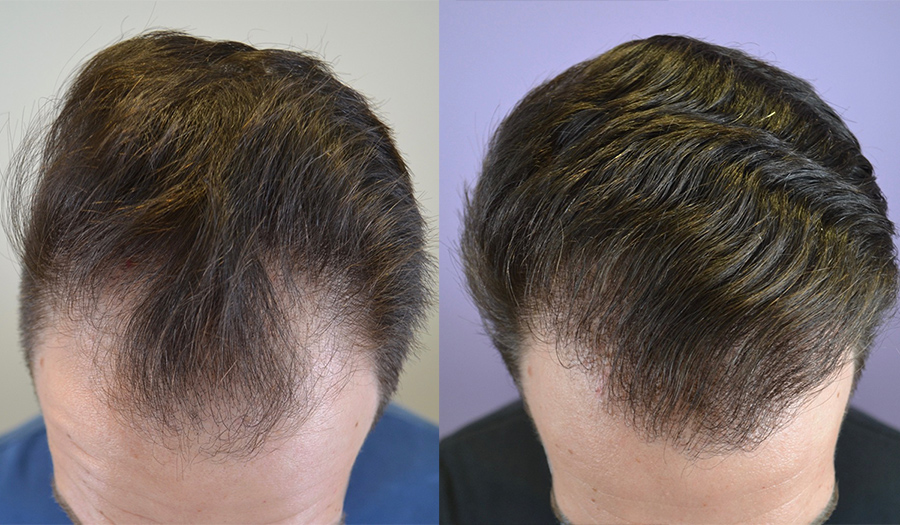
The Norwood scale is the most widely accepted classification system for male hair loss. It maps the natural progression of hair loss from minimal recession to extensive baldness.
It helps:
Doctors diagnose the stage of hair loss
Patients understand future risk
Hair transplant surgeons plan long-term strategies
Each Norwood stage reflects not only what hair is lost—but what is likely to be lost next.
Norwood 3 is the first stage of hair loss where recession becomes clinically significant.
At this stage:
The receding hairline deepens at both temples
The frontal hairline forms a clear “M” shape
Hair loss is no longer subtle or cosmetic
Unlike early stages, Norwood 3 represents active and measurable hair loss, not just hairline maturation.
Norwood 3 is considered the decision point in male hair loss management.
Why?
Hair loss becomes difficult to camouflage
The recession of the hairline accelerates
Treatment outcomes depend heavily on timing
From this stage onward, inaction often leads to significant hair loss within a few years.
Clinically, Norwood 3 is a confirmed stage of male pattern baldness.
This means:
Hair follicles are genetically sensitive to DHT
Miniaturization is ongoing
Loss is progressive, not temporary
At this stage of male pattern baldness, reversal without intervention is unlikely.
Typical Norwood 3 features include:
Deep triangular recession at the temples
A thinner band of hair across the front
Increased scalp visibility under bright light
The frontal hairline no longer frames the face symmetrically.
Not all receding hairlines are the same.
At Norwood 3:
Recession is deep and angular
The hairline shape changes permanently
Styling options become limited
This distinguishes it from earlier cosmetic changes.
The frontal hairline at Norwood 3:
Sits higher than normal
Loses its straight or rounded contour
Appears disconnected from the temples
This is often when men first seek professional advice.
At Norwood 3:
Many hair follicles are already miniaturized
Thick terminal hairs are replaced by thin vellus hairs
Growth cycles shorten dramatically
Once follicles reach advanced miniaturization, recovery becomes unlikely without surgical intervention.
Norwood 2:
Mild recession
Often stable
No true bald zones
Norwood 3:
Clear balding areas at the temples
Progressive pattern
Visible cosmetic impact
This transition marks the shift from “monitoring” to “decision-making.”
If Norwood 3 progresses:
The frontal and crown areas may begin to connect
The horseshoe shaped pattern becomes more obvious
Hair loss accelerates
Early action at Norwood 3 can prevent this escalation.
Male pattern hair loss is inherited.
Key genetic indicators:
Early hair loss in male relatives
Similar hairline shapes
Predictable recession patterns
If family history includes advanced loss, Norwood 3 is rarely the final stage.
Medically speaking, yes.
Norwood 3 is often defined as the first stage of significant hair loss because:
Loss is permanent
Cosmetic camouflage fails
Psychological impact increases
However, “significant” does not mean irreversible.
The classic horseshoe shaped pattern forms when:
Hair remains on the sides of the head
Frontal and crown regions recede
The central scalp thins progressively
Norwood 3 is the earliest phase of this pattern.
At Norwood 3:
A strong band of hair often remains
Crown density is usually preserved
Many follicles are still viable
This makes Norwood 3 one of the best stages for intervention.
The donor area—typically the back and sides of the head—is usually strong at Norwood 3.
Good donor characteristics include:
High density
Thick hair shafts
Minimal miniaturization
This allows excellent surgical planning if needed.
A Norwood 3 hair transplant is considered when:
Recession is clearly visible and progressive
Medical treatments fail to stabilize loss
The patient is psychologically affected
Donor area quality is good
At this point, hair transplant surgery becomes a logical option—not a premature one.
Best candidates:
Stable hair loss for 6–12 months
Realistic expectations
Adequate donor supply
Understanding of future hair loss risk
Early but informed surgery yields the most natural results.
A transplant may be postponed if:
Hair loss is rapidly progressing
The patient is very young
The donor area is weak
Expectations are unrealistic
In such cases, stabilization should come first.
Most experienced hair transplant surgeons agree:
“Norwood 3 is often the ideal stage for surgical correction—if planned conservatively.”
The emphasis is on:
Long-term aesthetics
Preserving donor hair
Avoiding aggressive hairlines
At Norwood 3:
The hairline should be age-appropriate
Over-lowering is avoided
Density is prioritized over coverage
A conservative design prevents unnatural results later.
Typical graft ranges:
1,200–2,200 grafts for temples and front
Depends on hair thickness and extent of hair loss
Results aim for natural framing—not teenage density.
A transplant does not stop future loss.
Long-term plans include:
Medical stabilization
Periodic monitoring
Possible future procedures
Hair restoration is a journey, not a one-time fix.
Men at Norwood 3 often experience:
Reduced confidence
Aging self-perception
Social anxiety
Addressing hair loss often produces disproportionate psychological benefits.
Major errors include:
Waiting too long
Overcorrecting early
Choosing unqualified clinics
Ignoring long-term planning
Education prevents regret.
Norwood 3 does not automatically require surgery—but it is often the stage where surgery makes sense.
Key takeaways:
Norwood 3 is a decisive stage of hair loss
A hair transplant can be highly effective
Timing, planning, and surgeon expertise matter most
Conservative, future-proof strategies win long-term
With the right approach, Norwood 3 hair loss can be managed, corrected, and controlled—not feared.


