

Reaching Norwood 6 or Norwood 7 on the norwood scale can feel overwhelming. At this advanced stage of male pattern baldness, the top of the scalp is often largely bald, leaving only a thin horseshoe-shaped band of hair remaining around the sides of the head. Many men in this situation ask the same question:
Is it still possible to restore hair at Norwood 6–7?
The short answer: yes — but with realistic expectations, careful planning, and an experienced surgical team. In this in-depth guide, we’ll explain:
What Norwood 6 and Norwood 7 mean
How severe male pattern hair loss progresses
Whether a hair transplant procedure can help
How many grafts are typically required
What kind of hair transplant results are realistic
The role of donor management and long-term strategy
Why consultation and case selection matter
Let’s break down what severe baldness really means — and what modern surgery can (and cannot) achieve.
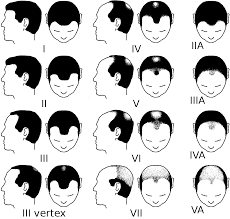
The norwood scale classifies the progression of male pattern baldness from early temple recession to severe, crown-to-frontal baldness.
Norwood 6
The frontal and crown bald areas merge
The mid scalp is largely hairless
A clear horseshoe pattern forms
Only hair on the back and sides of the head remains
Norwood 7
The most severe stage of hair loss
The top of the scalp is completely bald
Norwood 7 hair refers only to a narrow rim of hair around the scalp
The donor zone may be thinner than in Norwood 6
At these levels, male pattern hair loss has progressed significantly, and the available donor supply becomes the most important factor.
In early stages (Norwood 2–4), bald areas are limited. In Norwood 6–7:
Bald areas are extensive
The entire top of the head is affected
Coverage area is large
Donor supply is finite
This creates a mathematical problem:
There is not enough donor hair to recreate teenage-level density across the entire scalp.
Therefore, success depends on strategic allocation — not full replication.
Yes — but with modified goals.
A properly planned hair transplant procedure at this stage of hair loss aims to:
Rebuild a natural frontal hairline
Restore the mid scalp
Provide light-to-moderate crown coverage
Create the appearance of density
Preserve donor reserves
The goal is cosmetic improvement, not complete reversal.
In Norwood 6–7, the hair remaining in the donor region determines feasibility.
Surgeons evaluate:
Density per cm²
Hair thickness
Scalp elasticity
Stability of remaining hair
Miniaturization rate
A strong donor area makes advanced restoration possible.
The number of grafts required varies.
Typical Estimates:
Frontal hairline restoration: 2,500–3,000 grafts
Mid scalp coverage: 1,500–2,500 grafts
Crown restoration: 1,000–2,000 grafts
Total may range between:
4,000 to 7,000+ grafts
Often, multiple sessions are required.
The most common method for severe cases is the fue hair transplant.
FUE allows:
Extraction of individual follicles
Minimal scarring
Flexible session planning
Strategic distribution of grafts
Because Norwood 6–7 patients need large coverage, FUE provides better donor management.
A single session may not be enough.
Advanced patients often undergo:
First session: frontal + mid scalp
Second session: density refinement
Third session: crown improvement (if donor allows)
Spacing sessions 8–12 months apart ensures optimal healing.
In severe baldness, hair transplant results must be realistic.
You can expect:
✔ Natural frontal hairline
✔ Improved face framing
✔ Visible coverage
✔ Balanced density
✔ Cosmetic transformation
You should NOT expect:
✘ Full teenage density
✘ Complete scalp coverage at high density
✘ Unlimited graft supply
The aim is aesthetic improvement — not perfection.
For Norwood 6–7:
The frontal third of the scalp is prioritized.
Why?
It frames the face
It creates the strongest cosmetic impact
It reduces visible baldness
It preserves grafts
The crown may receive lighter density.
The mid scalp acts as a bridge between front and crown.
Moderate density here helps:
Create visual continuity
Avoid unnatural gaps
Enhance overall appearance
It is typically covered in the first session.
Not always.
Some Norwood 7 patients have:
Weak donor supply
Diffuse thinning in donor
Limited hair follicles
In such cases, transplantation may be limited or not recommended.
Proper consultation is essential.
In select severe cases, surgeons may use:
Beard hair
Chest hair
Body hair can increase total graft count.
However:
Growth cycle differs
Texture varies
Density blending must be planned carefully
Even moderate restoration can:
Improve self-confidence
Reduce age appearance
Enhance professional image
Restore facial balance
Many Norwood 6–7 patients experience life-changing results.
Many international patients travel for advanced procedures, including Hair Transplant Antalya clinics known for:
High graft capacity
Experienced FUE teams
Competitive pricing
Large-session expertise
Choosing an experienced center is critical for severe cases.
Advanced surgeries carry risks:
Overharvesting
Poor density planning
Unrealistic hairline design
Donor depletion
A conservative long-term approach protects remaining hair.
Patients should also consider medical therapy to protect remaining hair.
Options include:
Finasteride
Minoxidil
PRP therapy
Preserving native hair enhances transplant longevity.
A skilled surgeon must:
Design age-appropriate hairline
Avoid low aggressive hairlines
Preserve grafts
Consider future hair loss progression
Maintain donor integrity
Long-term planning is more important than density.
Thousands of patients in this category achieve:
Fuller frontal zones
Natural-looking hair
Balanced scalp coverage
Improved confidence
With proper expectations, advanced restoration can be highly successful.
Reaching Norwood 6 or Norwood 7 does not mean restoration is impossible.
Although the scalp may appear largely bald and even completely bald on top, modern techniques make cosmetic improvement achievable.
A well-planned hair transplant procedure can restore natural balance — even at the most advanced stage of male pattern baldness.
If you are unsure whether you are a candidate, a professional evaluation and free consultation with an experienced surgeon is the best next step.
For severe cases, expertise matters more than ever — especially when planning advanced treatments such as Hair Transplant Antalya options.
Severe hair loss can be treated. The key is realistic expectations, strategic graft use, and an experienced surgical team.
In Norwood 6–7 hair loss, the biggest challenge is not technique — it is surface area versus donor supply.
Let’s break it down.
Average Bald Area in Norwood 6–7
Total bald surface: 180–250 cm²
Safe donor capacity (lifetime): 5,000–8,000 grafts
Safe extraction in one session: 2,500–4,000 grafts
Now consider density.
Natural Density:
80–100 follicular units per cm²
Cosmetic Density (minimum visual coverage):
30–40 grafts per cm²
To cover 200 cm² at cosmetic density:
200 × 35 = 7,000 grafts
Most Norwood 7 patients simply do not have enough donor hair to fully recreate original density across the entire scalp.
This is why strategy matters more than ambition.
Instead of attempting full coverage, experienced surgeons prioritize:
1️⃣ Frontal Third (Most Important)
40–50 grafts/cm²
2,500–3,000 grafts
Strong visual impact
2️⃣ Mid Scalp
30–35 grafts/cm²
1,500–2,000 grafts
Creates continuity
3️⃣ Crown
20–30 grafts/cm²
Optional in first session
Often staged later
This strategic density layering creates the illusion of fuller coverage while preserving donor supply.
Aggressive low hairlines are dangerous in advanced cases.
At this stage of hair loss, a responsible surgeon will:
Design a slightly higher, mature hairline
Avoid teenage density
Consider future aging
Protect graft reserve
A low hairline in a Norwood 7 patient can:
Exhaust donor supply
Prevent crown coverage
Look unnatural long-term
Conservative design = better lifetime result.
The hair remaining in Norwood 6–7 patients is limited.
Advanced donor strategy includes:
Even extraction distribution
Avoiding overharvesting
Preserving density symmetry
Evaluating donor miniaturization
In some severe cases, the donor itself may be slightly thinning.
This requires microscopic assessment before surgery.
No.
Let’s be direct.
A completely bald Norwood 7 scalp cannot be restored to teenage density using scalp donor alone.
However:
✔ It can be transformed cosmetically
✔ Bald areas can be visually minimized
✔ Face framing can be restored
✔ Age appearance can improve significantly
The goal is transformation — not total reversal.
When scalp donor supply is limited, surgeons may consider body hair.
Beard Hair
Advantages:
Thick shaft
Strong growth
Good yield
Disadvantages:
Texture mismatch
Curl pattern differences
Beard hair is often used in the mid scalp or crown for density enhancement.
Chest hair is less reliable due to shorter growth cycle.
Advanced patients often require 2–3 procedures.
Session 1
Frontal hairline
Mid scalp foundation
Session 2 (8–12 months later)
Density refinement
Crown restoration
Session 3 (optional)
Additional density
Scar revision
Crown thickening
Spacing sessions allows:
Donor healing
Hair growth evaluation
Better long-term planning


