

Few athletes in modern sports have achieved the level of global recognition and respect as Rafael Nadal. Known for his relentless energy, mental toughness, and record-breaking performances in Grand Slam tournaments, Nadal has built a legacy that goes far beyond tennis.
But alongside his incredible career, fans have also followed another visible journey — the evolution of Rafael Nadal’s hair.
Over the years, noticeable changes in his hairline and density sparked widespread discussion. From early signs of hair loss to what many believe to be a successful hair transplant surgery, Nadal’s transformation has become one of the most talked-about examples in the world of hair restoration surgery.
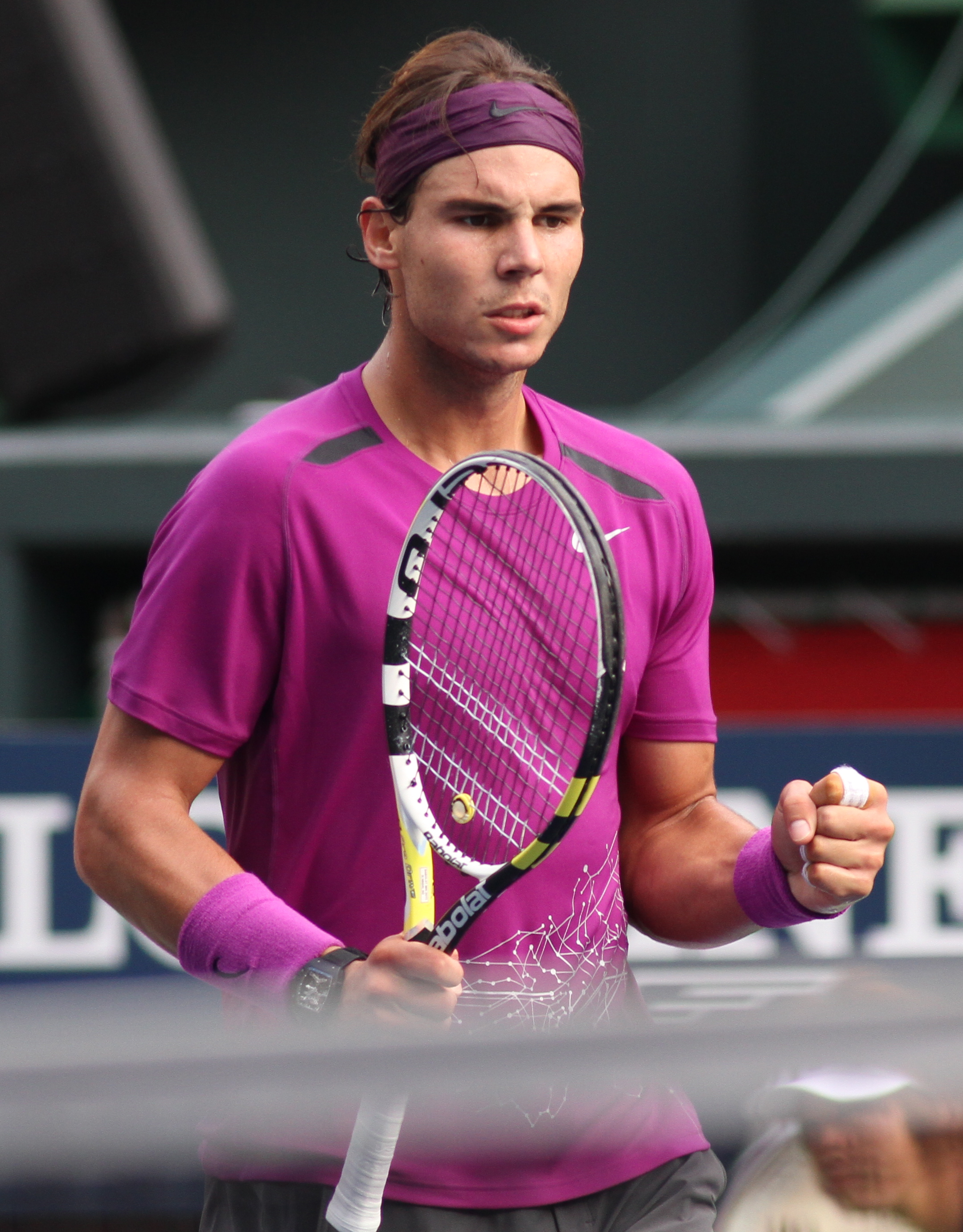
In this in-depth article, we’ll explore Nadal’s hair journey, the science behind it, and what his transformation means for millions of men losing their hair worldwide.
During the early years of his career, Nadal had a thick, dense, and natural-looking head of hair. His youthful appearance matched his explosive playing style on the court.
However, as time progressed, fans began to notice subtle changes.
These included:
A receding hairline, particularly in the temples
Visible thinning on the crown area
A developing bald spot at the top of the scalp
These signs are classic indicators of male pattern baldness, the most common form of hair loss in men.
For someone constantly under high-definition cameras and global attention, even minor changes become highly visible.
To fully understand Nadal’s transformation, it’s important to understand male pattern baldness.
This condition is caused by genetic sensitivity to DHT (dihydrotestosterone), which gradually weakens hair follicles.
The process typically follows a predictable pattern:
Thinning hair at the temples
Gradual recession of the hairline
Crown thinning leading to a bald spot
Progressive loss of density
Nadal’s visible hair changes over time closely followed this pattern.
At a certain stage in his career, something changed.
Fans began noticing that Nadal’s hair looked:
Fuller in previously thinning areas
More structured along the frontal hairline
Improved in overall density
This led to widespread speculation about nadal s hair transplant.
Unlike temporary solutions, such improvements are typically associated with hair transplant surgery, especially when the results appear consistent over time.
While Nadal has not publicly detailed every aspect of his procedure, it is widely reported and visually supported that he underwent hair restoration surgery.
Before the procedure, his hair showed clear signs of:
Advanced receding hairline
Noticeable crown thinning
Reduced density across the scalp
After the transformation, the changes were evident:
A restored hairline
Reduced visibility of the bald spot
Stronger and more uniform coverage
These results align closely with outcomes from modern follicular unit extraction fue techniques.
The technique most commonly associated with Nadal’s transformation is follicular unit extraction fue.
This advanced method involves:
Extracting individual hair follicles from a donor area
Implanting them into thinning or bald regions
Ensuring natural direction, angle, and density
Compared to older methods, FUE offers:
Minimal scarring
Faster recovery
More natural results
Long-lasting hair growth
This technique has become the gold standard in modern hair transplant surgery.
When comparing Nadal’s appearance before and after the suspected hair transplant surgery, the difference is clear but not exaggerated.
Before:
Noticeable thinning hair
Receding temples
Visible crown thinning
After:
Fuller hairline
Improved density
More balanced and youthful appearance
What stands out is how natural the results look.
There is no harsh or artificial hairline — instead, the transformation blends seamlessly with his overall appearance.
This is a hallmark of successful hair transplants.
A key part of any hair transplant surgery is the hair growth timeline.
The process is gradual:
First month: Shedding phase (shock loss)
3–4 months: Early regrowth begins
6 months: Visible improvement
12 months: Final results
Nadal’s transformation appears to follow this natural progression.
The improvement was not overnight but developed gradually, which is why it looked authentic.
A successful transplant depends heavily on the quality of the hair follicles in the donor area.
This area — typically the back of the scalp — contains hair that is resistant to male pattern baldness.
During the procedure:
Follicles are extracted from this stable region
They are implanted into areas affected by hair loss
They continue to grow permanently
This is why hair restoration surgery is considered one of the most effective long-term solutions.
For professional athletes, appearance plays a bigger role than many people realize.
Reasons include:
Constant global visibility
Media coverage and endorsements
Personal confidence
For someone like Nadal, maintaining a strong presence both on and off the court is important.
Addressing hair loss through a permanent solution can enhance that presence without distracting from performance.
Hair loss is not just a physical change.
It can affect:
Self-confidence
Public image
Personal comfort
Even for someone as accomplished as Nadal, these factors can play a role.
Choosing to address losing their hair is often about feeling like oneself again.
Not all transplants deliver the same results.
What defines successful hair transplants includes:
Natural hairline design
Proper graft placement
Correct angle and direction
Balanced density
Nadal’s transformation is often cited as a strong example because it meets all these criteria.
Nadal’s hair transformation did not go unnoticed.
Fans and media quickly picked up on the changes, leading to widespread discussions.
What’s important is how this influenced public perception.
Hair transplants are now seen as:
Normal
Effective
Accessible
This shift has encouraged many men experiencing hair loss to explore solutions.
Before considering a transplant, many people try temporary solutions:
Hair fibers
Styling tricks
Medications
While these can help temporarily, they do not offer permanent solutions.
Hair transplant surgery, on the other hand, provides lasting results because transplanted follicles continue to grow naturally.
While effective, this procedure is not for everyone.
Factors to consider:
Donor area quality
Extent of hair loss
Age and future progression
Overall health
A proper consultation is essential before deciding on hair restoration surgery.
What makes Nadal’s case interesting is not just the physical transformation.
It represents:
Adaptation to change
Use of modern medical solutions
Maintaining confidence over time
His journey shows that even global icons face the same challenges as everyone else — and solutions are available.
The story of Rafael Nadal’s hair is more than just a cosmetic discussion.
It reflects the evolution of modern hair transplant surgery and how far techniques have come.
From visible hair loss and a developing bald spot to a fuller and more natural appearance, Nadal’s transformation highlights the effectiveness of today’s methods.
The case of nadal s hair transplant demonstrates that addressing male pattern baldness is no longer a complex or uncertain process.
With advanced techniques like follicular unit extraction fue, achieving natural hair growth and restoring a youthful look is entirely possible.
For millions of men losing their hair, Nadal’s journey serves as a powerful example:
Hair loss may be inevitable for many — but effective, natural, and permanent solutions are within reach.


