

Over the years, Travis Kelce has become one of the most recognizable faces in the NFL. As a Super Bowl champion, media personality, and high-profile celebrity, his appearance is constantly under public scrutiny. Recently, online discussions have focused on one specific question:
Did Travis Kelce get a hair transplant?
In this comprehensive 2026 guide, we examine visible changes in his hairline, analyze whether a transplant is likely, explain what procedure may have been used, and break down the potential cost.
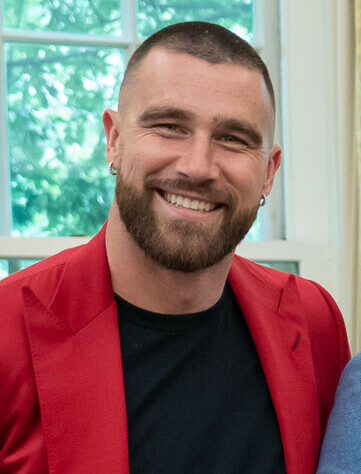
In the early stages of his NFL career, Travis Kelce appeared to have:
A strong, youthful hairline
Dense frontal coverage
Thick natural texture
However, as with many men entering their 30s, subtle changes began to appear over time:
Slight temple recession
Minor thinning at the corners
A maturing hairline
This is extremely common and typically associated with male pattern hair loss.
In more recent seasons and public appearances, Kelce’s hairline appears:
Fuller at the temples
More symmetrical
Denser in high-definition close-ups
Less recessed than in earlier comparisons
The improvement appears subtle rather than dramatic — which is often a hallmark of well-executed hair restoration.
There is no official confirmation from Travis Kelce regarding a procedure.
However, visual comparison suggests:
Temple reinforcement
Slight lowering of frontal hairline
Increased density in previously thinner zones
If Kelce underwent a transplant, it was likely conservative and focused on refinement rather than major reconstruction.
The most probable technique in 2026 for athletes is FUE (Follicular Unit Extraction).
Why FUE?
No visible linear scar
Minimal downtime
Short hairstyle compatibility
Natural-looking density
In this method:
Individual hair grafts are extracted from the donor area.
The surgeon places them into thinning regions.
The hairline is artistically redesigned for balance.
Given Kelce’s athletic lifestyle and preference for shorter haircuts, FUE would be ideal.
Based on visual estimation:
1500–2500 grafts would likely be sufficient
Focus on temple regions
Possible light frontal reinforcement
Because Kelce never showed advanced baldness, the procedure would likely enhance existing density rather than rebuild a full hairline.
If Travis Kelce had a procedure, the likely recovery timeline would be:
Day 1–7:
Healing and scabbing
Month 1:
Temporary shedding (shock loss)
Month 3–4:
New growth begins
Month 6:
Noticeable density improvement
Month 12:
Final matured result
Athletes typically schedule such procedures during off-season periods.
Hair transplant cost depends on:
Number of grafts
Clinic location
Surgeon experience
Technology used
Privacy services
🇺🇸 United States
$8,000 – $20,000+
🇬🇧 United Kingdom
£6,000 – £15,000
🇹🇷 Turkey
€2,000 – €5,000 (premium clinics)
Celebrity-level discretion services can significantly increase cost.
If performed in a high-end U.S. clinic with a leading surgeon, total cost could easily exceed $25,000.
For professional athletes like Travis Kelce:
Media exposure is constant
Brand endorsements rely on image
Confidence plays a psychological role
A stable, dense hairline enhances camera presence and public perception.
Professional grooming, lighting, and hair styling can enhance perceived density.
However:
Styling does not permanently restore temple recession
Sustained improvements across seasons suggest structural change
Increased symmetry usually points to surgical refinement
While styling plays a role, it rarely explains long-term structural improvement.
If Kelce underwent a transplant, the result appears:
Age-appropriate
Balanced with facial proportions
Not overly aggressive
Subtle and natural
The best hair restoration is often invisible — people notice improvement but cannot identify surgery.
Modern hair restoration focuses on:
Conservative design
Avoiding overcorrection
Matching natural hair direction
Maintaining masculine geometry
Kelce’s current hairline appears consistent with these principles.
Like any surgical procedure, hair transplantation involves potential risks:
Temporary swelling
Shock loss
Minor scabbing
Uneven density (if poorly performed)
Choosing an experienced surgeon minimizes complications.
Transplanted hair taken from the donor area is genetically resistant to DHT.
This means:
Results are permanent
Hair will grow normally
It can be cut and styled like natural hair
However, native non-transplanted hair may continue thinning if untreated.
Hairline adjustments can subtly:
Shorten forehead appearance
Improve facial symmetry
Enhance masculine definition
Strengthen on-camera presence
Small structural changes can significantly impact perceived attractiveness.
There is no official confirmation that Travis Kelce had a hair transplant.
However, visual analysis suggests:
Early mild recession
Later increased temple density
Balanced frontal line
Natural enhancement
If a procedure was performed, it was likely:
FUE-based
Conservative
Designed for subtle refinement
Focused on long-term natural aesthetics
The evolution of Travis Kelce’s hairline reflects what modern hair restoration can achieve in 2026 — subtle, natural, confidence-enhancing improvements.
Whether confirmed or not, his case demonstrates how today’s hair transplant techniques can refine appearance without dramatic, obvious transformation.
For individuals experiencing early hairline recession, conservative FUE treatment offers a realistic solution with natural results and long-term stability.
When analyzing whether a public figure may have undergone hair restoration, subtle structural changes matter more than dramatic transformations.
In Travis Kelce’s case, the most noticeable shifts over the years include:
Stronger temple framing
Improved corner density
A smoother transition between frontal hairline and temporal points
Reduced contrast in high-definition close-up shots
These adjustments are consistent with conservative frontal reinforcement rather than full scalp reconstruction.
It’s important to distinguish between:
A naturally maturing hairline
Progressive male pattern recession
Many men experience slight temple shifts in their 30s. However, when density appears to improve later — rather than decline — this often suggests intervention.
If Kelce experienced early recession followed by density restoration, it would align with a targeted FUE session.
Temple areas define facial symmetry. Even minor graft placement in this zone can:
Balance facial proportions
Reduce forehead width appearance
Create sharper masculine definition
Enhance camera presence
For athletes who frequently appear in interviews and advertisements, temple refinement can significantly improve on-screen appearance.
If a procedure occurred, graft distribution may have looked like this:
60–70% toward temple reinforcement
30–40% frontal edge thickening
No major crown work
This type of design keeps the change subtle and avoids overcorrection.
Travis Kelce has relatively thick, slightly coarse hair texture.
This provides two major advantages in hair transplantation:
Fewer grafts required to create density illusion
Stronger visual coverage per graft
Patients with thicker shafts often achieve fuller results with fewer total grafts.
Another possibility is early intervention with:
PRP therapy
Prescription DHT blockers
Non-surgical density maintenance
However, medication typically stabilizes loss rather than rebuilds temple corners once recession has occurred.
Sustained improvement in symmetry usually suggests graft implantation.
Professional athletes often schedule hair transplant procedures:
Immediately after season end
During injury recovery periods
In extended off-season windows
Because early healing involves visible redness and scabbing, procedures are often timed to minimize media exposure.
Kelce’s seasonal visibility patterns align with this strategy if a procedure occurred.
In modern sports culture:
Personal image influences endorsement value
Media exposure is constant
Brand partnerships require polished appearance
Subtle cosmetic refinement, including hair restoration, has become normalized among public figures.
A stable hairline supports:
Youthful perception
Leadership presence
Marketability
If performed in a premium U.S. clinic with celebrity-level discretion:
Base FUE cost (2000 grafts):
$10,000 – $18,000
Add-ons could include:
VIP privacy services
Private surgical suite
Advanced PRP combination therapy
Long-term follow-up
Total potential cost could exceed $25,000.
If done internationally in a high-end European clinic, pricing could be lower — but celebrity discretion often keeps procedures domestic.
Modern celebrity hair transplants focus on:
Conservative design
Age-appropriate density
Natural hairline irregularity
Avoiding artificial symmetry
Kelce’s current appearance suggests — if intervention occurred — that it was strategically conservative.
An undetectable transplant typically includes:
Correct hair angle placement
Natural density gradient
Feathered frontal edge
Preservation of slight irregularity
Respect for original hairline architecture
Overly straight or aggressively lowered hairlines often reveal surgical work.
Kelce’s current hairline does not display these artificial characteristics.
If Travis Kelce underwent a transplant:
Grafts would be permanent
Future recession may require minor touch-ups
Maintenance medication may stabilize surrounding hair
Modern FUE results are designed to last decades when donor selection is appropriate.
While there is no public confirmation that Travis Kelce had a hair transplant, visual comparisons suggest measurable improvement in temple density and frontal structure.
If performed, the procedure was likely:
Follicular Unit Extraction
1500–2500 graft range
Conservative temple reinforcement
Executed with natural aesthetics in mind
Scheduled strategically during off-season
His case represents the 2026 standard of male celebrity hair restoration: subtle, balanced, and undetectable.


