

(Complete Guide to Procedure, Grafts, Recovery & Pricing)
A widow’s peak can be one of the most defining hairline characteristics. For some, it enhances their facial features. For others, it becomes more pronounced due to progressive hair loss, creating imbalance in the frontal hairline.
In 2026, more patients are seeking correction or refinement of the widow’s peak through modern hair transplant procedures. But how much does it cost? How many grafts are needed? And does a widow’s peak hair transplant actually work?
This in-depth guide covers everything — procedure types, peak hair transplant cost, recovery times, risks, and international price comparisons.
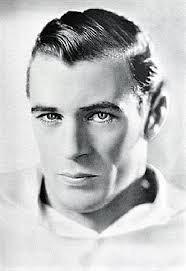
A widow’s peak is a natural hairline pattern that forms a V shaped point in the center of the forehead. It can be:
Genetic and present from childhood
Exaggerated by receding temples
More visible with thinning frontal hair
In some cases, widow s peak hair becomes sharper due to male pattern hair loss, which deepens the V shape as surrounding hair recedes.
Some patients want to:
Soften the peak
Straighten the hairline
Lower the frontal edge
Restore temple density
Others want to enhance it for a sharper aesthetic look.
When hair loss progresses at the temples, the natural V point remains while surrounding areas thin. This creates:
A sharper angle
Higher recession at the corners
Less frontal hair density
Because the central hairline may remain stable longer, the contrast becomes more dramatic.
That’s why many patients explore hair restoration specifically for this region.
Yes — when properly designed.
The key question patients ask is:
How peak hair transplant works?
A widow’s peak transplant works by:
Extracting healthy hair follicles from the donor area
Rebuilding or reshaping the hairline
Balancing the temples
Creating symmetry based on facial proportions
The goal is harmony — not overcorrection.
Modern hair transplant procedures for widow’s peak correction include:
Follicular Unit Extraction (FUE)
The most common approach is follicular unit extraction.
In this technique:
The surgeon extracts individual follicular units
Grafts are harvested one by one
No linear scar forms
It is considered minimally invasive
Because widow’s peak corrections usually require fewer grafts, fue hair transplant is ideal.
Also called strip surgery or follicular unit transplantation, this method:
Removes a strip of scalp
Leaves a linear scar
Allows large graft harvesting
For small widow’s peak adjustments, FUT is less commonly used.
The number of grafts required depends on:
Severity of temple recession
Desired hairline height
Existing density
Skin elasticity
Shape of the V point
Estimated Graft Range:
Minor softening → 800–1200 grafts
Moderate reshaping → 1200–2000 grafts
Significant frontal lowering → 2000–2500 grafts
Each graft contains 1–4 follicular units, meaning thousands of individual hair shafts may be placed.
The donor area (typically the back of the scalp) is genetically resistant to DHT.
A strong donor area ensures:
High graft survival
Natural texture match
Permanent transplanted hair
Without adequate donor density, results may be limited.
Step 1: Consultation
Hairline is measured relative to facial features.
Step 2: Design
Surgeon maps natural curvature and symmetry.
Step 3: Local Anesthesia
The procedure is painless and minimally invasive.
Step 4: Extraction
Using follicular unit extraction, the surgeon removes grafts.
Step 5: Implantation
Grafts are placed carefully to create natural hair growth direction.
Recovery times for widow’s peak correction are typically fast:
Day 1–3 → Mild swelling
Day 7–10 → Scabs fall off
Month 1 → Temporary shedding
Month 3–4 → New hair growth begins
Month 12 → Final result
Because the treated area is small, healing is often quicker than full-scalp transplants.
After the transplant:
Initial shedding occurs
Dormant phase
New hair growth starts around 3 months
Density improves by 6 months
Mature thickness by 12 months
The transplanted hair behaves like natural hair permanently.
Now the key question:
What is the peak hair transplant cost in 2026?
Pricing depends on:
Number of grafts required
Technique used
Surgeon experience
Country
🇺🇸 United States
$4,000 – $12,000
High-end celebrity clinics may charge more
🇬🇧 United Kingdom
£3,000 – £9,000
🇹🇷 Turkey
€1,500 – €4,000
Premium clinics slightly higher
For international patients researching Hair Transplant Cost in Antalya, prices remain significantly more competitive compared to the US and UK while maintaining high medical standards.
|
Grafts |
Estimated Cost (Global Average) |
|---|---|
|
1000 |
$2,500 – $5,000 |
|
1500 |
$3,500 – $7,000 |
|
2000 |
$4,500 – $9,000 |
|
2500 |
$6,000 – $12,000 |
Remember: the number of grafts required is the main cost driver.
Yes.
Because grafts come from the permanent donor area, they are resistant to DHT.
The transplanted hair will continue normal hair cycles for decades.
However, native hair around it may continue thinning if untreated.
Like all hair transplant procedures, risks include:
Swelling
Temporary numbness
Shock loss
Overcorrection
Asymmetry
Choosing an experienced surgeon reduces complications significantly.
An artificial straight hairline can look unnatural.
A widow’s peak should:
Complement facial proportions
Match natural hair direction
Avoid extreme lowering
Blend with surrounding density
Balance is more important than complete elimination of the V shape.
Ideal candidates:
Stable hair loss pattern
Healthy donor area
Realistic expectations
Good scalp elasticity
Patients with aggressive male pattern hair loss may need additional planning.
In most cases, yes.
FUE hair transplant offers:
No linear scar
Faster healing
Precision extraction
Better control over hairline artistry
It remains the gold standard in 2026 for widow’s peak correction.
Yes — but subtly.
Adjusting the widow’s peak can:
Shorten forehead appearance
Improve facial symmetry
Enhance masculine or feminine balance
Frame the eyes more effectively
Hairline shape strongly influences perceived age and attractiveness.
A widow’s peak hair transplant in 2026 is:
✔ Technically straightforward
✔ Minimally invasive
✔ Permanent
✔ Customizable
✔ Natural-looking when done properly
The peak hair transplant cost depends primarily on the number of grafts required and clinic location.
For many patients, correcting a V-shaped hairline restores confidence without needing a full scalp procedure.
A widow’s peak that forms a V shaped hairline can be reshaped safely using modern follicular unit extraction techniques.
By carefully selecting follicular units from the donor area, surgeons restore balance, density, and natural framing of the face.
With advanced methods, minimal scarring, fast recovery times, and permanent transplanted hair, widow’s peak correction remains one of the most effective niche hair restoration procedures available in 2026.


